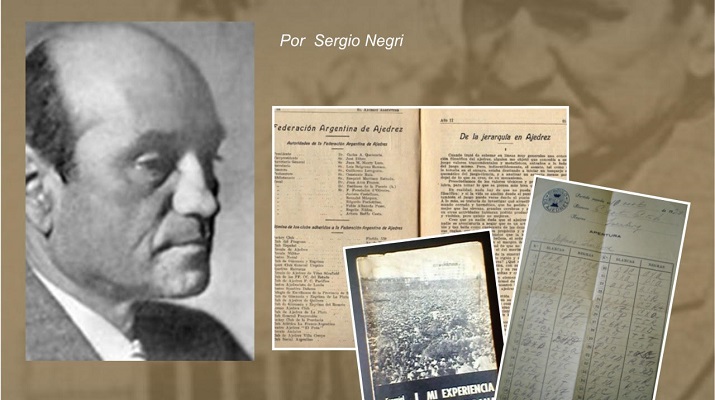
Chess in the 19th Century: Milestones of 1895
By Sergio Ernesto Negri

Global Context
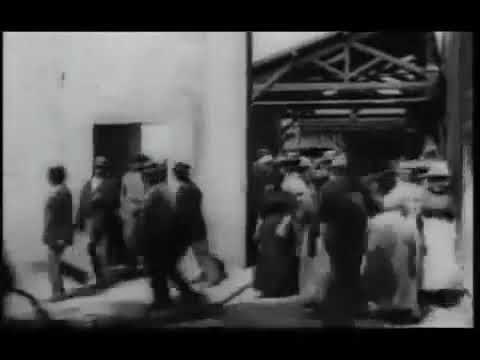
Toward the end of the year, the Lumière brothers (Auguste: 1862-1954; Louis: 1864-1948) held the first commercial film screening at the Grand Café in Paris: it was La Sortie de l’Usine Lumière à Lyon («Workers Leaving the Factory in Lyon«). German physicist Wilhelm Röntgen (1845-1923) discovered a new form of radiation, which he called “X-rays” due to its unknown nature; he would later receive the first Nobel Prize in Physics in history. Incidentally: Swedish inventor Alfred Nobel (1833-1896) signed his will in Paris, bequeathing most of his fortune to the creation of the prizes that would bear his name. In Italy, Guglielmo Marconi (1874-1937) succeeded in transmitting radio signals over a distance of approximately 2.4 kilometers, laying the groundwork for global telecommunications. German engineer Karl Benz (1844-1929) completed the design of his first motorized “bus,” and the Panhard & Levassor company began standardizing the modern vehicle configuration (front engine and rear-wheel drive). American William Morgan (1870-1942) invented a game called “Mintonette” in Massachusetts, which we know today as volleyball.
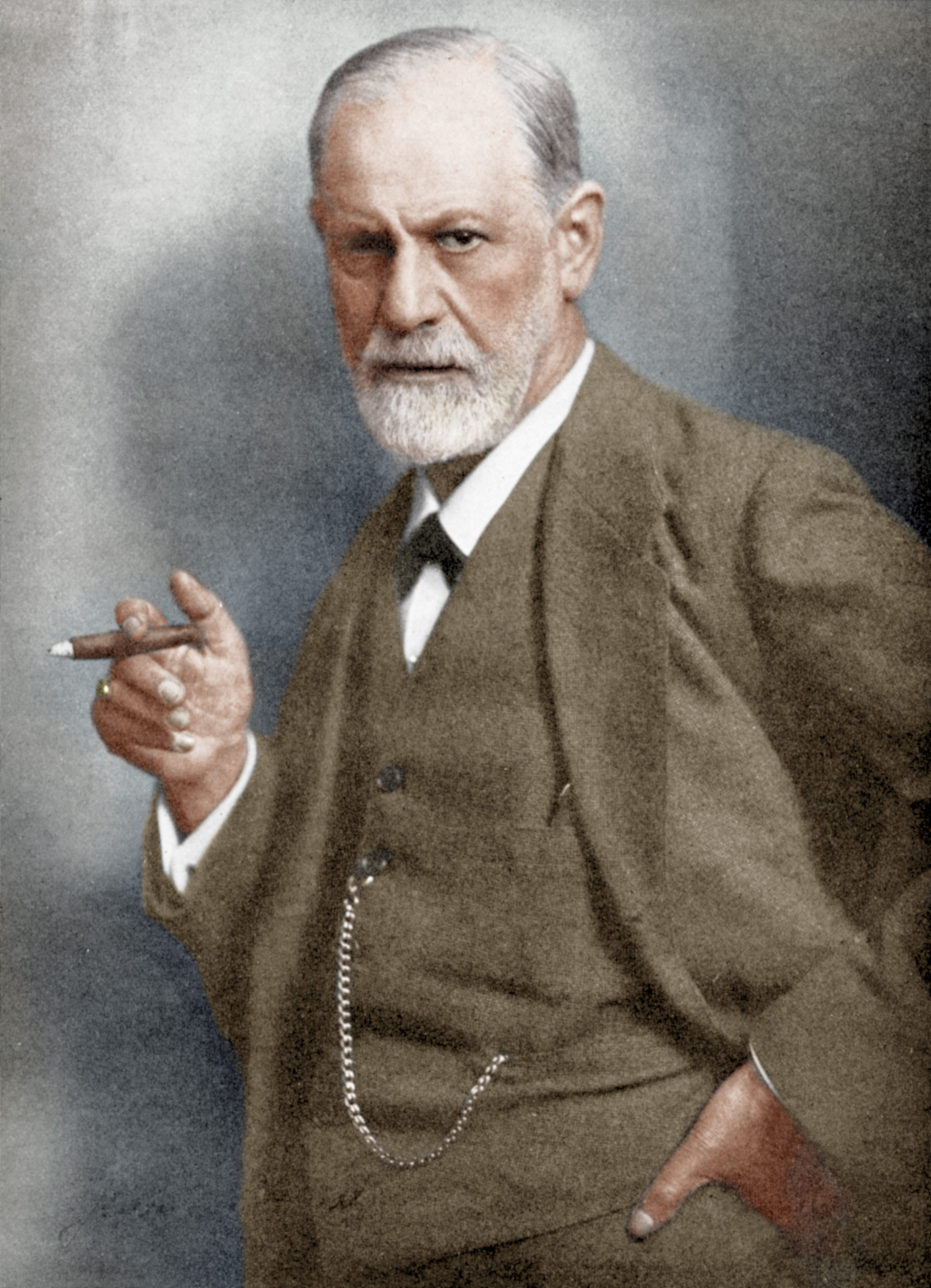
The Irish writer Oscar Wilde (1854-1900) premiered his masterpiece, The Importance of Being Earnest, but just a few months later he was arrested and sentenced to two years of hard labor for “gross indecency”. The Austrian Sigmund Freud (1856–1939) published, with his compatriot and colleague Josef Breuer (1842–1925), Studien über Hysterie («Studies on Hysteria«), which laid the foundation for psychoanalysis and mentioned the case of a woman for whom: “Chess, which she played excellently, was a favourite occupation of hers, and she enjoyed playing two games at a time, which can scarcely be regarded as indicating a lack of mental synthesis» and, in another passage, adopting a more analytical tone, the authors state:
«There remains a third type of organization to be mentioned: the most important one, but the one about which it is most difficult to make a general statement. I am referring to an arrangement based on the content of thought, the connection established by a logical thread that reaches to the core and tends to follow an irregular and winding path, different in each case. This arrangement has a dynamic character, in contrast to the morphological nature of the two stratifications mentioned above. While these two would be represented in a spatial diagram by a continuous line, curved or straight, the course of the logical chain would have to be indicated by a dashed line that would run along the most tortuous paths from the surface to the deepest layers and vice versa, and yet would generally advance from the periphery toward the central core, touching each intermediate stopping point—a line resembling the zigzag line of the solution to a knight’s move problem, which traverses the squares of the chessboard diagram».
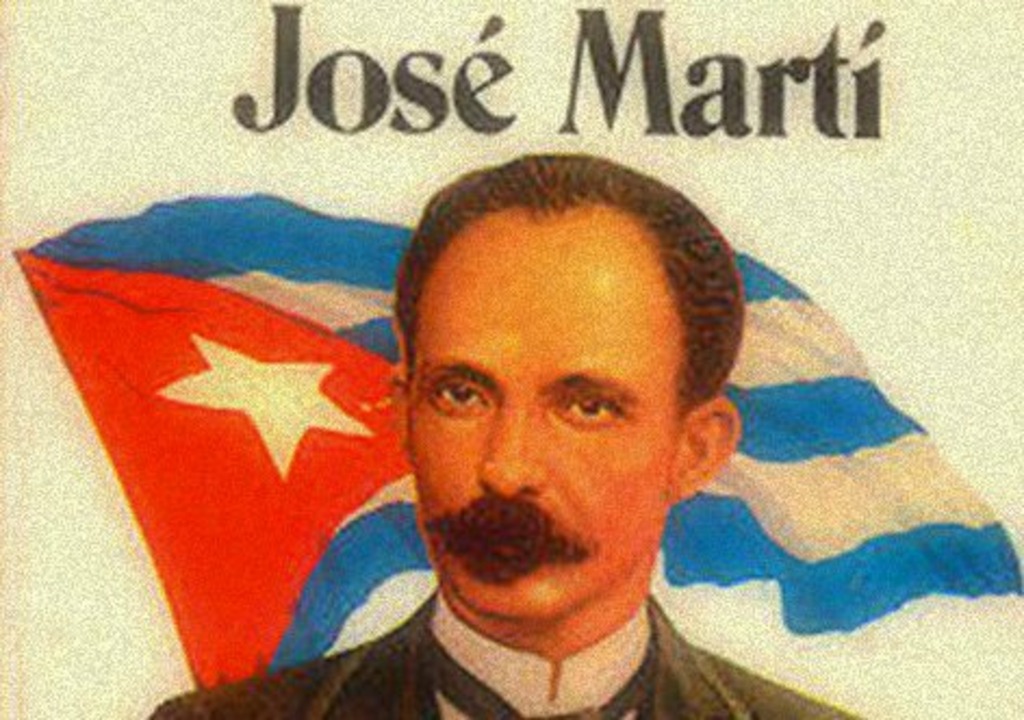
An uprising against Spanish rule known as the “Grito de Baire” takes place in Cuba, ideologically led by José Martí (1853-1895), a man with close ties to chess, who will die this year. The First Sino-Japanese War comes to an end with the Treaty of Shimonoseki, consolidating Japan as an imperial power. Civil war in Ecuador. England establishes a protectorate over Kenya, while France conquers Madagascar and Japan acquires the island of Formosa. Boer uprising in South Africa. In France, officer Alfred Dreyfus (1859-1935) is stripped of his rank and sentenced to life imprisonment, a case that would become emblematic of the abuses to which the justice system can stoop. An earthquake devastates Iran.
Chess in 1895
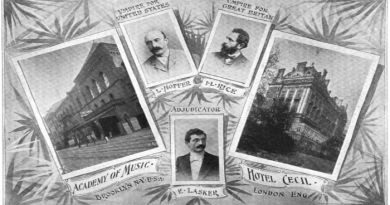
One of the strongest tournaments of the century took place in Hastings—not at the end of the year, as would become customary in the years to come, but in August, concluding in September—in which, somewhat surprisingly, and in his debut in European competitions, the American Harry Nelson Pillsbury (1872-1906), edging out the Russian Mikhail Chigorin (1850-1908) by the narrowest of margins, with the world champion, the Prussian Emanuel Lasker (1868–1941), finishing third. Among the participants were the former champion, the American (born in Prague) Wilhelm Steinitz (1836–1900), his compatriot Frank Marshall (1877–1944), the Prussian Siegbert Tarrasch (1862–1934), and the Austrian Karl Schlechter (1874–1918). It was here that the famous game between Steinitz and the German Curt von Bardeleben (1861–1924) was played, in which Steinitz repeatedly proposed a queen sacrifice that could not be accepted, as it would lead to a checkmate that was, ultimately, inevitable. It was a tournament as fierce as it was competitive. Suffice it to say that no one emerged undefeated. Pillsbury, for instance, lost three games (to Chigorin, Lasker, and Schlechter) and yet emerged with a victory that placed him at the center of the chess world, in a way reminiscent—through his success (not through an invincibility that clearly was not such)—of his compatriot, the legendary Paul Morphy (1837–1884). At the same time, a women’s tournament was held, featuring twenty players, won by the British Edith Margaret Foster de Thomas (1853–1920), mother of the renowned chess player George Thomas (1881–1972).

Lasker gave twelve lectures in London prior to the Hastings tournament, which would form the intellectual foundation of his future book Common Sense in Chess, that will be published in 1896.

At the end of the year (though it would conclude the following year), the St. Petersburg tournament took place—a six-round round-robin event featuring Lasker, Steinitz, Pillsbury, and Chigorin—which echoed the previous tournament, as the top five finishers from the Hastings tournament were invited to participate; however, Tarrasch declined to take part due to his professional obligations as a physician. Lasker emerged victorious, although Pillsbury dominated early on; he was already showing signs of a disease that affected his performance—the same illness that, years later and far too soon, would lead to his death.
At a tournament in Vienna, the Romanian Georg Marco (1863–1923) finished first, ahead of the Slovak Miksa Weiss (1857–1927) and Schlechter. In match play, the German (later British) Jacques Mieses (1865–1954) drew with the Belarusian-French Dawid Janowski in Paris with seven points each, only to lose to the German Richard Teichmann (1868–1925) in London by a score of 4.5 to 1.5; while von Bardeleben tied with the British player Joseph Blackburne (1841–1924) at 4.5 points in London, and defeated Teichmann there by a score of 6–4. Janowski, still in the French capital, defeated the Cuban Manuel Márquez Sterling (1872–1934) 2.5–0.5, a man who would go on to become President of his country. In Budapest, in a match between locals, Géza Maróczy (1870–1951) defeated Rudolf Charousek (1873–1900) 9–5. In New York, Steinitz narrowly prevailed over the American (born in a city in present-day Ukraine) Salomon Lipschütz (1863–1905) by a score of 3.5 to 2.5.
As of December, the Chessmetrics top 5 was as follows: Tarrasch; Lasker; Chigorin; Steinitz; von Bardeleben. According to the annual Edo Historical Chess Ratings, however, the order was: Lasker; Tarrasch; Chigorin; Steinitz; Pillsbury.
The Ladies’ Chess Club is founded in London. Twenty-five women in the Brompton neighborhood, who used to meet in private homes, eventually secure a venue at 447 Strand. Although the original idea is attributed to Mathilde Wolff van Sandau (1843–1926), a German-born musician and conductor, in whose home it all began, and to Edith Burrell (c.1849–1937), its first president was Priscilla Hillyard (1851–1939), wife of media magnate George Newnes (1851–1910), who included the game in his newspapers, which is why she was known by this surname as well, leadership fell to Rhoda Bowles (1862–1940), a woman of great organizational skills and also a journalist, who learned to play chess by touch during a period when she was blind. In a short time, the organization grew to have one hundred members.
The writer Ezequiel Martínez Estrada (1895–1964) was born in Argentina; a passionate chess enthusiast, he dedicated timeless writings to the game—in essays, historical chronicles, and verse— and reflections that, posthumously, would give rise to the book Filosofía de ajedrez («Philosophy of Chess«). In Brazil the writer Malba Tahan (1895–1974) was born, Julio Cesar de Mello e Souza was his real name, author of O Homem que Calculava («The Man Who Counted«), a 1938 book in which he combines mathematics and poetry, dedicating two chapters to chess and exploring the origins of its invention. In France, was born the poet Paul Éluard (1895–1952)—or Eugène Grindel, as was his real name—would passionately embrace chess: in his Lettres à Gala («Letters to Gala«), he included the game in poetic reference:
«Let us not forget the nightingale / Nor the chess hidden in the mud / Nor the bones of the dead / Nor the dead leaves that have entered / Into the eternity of December.».

The Argentine politician and writer Juan Bautista Alberdi (1810–1884), in Escritos póstumos («Posthumous Writings«), a sixteen-volume work published between this year and 1901, in which it is mentioned that General Juan Lavalle (1797–1841) was playing it “peacefully on his ranch” a way of suggesting that he was distracted and questioning him for being used by the Unitarian faction of his country. British biologist Thomas Henry Huxley (1825–1895) dies, a fervent advocate of the theory of evolution: he devoted several pages to chess in his analysis of the scope of “liberal education” in which he did in a work from 1876–1877, A Liberal Education; and Where to Find It, stating:
«The chess-board is the world; the pieces are the phenomena of the universe; the rules of the game are what we call the laws of Nature. The player on the other side is hidden from us. We know that his play is always fair, just, and patient. But also we know, to our cost, that he never overlooks a mistake, or makes the smallest allowance for ignorance.«.