The Battle in Buenos Aires, 1978: A Three-Way Contest for the FIDE Presidency
By Henrik Malm Lindberg

For many years, FIDE presidential elections were less like elections than coronations. Neither Folke Rogard nor Max Euwe faced an opposing candidate when they were elected in 1949 and 1970, respectively. When Euwe stood for re-election at the 1974 congress in Nice, he did have an opponent – Narciso Rabell Mendez of Puerto Rico – but Rabell Mendez had no realistic chance. By the time of the next presidential election, at the congress in Buenos Aires in the autumn of 1978, Euwe had announced that he would step down, and a serious campaign took shape among three candidates. This contest would also set the pattern for future presidential elections in the World Chess Federation.
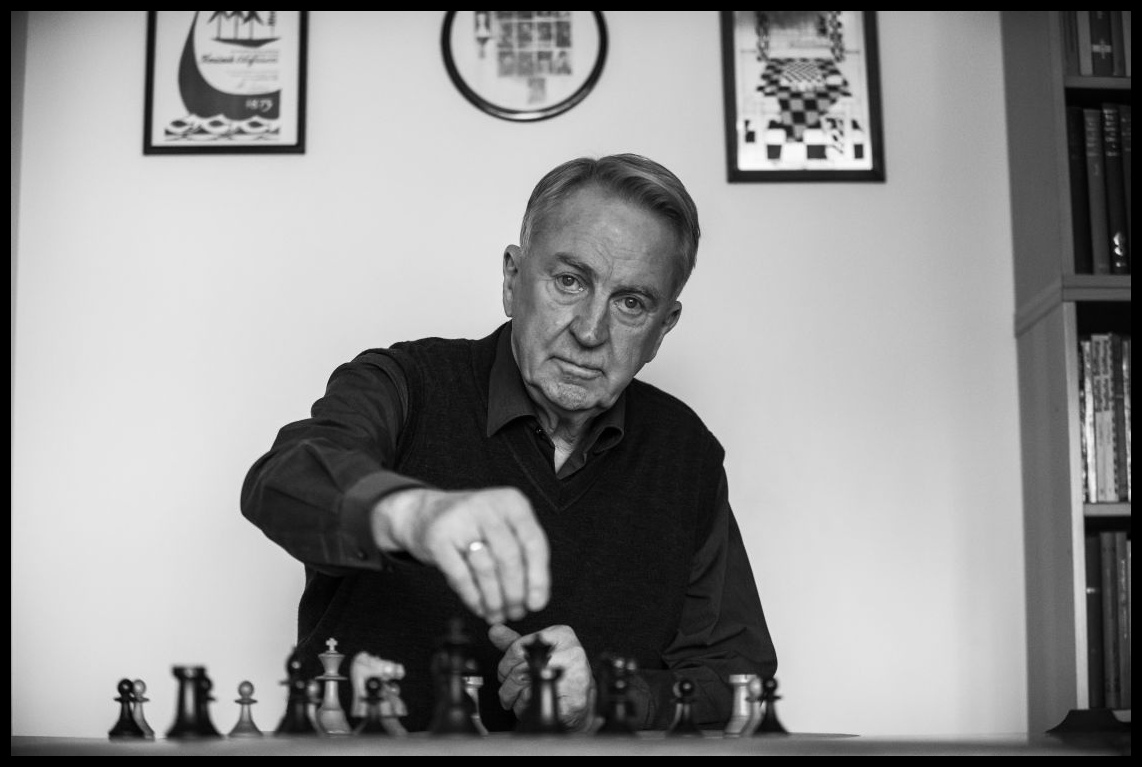
When Euwe announced in early summer 1977 that he had decided to step down, he had already spoken to the Icelander Fridrik Olafsson during the chess festival in Wijk aan Zee and tried to persuade him to stand. Euwe regarded Olafsson as a suitable candidate because of his legal background, but also because he was an outstanding chess player. Olafsson himself had the impression that Euwe also attached importance to the fact that he knew many members of the world elite. However, Euwe also approached Svetozar Gligoric as a suitable successor, not least because of the Yugoslav’s objectivity. Gligoric was initially hesitant about standing, but changed his mind and then announced his candidacy. It was clear that the FIDE president wanted someone with a background as a player.
During his presidency, Euwe had been forced to contend with countless crises, large and small, surrounding the World Championship: the defections of players such as Korchnoi and Pachman, and the expulsion from the World Chess Federation of certain federations, including South Africa and Rhodesia. Euwe remained popular in many federations, but by no means all. At times he had been subjected to fierce criticism – particularly from the Eastern bloc, led by the Soviet Union – for actions that were not always considered consistent with the existing rules. In August 1976, the Soviet Sports Committee had decided that Euwe must not be re-elected. The committee would have preferred a new president from a communist country, Yugoslavia was mentioned, believing that such a president would be more receptive to Soviet views.
By late summer 1977, it was clear that several candidates had shown interest in taking over the presidency, but the Icelander Fridrik Olafsson was then regarded as the favourite. Gligoric was also a candidate, as was one of FIDE’s vice-presidents, Narciso Rabell Mendez. He was a 42-year-old civil engineer and chess organiser from Puerto Rico and a former president of the Puerto Rican federation. Rabell Mendez also had some credentials as a player: at the 1962 Varna Olympiad, he played as a reserve and scored 50 per cent. Florencio Campomanes of the Philippines was also mentioned as a potential candidate in the speculation and, according to some sources, was a candidate too, but ultimately he did not stand. At the time, Campomanes was a controversial figure within FIDE and had to defend himself against allegations in his own federation, which may have influenced his decision.
Gligoric, who turned 55 before the Buenos Aires congress, had been known for decades as a grandmaster among the world’s elite, but also as an arbiter, organiser and, not least, writer. Olafsson was likewise a grandmaster who had competed at world-elite level in the 1950s and 1960s, but he had also pursued a distinguished career as a lawyer, including work at the Ministry of Justice. From 1974 onward, the Icelandic state paid him a salary so that he could play chess full-time, and pre-congress speculation made clear that Olafsson would be allowed to retain that salary if elected president.
An intense campaign was conducted in the run-up to the 1978 congress. Brochures were produced for all the candidates and circulated before the vote. It is interesting to note that Iceland’s brochure was more restrained than the one published by Puerto Rico, which advertised the merits of its candidate, Rabell Mendez, rather unabashedly and included plenty of photographs of him from different angles.
Olafsson began by securing support close to home. The Nordic federations were contacted, and all five, in addition to his own in Iceland, quickly rallied behind the Icelander. Cooperation within the Nordic group was somewhat strained at that point, however, and Olafsson did not feel that the support in the Nordic countries was wholehearted; there was a degree of jealousy that little brother Iceland had suddenly assumed a leadership role.
Olafsson then received support for his candidacy from several Western European federations, as had been expected. Support also came from a somewhat unexpected source. The Dutch insurance company, Interpolis, who financed the Tilburg tournament, decided to support Olafsson’s campaign and therefore financed his brochures during the final stage of the election campaign.
Gligoric sought and obtained support from several federations in the socialist countries. Shortly before the congress, moreover, Gligoric unveiled a major international scoop. The chess world’s great but long-lost son, Bobby Fischer, might be on his way back to the game, and the rumours that had circulated since June 1978 seemed about to become reality. Gligoric and the Yugoslav Chess Federation had persuaded Fischer to accept a match against his old antagonist, and this was, of course, a major boost to Gligoric’s candidacy.
Rabell Mendez, for his part, sought support first among the Latin American federations and then among those of the rest of the Third World. Endorsements and nominations came in from those quarters, and in June 1978 Alberto Caro, president of the Central American and Caribbean Federation, sent all FIDE federations an ambitious but unproofread circular letter. It asked the other federations for proposals and views that could be used to formulate a programme for the 1978–82 term of office. It is unclear how many replies the letter received.
Euwe intended not to speak ill of any of the candidates, but his true views of those who wanted to succeed him nevertheless began to emerge. Chess journalist Jules Welling, who wrote for Chess in Australia among other publications, reported that Euwe considered Rabell Mendez and Campomanes unsuitable for the office of FIDE president. When this was published, the FIDE president was upset. In correspondence with the magazine’s editor, Bernard H. Johnson, Euwe clarified that Campomanes would not be a candidate, whereas Olafsson would. He added that held Rabell Mendez in high esteem for his rhetorical skill and experience in organising chess; but noted that the Puerto Rican had never been a prominent player. Even in this correction, it was clear that Euwe preferred the European candidates, but he had his secretary, Ineke Bakker, notify Rabell Mendez of the correction so as not to create ill feeling.
The Puerto Rican federation was clearly preparing for a Rabell Mendez victory. In the summer of 1978, it requested detailed information from FIDE’s office in Amsterdam about the duties involved, salaries, the size of the workload and the number of staff required to run the operation. The correspondence shows that Rabell Mendez intended to move the office to his home territory – Puerto Rico – and employ local female staff for the work. The proposed move of the secretariat was a particular concern for Euwe. In an interview with Trouw, he emphasised that the Amsterdam secretariat functioned very well under Bakker’s leadership and that a move could cause unease.
Euwe had announced a year before the FIDE-congress that he would step down, but at the last moment, during the Karpov–Korchnoi World Championship match in Baguio in July and August 1978, a campaign was launched to persuade him to stay. Campomanes and Singapore’s Lim Kok Ann approached the FIDE president and asked whether he would be prepared to stand for re-election. They insisted that Olafsson would be eliminated in the first round of the presidential election and that FIDE would face a split if either Gligoric or Rabell Méndez won.
There were others within FIDE who also tried to persuade Euwe to change his mind, including the American Ed Edmondson and the West German Alfred Kinzel. This left Olafsson in a precarious position, as several of his former supporters abandoned him. They included the British veteran Harry Golombek, who was also one of the zonal presidents. Golombek justified his change of view by arguing that Gligoric would otherwise be elected. He believed that the Icelander could count on the support of only twenty-five of the ninety delegates at the congress and therefore had no chance.
Euwe was not unreceptive to the attempts at persuasion, but wanted around 50 member countries to come forward in support. Kinzel then undertook to contact the member federations and rally support for Euwe. By the time the deadline for the campaign had passed, however, far fewer than 50 federations had responded, and Euwe stood by his decision to step down. He thanked the member federations that had expressed their support – and urged them to vote for Olafsson instead.
Shortly before the FIDE Congress in Buenos Aires, it was announced that, if victorious, Olafsson intended to keep the office in Amsterdam rather than move it to Iceland. The announcement probably did not please the Icelandic federation, where president Einar S. Einarsson, among others, had hoped to play a central role in a new FIDE office in Reykjavik. Reports from Buenos Aires described the announcement as significant, and it may have caused some delegates to reconsider. When the congress itself opened on 7 November 1978, the Olympiad had reached the twelfth round at River Plate Stadium, where Argentina had won the football World Cup a few months earlier. Hungary had moved into the lead after crushing Sweden 3.5–0.5, while the Soviet Union managed only a 2.5–1.5 win over Poland. The presidential election and other important votes were scheduled for the second day of the congress, Wednesday 8 November.
On that day, tension was in the air in more ways than one. Argentina was then a military dictatorship led by General Jorge Videla, who had overthrown Isabella Peron in a coup two years earlier. A ‘Dirty War’ was being waged against the country’s left, and tens of thousands of people disappeared or were murdered. Argentina was also in conflict with Pinochet’s Chile over several small islands, and war between the two countries was a real possibility. A few weeks before the Olympiad, Rodolfo Zanlungo, chairman of Argentina’s Olympiad committee, had been kidnapped by a militant left-wing group, so security at the congress was highly visible. Guards had been posted to protect the congress, and two burly bodyguards were stationed outside the hotel room occupied by the US FIDE delegation.
The atmosphere in the auditorium of the Sheraton Hotel in Buenos Aires was tense before the vote. Most delegates had their minds made up already, often having directives from their federations. Undecided delegates were still being lobbied at the last moment and there were federations who kept several options open. The United States Chess Federation (USCF) had conducted thorough interviews with each candidate, concluded that all three were worthy of the presidency, and waited until the last moment to decide how to vote. Some countries’ delegates were also playing in the event; in Zaire’s case, the delegate was to vote for Gligoric, but he had an adjourned game in that round and missed the ballot.
When the result of the first ballot among the three candidates was announced, a murmur ran through the auditorium. Rabell Mendez, 31; Fridrik Olafsson, 30; and Svetozar Gligoric, 29.
Gligoric was therefore eliminated, and his supporters’ votes would now be divided between the two remaining candidates. Rabell Mendez had hoped that every federation in the Western Hemisphere would vote for him, but many smaller countries followed the United States’ example and cast their votes for Olafsson. The second ballot – Olafsson, 57; Rabell Mendez, 34 – also indicated that almost all of Gligoric’s supporters shifted to the other European candidate, and we know that the communist countries voted as a bloc: first for Gligoric, then for Olafsson.
Olafsson himself has emphasised that Gudmundur G. Thorarinsson, a shrewd politician from the Progressive Party and a former president of the Icelandic Chess Federation, was important to the victory. Thorarinsson had manoeuvred skilfully during the congress to maximise Olafsson’s support – and succeeded.
In many respects, Olafsson represented a continuation of the Euwe era. Like Euwe, he was an elite European grandmaster, and he demonstrated institutional continuity by retaining the Amsterdam office. He was also the candidate preferred by Euwe himself and won support from both East and West. The new president first thanked his predecessor, Euwe, who was elected honorary president—as Rogard had been in 1970. Olafsson planned to travel, popularise chess, recruit members, promote chess in schools, and improve the coordination of major international tournaments. Above all, he sought to unite the chess world and keep it out of the politics of the Cold War – the vision of Rogard and Euwe – though he knew the task would be difficult.