Milestones of 1871/1885 – Steinitz and Zukertort prepare to battle for the title of best player in the world
By Sergio Ernesto Negri

GLOBAL CONTEXT
From a Western perspective, the period 1871–1885 marks the consolidation of the modern nation-state, the explosion of colonial imperialism on a global scale, and the consolidation of the Second Industrial Revolution, which began around 1880, with its consequent increase in population and per capita income.
Capitalism developed, the proletariat and the social question gained prominence, and increasing industrialization raised environmental concerns due to the observable deterioration of the landscape. From the perspective of the British historian Eric Hobsbawm (1917-2012), the Age of Capital, which had begun in 1848, ended around 1875, giving way to the Age of Empire, which would extend until 1914.
Indeed, in addition to the Austro-Hungarian Empire, which had existed since 1867, and the long-established Ottoman Empire, which was in decline in Europe, the German Empire (Deutsches Reich) was born after the Prussian victory in the war against Napoleon III’s France (1808-1873). German unification was proclaimed on January 18, 1871, under the leadership of Chancellor Otto von Bismarck (1815-1898) and Emperor Wilhelm I of Germany (1797-1888).

After the collapse of the French Empire, the second one after the initial one of Napoleon Bonaparte (1769-1821), the third French Republic was established, with a first socialist government in the Paris Commune, which was suppressed in the framework of the so-called «Bloody Week».
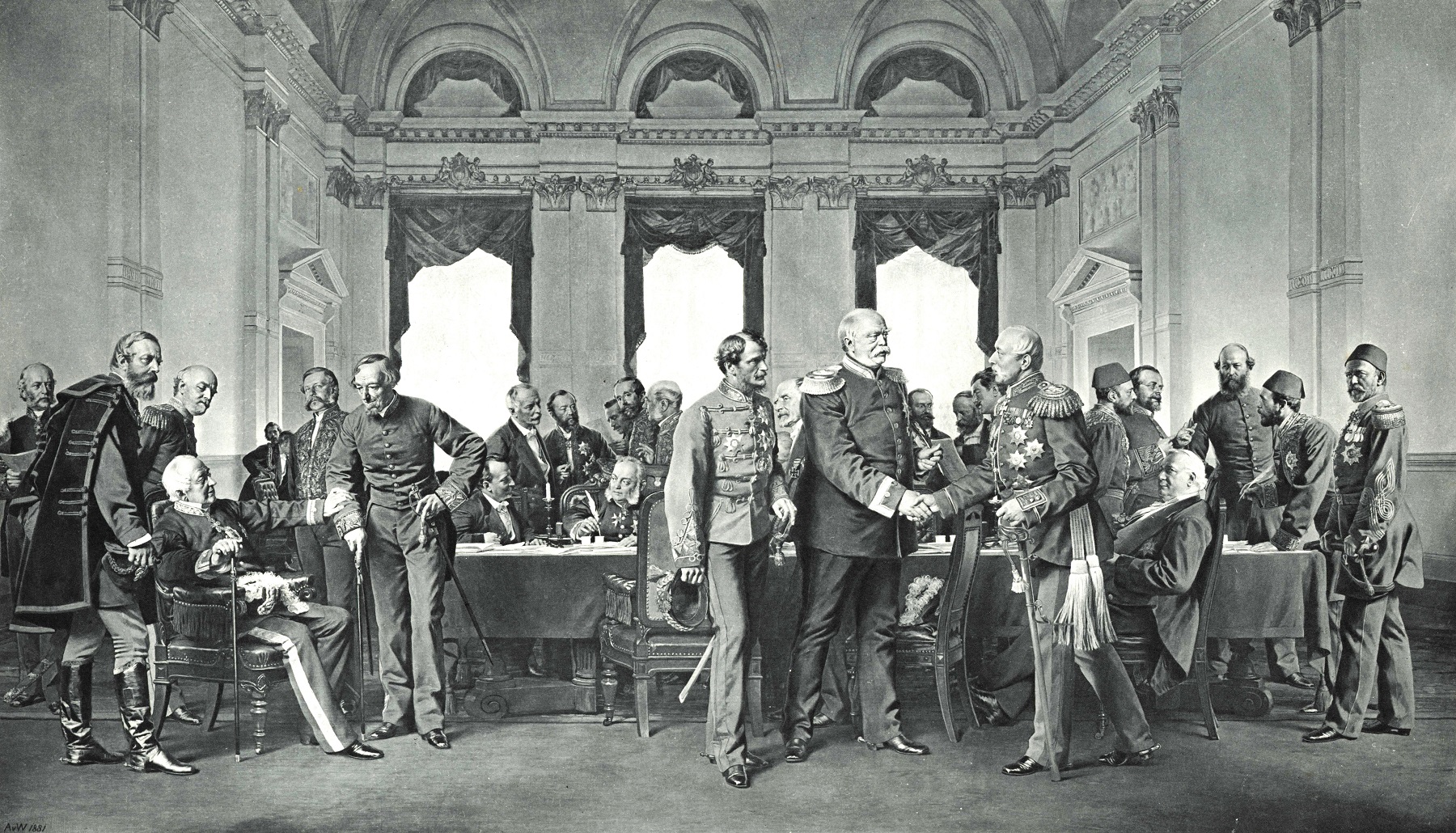
In 1877-1878, a new Russo-Turkish War broke out, leading to the disintegration of the Ottoman Empire in the Balkans. The Congress of Berlin in 1878, led by Bismarck, redrew European borders, granting formal independence to Romania, Serbia, and Montenegro, as well as autonomy to Bulgaria, the cession of Cyprus to Great Britain, and Austrian control over Bosnia.
The Berlin Conference, organized at the behest of the powerful Bismarck and France between 1884 and 1885, formalized the «Scramble for Africa» institutionalizing British, French, German, Belgian (which annexed the Congo Free State), and Portuguese colonial exploitation. Years earlier, in 1876, Queen Victoria of England (1819-1901) had been proclaimed Empress of India. European colonialism in all its dimensions.
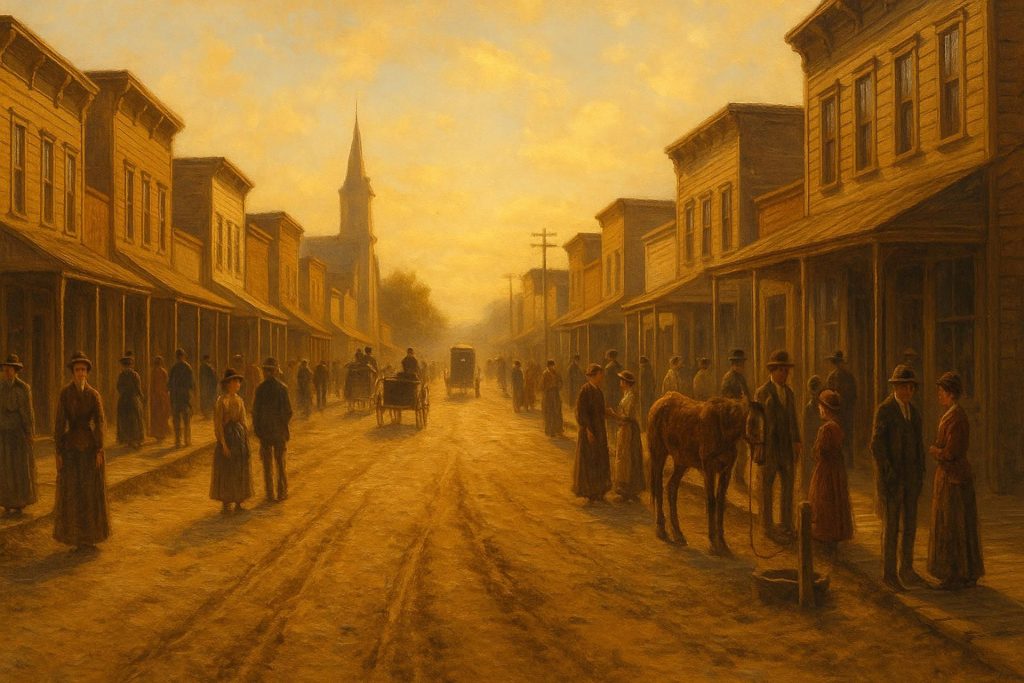
In America, the reconstruction of the United States takes shape, lasting until the late 1870s, definitively leaving the Civil War behind. This period is marked by urbanization, European immigration, and economic expansion, considered a Golden Age, in the words of local writer Mark Twain (1835-1910). This era will continue into the early 20th century, propelling the country to global leadership through its industrialization.
To the south, in Argentina, the Conquest of the Desert culminates in 1879, leading to the integration of its territory. The federalization of Buenos Aires the following year consolidates a nation that will soon integrate into the global agricultural export market. Between 1879 and 1884, the War of the Pacific took place, pitting Chile against the alliance formed by Peru and Bolivia, reconfiguring the borders of South America, leaving the latter country landlocked and granting Chile control of the valuable nitrate deposits in the Atacama Desert.
The Industrial Revolution deepened with the expansion of borders and the bringing of distant lands closer together, integrating the global economy with the massive advance of transcontinental railway networks (in the U.S., Europe, and South America) and steamship transport, facilitated by the global expansion of industrial steel production.
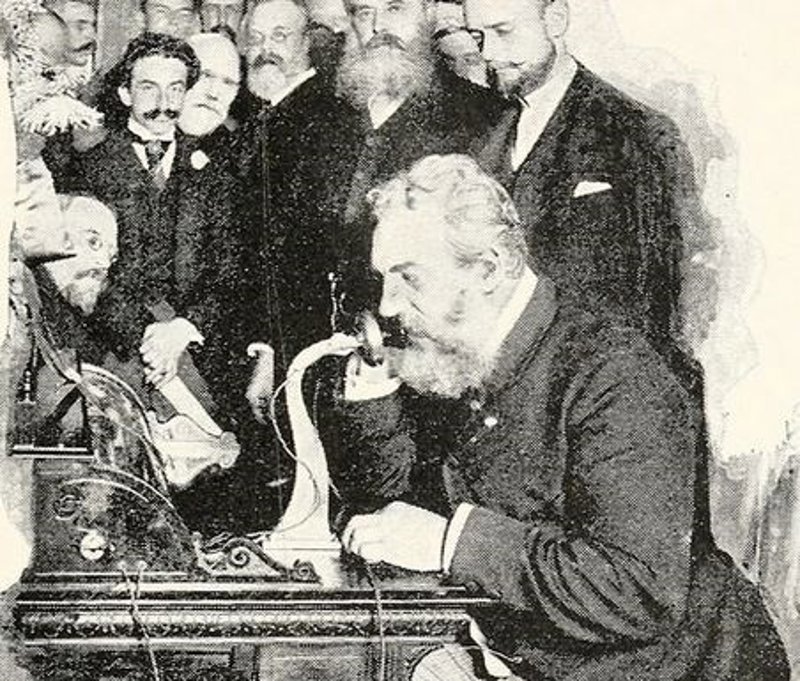
Technological transformations intensified. In 1876, the Scotsman Alexander Graham Bell (1847-1922) patented the telephone, revolutionizing long-distance telecommunications; in 1879, the American Thomas Edison (1847-1931) perfected the long-lasting incandescent light bulb, paving the way for the mass electrification of cities and industries; and in 1885, the German Karl Benz (1844-1929) built the Motorwagen, considered the first automobile powered by an internal combustion gasoline engine. Louis Pasteur (1822-1895) developed the rabies vaccine in 1885, laying the foundations of modern microbiology, along with the research of the German Robert Koch (1843-1910), who discovered the tuberculosis bacillus in 1882.
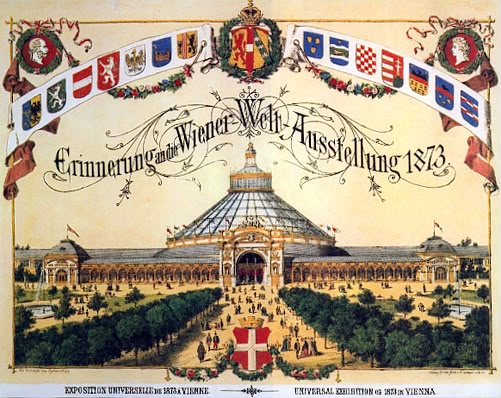
The achievements of modernity were celebrated at World’s Fairs and International Expositions, including the 1873 Vienna Exposition (which featured a chess tournament as an associated event), the first of its kind held in the increasingly powerful Central Europe. Across the ocean, an exposition was held in Philadelphia in 1876, commemorating the Centennial of U.S. independence. In 1878, Paris hosted an exposition, demonstrating the country’s recovery after its defeat against Prussia. And in 1880, the Exposition reached the Southern Hemisphere, taking place in Melbourne, Australia, showcasing a nation engaged in wool production and the gold rush. Finally, in this period, the 1885 Antwerp Exposition was held, focusing entirely on maritime trade and international navigation.
In 1874, the first Impressionist Exhibition was held in Paris, a new movement that acquired its name from the work of the Frenchman Claude Monet (1840-1926), entitled Impression, Sunrise (Impression, soleil levant, in French), painted in Le Havre in 1872. Works by Monet and his compatriots Pierre-Auguste Renoir (1841-1919), Edgar Degas (1834-1917) and Camille Pissarro (1830-1903), an artist of Danish origin, were presented, definitively breaking with the canons of traditional academic art, by not only trying to paint things as they are, but how light and the human eye perceive them in a fleeting instant.
In 1883, the first part of Thus Spoke Zarathustra by Friedrich Nietzsche (1844-1900) was published, reflecting the profound philosophical, existential, and moral crisis of European modernity at the end of the 19th century. There, the author develops the idea of nihilism, introducing the concept of the first man, the creator of values, not as a project, but as an anti-project, the absence of any project, in the context of an amoral state and the creation of new values that can be interpreted as the beginning of the path toward the ideal of the Übermensch (Superman):
«Innocence is the child, and forgetfulness, a new beginning, a game, a self-rolling wheel, a first movement, a holy Yea. Aye, for the game of creating, my brethren, there is needed a holy Yea unto life: ITS OWN will, willeth now the spirit; HIS OWN world winneth the world’s outcast».

Central Europe, with a unified Germany as its main driving force, was reconfigured and empowered during this time. Its political influence extended to the realm of ideas and cultural expressions. Similarly, chess underwent a transformation, and it is no surprise that many of the emerging talents came from this region.
This was the era of the dominance of German, Polish (a territory that would remain part of the Russian Empire for a considerable time), and Austro-Hungarian (an empire that also included Czechs, Slovaks, and Romanians) chess players, whereas in the past, especially in the first half of the century, the central focus had been primarily on France and England.
These were new times for a world embarked on a dynamic of integration and aspirations for progress.
CHESS IN THE YEARS 1871/1885
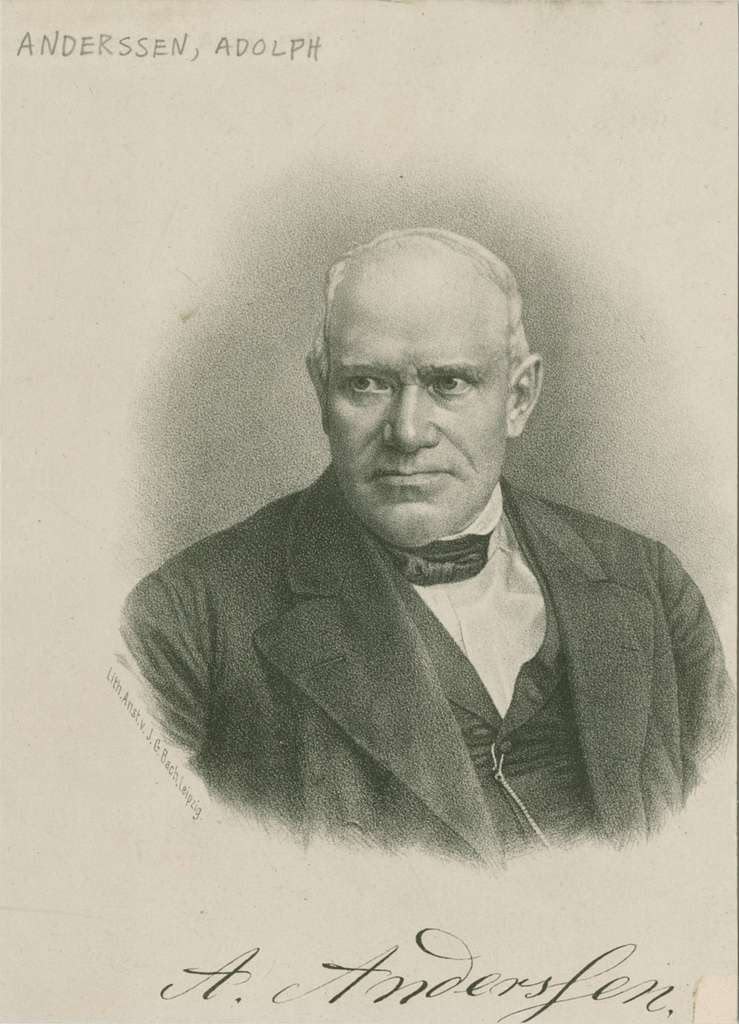
Although they were informal games, a match took place in Berlin in 1871 between Johannes Zukertort (1842-1888), born in Lublin, Poland (then part of the Russian Empire), and the German Adolf Anderssen (1818-1879), born in Breslau (nowadays, Wroclaw, too in Poland). Zukertort was already a veteran in his distinguished career, and the match resulted in a 5-2 victory, a sign of the changing times. Anderssen, on the other hand, triumphed in a tournament in Leipzig, the first Congress of the Mitteldeutscher Schachbund (Central German Chess Federation), after a tiebreaker with his compatriot Samuel Mieses (1841-1884), with whom he had shared the lead in the tournament.
Meanwhile, Wilhelm Steinitz (1836-1900), born in Prague (Austro-Hungarian Empire), confirmed what he had previously hinted at, establishing his dominance on the world stage by winning the 1872 London tournament, the Third British Congress, with a two-point advantage over the local player Joseph Blackburne (1841-1924). Zukertort, a newcomer to the British circuit, would soon become Steinitz’s main rival. In fact, they faced each other in a match in London in this year, in which Steinitz clearly defeated Zukertort nine to three, with seven wins, one loss, and four draws.

GAME FROM THE 1872 LONDON TOURNAMENT ANALYZED BY IM ALEJO DE DOVITIIS
Also recorded that year were several telegraph matches: in Australia, demonstrating that technology allowed for shortening distances across a particularly vast territory, Sydney played Brisbane, and with Adelaide and Melbourne, while in the British Empire, Edinburgh faces Glasgow, and this city also faces London.
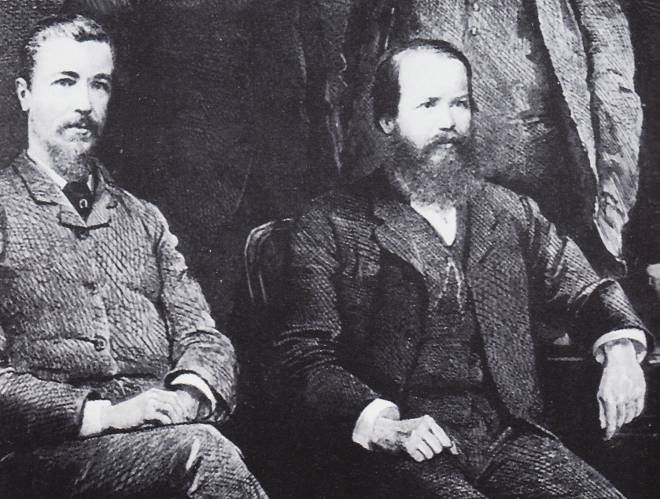
In the 1873 Vienna tournament, Steinitz reaffirmed his dominance, defeating Blackburne 2-0 in a tiebreaker. Blackburne and Steinitz had tied for first place in the regular season, during which Englishman had actually beaten his esteemed rival in two of the three matches played. It was becoming increasingly clear that Steinitz was applying his new strategic ideas, as seen in a game where he maintained the chain of white pawns on dark squares intact. This was demonstrated at the Grand Exhibition held in the imperial capital. Anderssen took third place.
GAME FROM THE VIENNA TOURNAMENT 1873 ANALYZED BY IM ALEJO DE DOVITIIS
Furthermore, this year, in a match played in Vienna, the German Ludwig (Louis) Paulsen (1833-1891) defeated Steinitz 3-2. There were also, as was customary, telegraph matches in Australia, with Sydney playing Brisbane and Melbourne, and two more in Canada: Toronto vs. Seaforth and Ottawa vs. Cobourg.
In 1874, the Third Chess Congress was held in Chicago, with the Scottish-born George Mackenzie (1837-1891), who had settled in the country, achieving success. In 1875, in St. Petersburg, Szymon Winawer (1838-1919), a Pole (then part of the Russian Empire), defeated the Russian Ilya Shumov (1819-1881) 5-2 in a match.
In 1876, Steinitz, overwhelmingly defeated Blackburne in a match in London, winning seven games without conceding a single draw. In Leipzig, Paulsen defeated Anderssen in another match, 5.5-4.5. In the Second German Tournament of the central region, in this same city, Anderssen shares first place with two other players, winning in the tiebreaker, with Paulsen relegated to fourth place.

In 1877, at the German Chess Congress organized in Leipzig by the Westdeutscher Schachbund (West German Chess Federation), Paulsen emerged victorious, undefeated (seven wins and four draws), followed by Anderssen (in whose honor the tournament was held, a testament to the recognition he deserved) and Zukertort, both half a point behind the winner.
GAME FROM THE 1877 LEIPZIG TOURNAMENT ANALYZED BY IM ALEJO DE DOVITIIS
In a match in Leipzig, this year, Paulsen defeated Anderssen 5.5 to 3.5, while in another one in London, Blackburne and Zukertort drew 1-1. The Russian Mikhail Chigorin (1850-1908) won a tournament in Saint Petersburg.
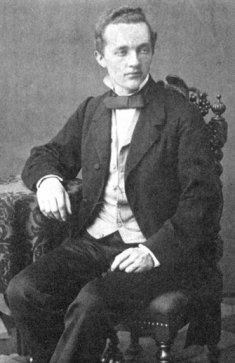
In 1878 in Paris, at another Universal Exposition, with Steinitz still deepening his studies and developing his new ideas without participating in tournaments since 1873, it was Zukertort who emerged victorious, establishing himself as Steinitz’s main rival. He achieved this in a second tiebreaker (the first ended in a draw), winning both games against Winawer, with whom he had shared the lead. In the regular tournament, they had each won one game against each other. Blackburne finished third, two points behind the leaders, while Anderssen was relegated to sixth place among the twelve participants.
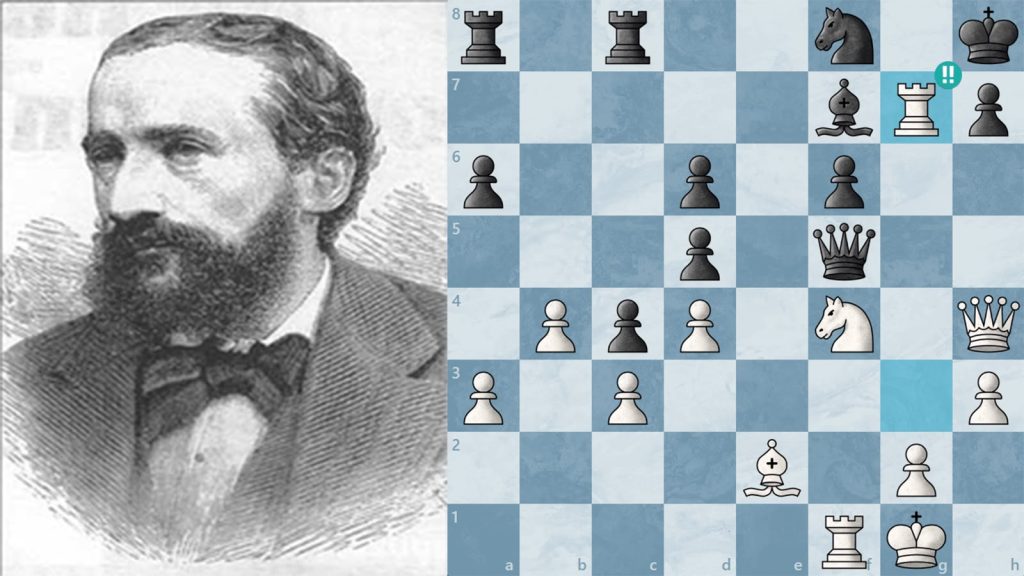
In Frankfurt, this year, at the twelfth Congress of West Germany, Paulsen took first place, followed by the Elovak Adolf Schwarz (1836-1910), with Anderssen completing the podium. At the First German Congress, organized by the Deutscher Schachbund (DSB) in 1879 and held in Leipzig, Berthold Englisch (1851-1897), born in Silesia (Austro-Hungarian Empire), emerged victorious, followed by Paulsen. Englisch also shared the lead in the 1880 Wiesbaden tournament with Blackburne and Schwarz. In a competition in Saint Petersburg, the local player Semyon Alapin (1856-1923) and Chigorin were victorious.
GAME FROM THE 1880 WIESBADEN TOURNAMENT ANALYZED BY IM ALEJO DE DOVITIIS
In 1880, seeing that chess was expanding to new horizons, a six-team tournament was held in Rio de Janeiro, Brazil, with the Portuguese player (and renowned musician) Arthur Napoleão dos Santos (1843-1925) emerging victorious.
In 1881, Blackburne, with a commanding three-point lead, triumphed at the Second DSB Congress in Berlin, ahead of Zukertort, while Winawer and Chigorin tied for third place. That year, in London, a match was held between Zukertort and Blackburne, which the former won after seven victories and two defeats; five draws were recorded but not counted in the standings; and another match saw Blackburne defeat the Hungarian Isidor Gunsberg (1854-1930) 8.5 to 5.5. And at the beginning of the year, in a tournament that had begun at the end of the previous year, Alapin and Chigorin shared another victory in Saint Petersburg.
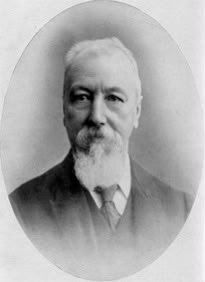
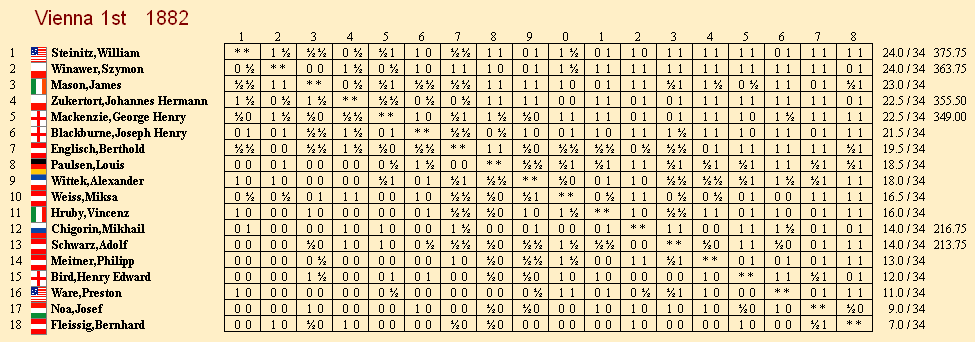
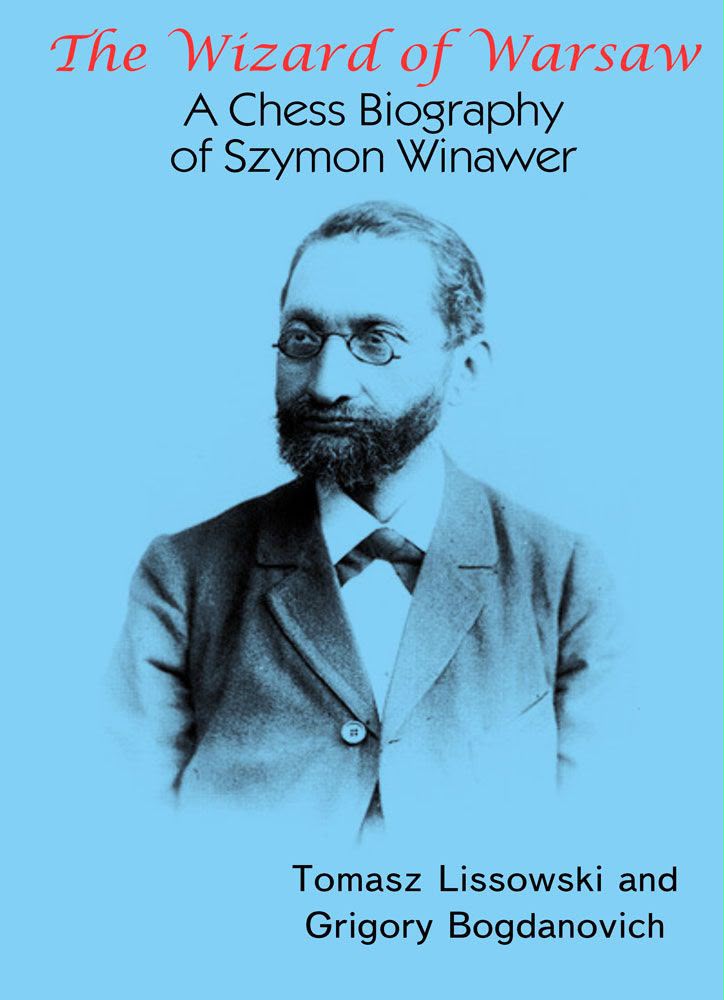
In 1882, Steinitz made his return, which took place in the context of a grueling double round-robin tournament, with. each player had to play thirty-four games. He shared the title with Winawer. The Irish (later American) James Mason (1849-1905) finished one point behind, while Zukertort came in fourth. In the head-to-head match, Zukertort defeated Steinitz 1.5 to 0.5, ending his rival’s twenty-five-game winning streak. It is considered one of the most important tournaments in history, as it featured the eight best players of the time.
In London 1883, however, it was Zukertort who triumphed, and decisively so (scoring twenty-two points out of twenty-six), over Steinitz, who finished three points behind the winner. Blackburne completed the podium, with Chigorin emerging in fourth place, having defeated Steinitz in both matches. Thus, the rivalry for the title of best in the world between the top two players was established, that would be resolved in 1886 with the first World Championship match. For the time being, in this competition, Zukertort had one victory and Steinitz one in their head-to-head encounter. A very significant event in this rivalry occurred on June 23rd at the Criterion Restaurant in Piccadilly, London, when, during the gala banquet that concluded the event, an official toast was proposed with the phrase: «To the best chess player in the world!» causing both players, very convinced of their own merits, to stand up in unison to thank for the tribute.

GAME FROM THE LONDON 1883 TOURNAMENT ANALYZED BY IM ALEJO DE DOVITIIS
In that same year, the Third DSB Congress was held in Nuremberg, resulting in a victory for Winawer, with Blackburne half a point behind and Mason in third place. In the following edition of this tournament, in 1885 in Hamburg, Gunsberg finished half a point ahead of Blackburne, Englisch, Mason, and two emerging figures: the Hungarian Miksa Weisz (1857-1927) and the German Siegbert Tarrasch (1862-1934), the latter of whom would have a particularly significant impact in the future.
GAME FROM THE 1885 HAMBURG TOURNAMENT ANALYZED BY IM ALEJO DE DOVITIIS
In summary, while the presence of other prestigious players is evident, such as Paulsen (who remained remarkably active), Neumann, Mason, Blackburne, Winawer, Chigorin, and, with the emergence of Gunsberg and Tarrasch, among others, Steinitz confirms what had been hinted at in the previous period, particularly when he defeated Anderssen in a match played in London in 1866, a match that marked the end of one era and the beginning of another.
However, as the years passed, Zukertort appeared, displacing Steinitz from his dominance in London and threatening his hegemony. Steinitz, who withdrew from the scene for a somewhat extended period, was dedicated to studying the game in depth, seeking definitive improvement. Upon his return to competition, he solidified his metamorphosis, leaving the romantic player behind to embrace the strategic one. He settled in the USA, seeking new horizons in his final home.
The clash of styles was that Zukertort remained characterized by the ideas of the past, and world preeminence would be decided against Steinitz in 1886, a pivotal year in chess history, when the first world champion was crowned, definitively establishing the model that, from then on, would prevail in the world of chess.
Moreover, and in the inevitable generational shift, it was a period of great losses, as the American Paul Morphy (1837-1884), the Englishman Howard Staunton (1810-1874), the Frenchman Pierre de Saint-Amant (1800-1872), and two figures who maintained a high level until their passing, Anderssen and Paulsen, all died. On the bright side, new great players are welcomed, especially the Polish Akiba Rubinstein (1880-1961) and the Austrian Karl Schlechter (1874-1918).
Furthermore, a providential event will occur. The Prussian Emanuel Lasker (1868-1941), at the end of this period, still in his adolescence, had developed a passion for chess since settling in Berlin, which seemed to distract him from his studies. Therefore, in 1885, he was sent to the small town of Landsberg an der Warthe (present-day Gorzów Wielkopolski, Poland) to concentrate on obtaining his secondary school diploma. However, fate, which always has surprises in store, will lead him to meet the president of the local chess club and his mathematics teacher, Georg Kewitsch (1843-1936), who will guide the young man along both paths: that of mathematics and that of chess.
POWERFULNESS OF THE PERIOD’S TOP CHESS PLAYERS
Let’s see who are considered the two best players each year according to the retrospective rating systems, noting that in the case of EDO Historical Chess Ratings, the ratings are annual, while for Chessmetrics they are monthly; therefore, in this case, the ratings for December of each period were used.
THE TWO BEST PLAYERS EACH YEAR ACCORDING TO EDO HISTORICAL CHESS RATINGS
| Year | 1st Place | 2nd Place |
| 1871 | Wilhelm Steinitz | Adolf Anderssen |
| 1872 | Wilhelm Steinitz | Adolf Anderssen |
| 1873 | Wilhelm Steinitz | Johannes Zukertort |
| 1874 | Wilhelm Steinitz | Johannes Zukertort |
| 1875 | Wilhelm Steinitz | Johannes Zukertort |
| 1876 | Wilhelm Steinitz | Johannes Zukertort |
| 1877 | Wilhelm Steinitz | Johannes Zukertort |
| 1878 | Wilhelm Steinitz | Johannes Zukertort |
| 1879 | Wilhelm Steinitz | Johannes Zukertort |
| 1880 | Wilhelm Steinitz | Johannes Zukertort |
| 1881 | Wilhelm Steinitz | Johannes Zukertort |
| 1882 | Wilhelm Steinitz | Johannes Zukertort |
| 1883 | Wilhelm Steinitz | Johannes Zukertort |
| 1884 | Wilhelm Steinitz | Joseph Blackburne |
| 1885 | Wilhelm Steinitz | Joseph Blackburne |
THE TWO BEST OF EACH YEAR ACCORDING TO CHESSMETRICS
| Year | 1st Place | 2nd Place |
| 1871 | Louis Paulsen | Gustav Neumann |
| 1872 | Wilhelm Steinitz | Louis Paulsen |
| 1873 | Wilhelm Steinitz | Louis Paulsen |
| 1874 | Wilhelm Steinitz | Louis Paulsen |
| 1875 | Wilhelm Steinitz | Louis Paulsen |
| 1876 | Wilhelm Steinitz | Joseph Blackburne |
| 1877 | Wilhelm Steinitz | James Mason |
| 1878 | Wilhelm Steinitz | James Mason |
| 1879 | Johannes Zukertort | Louis Paulsen |
| 1880 | Johannes Zukertort | Louis Paulsen |
| 1881 | Johannes Zukertort | Louis Paulsen |
| 1882 | Johannes Zukertort | Joseph Blackburne |
| 1883 | Wilhelm Steinitz | Johannes Zukertort |
| 1884 | Johannes Zukertort | Wilhelm Steinitz |
| 1885 | Johannes Zukertort | Wilhelm Steinitz |
Ranking by Historical Performance – For Prof. Elo
| Pos. | Player | Country / Empire | ELO |
| 1 | Wilhelm Steinitz | Austria-Hungary / United States | 2650 |
| 2 | Siegbert Tarrasch | German Empire | 2610 |
| 3 | Adolf Anderssen | Prussia (Germany) | 2600 |
| 4 | Johannes Zukertort | Poland (Russian Empire) | 2600 |
| 5 | Mikhail Chigorin | Russian Empire | 2600 |
| 6 | Gustav Neumann | Prussia | 2570 |
| 7 | Joseph Blackburne | United Kingdom | 2570 |
| 8 | Isidor Gunsberg | Austria-Hungary / United Kingdom | 2560 |
| 9 | George Henry Mackenzie | Scotland / United States | 2560 |
| 10 | Louis (Ludwig) Paulsen | German Empire | 2550 |
| 11 | Szymon Winawer | Poland (Russian Empire) | 2550 |
| 12 | Miksa Weiß | Austria-Hungary | 2540 |
| 13 | James Mason | Ireland / United States | 2530 |
| 14 | Berthold Englisch | Austria-Hungary | 2520 |
| 15 | Daniel Harrwitz | Prussia / France | 2520 |
| 16 | Johann Löwenthal | Hungary / United Kingdom | 2510 |
| 17 | Adolf Schwarz | Austria-Hungary | 2510 |
| 18 | Semyon Alapin | Russian Empire | 2500 |
| 19 | Ilya Shumov | Russian Empire | 2390 |
Births in the period
| Figure | Year | Country | Main Achievements |
| Anatol Tschepurnoff | 1871 | Finland (Russian Empire) | First grandmaster and leading figure of Finnish chess. Finnish Champion in 1922 and 1931, and winner of the 1st Nordic Chess Championship (Copenhagen 1922). |
| Harry Nelson Pillsbury | 1872 | United States | Dazzling chess genius and blindfold chess phenomenon. Winner of the legendary Hastings 1895 tournament ahead of Steinitz, Lasker, Chigorin, and Tarrasch. |
| Rudolf Charousek | 1873 | Hungary (Austro-Hungarian Empire) | Brilliant romantic-style genius. Winner of Budapest 1896 and Berlin 1897, earning epic victories over Emanuel Lasker. |
| Carl Schlechter | 1874 | Austria (Austro-Hungarian Empire) | Key positional theorist. Contested the World Championship match against Lasker in 1910 (drawing 5–5) and won Vienna 1908 and Hamburg 1910. |
| Grace Alekhine (Grace Wishaar) | 1876 | United States / United Kingdom / France | Visual artist and competitive player in international women’s tournaments; fourth and last wife of Alexander Alekhine. |
| Frank Marshall | 1877 | United States | U.S. Champion for 27 years, formidable attacking player, creator of the Marshall Attack in the Ruy Lopez, and World Championship challenger in 1907. |
| Stefano Rosselli del Turco | 1877 | Italy | Two-time Italian Champion (1923 and 1931), and founder of the magazine L’Italia Scacchistica (1911). Honorary GM in 1950. |
| Celso Golmayo de la Torriente | 1879 | Cuba / Spain | Precocious talent and son of Celso Golmayo Zúpide. Cuban Champion in 1897. |
| Fyodor Duz-Khotimirsky | 1879 | Ukraine (Russian Empire / USSR) | Four-time Kiev champion. Defeated Lasker and Rubinstein at St. Petersburg 1909 and coined the term «Dragon Variation» in the Sicilian Defense. |
| Akiba Rubinstein | 1880 | Poland (Russian Empire) | One of the greatest positional and endgame geniuses in history. Had a monumental 1912 winning San Sebastián, Piešťany, Wrocław, and Warsaw. World War I prevented his scheduled World Championship match. |
| George Thomas | 1881 | United Kingdom | Two-time British Champion (1922 and 1934), outstanding multi-sport athlete, and co-winner of the prestigious Hastings 1934/35 tournament ahead of Botvinnik. Honorary GM in 1950. |
| Alexander Rueb | 1882 | Netherlands | Co-founder and first President of FIDE (1924–1949). Prominent jurist, diplomat, collector, and endgame study composer. |
| Ossip Bernstein | 1882 | Ukraine (Russian Empire) / France | Grandmaster, financial lawyer, and notable elite tactician. Awarded the FIDE Grandmaster title in 1950. |
| Oldřich Duras | 1882 | Bohemia (Austro-Hungarian Empire) | Grandmaster and prolific problem and study composer. Winner of Vienna 1908, Prague 1908, and Wrocław 1912. |
| Carl Ahues | 1883 | Germany / Spain | International Grandmaster of remarkable longevity and German Champion in 1929. Team bronze medalist at the 1930 Hamburg Olympiad. |
| Rudolf Spielmann | 1883 | Austria (Austro-Hungarian Empire) | Master of romantic attack and specialist in sacrifices («The Last Knight of the King’s Gambit»). Winner of Semmering 1926 and author of The Art of Sacrifice in Chess. |
| Frederick Yates | 1884 | United Kingdom | Six-time British Chess Champion (1913, 1914, 1921, 1926, 1928, and 1931). Fierce international competitor who defeated World Champions such as Alekhine and Capablanca. |
| Eugene Znosko-Borovsky | 1884 | Russia / France | Master, celebrated literary critic, and prolific pedagogical author. Scored notable victories over Capablanca and Rubinstein, and authored classics on the middlegame. Mentor at the 1924 Paris Tournament of Nations. |
| Milan Vidmar | 1885 | Slovenia (Austro-Hungarian Empire / Yugoslavia) | One of the strongest elite players of the early 20th century, recognized Grandmaster (1950), and Chief Arbiter of the 1948 World Championship. |
| Karel Treybal | 1885 | Bohemia / Czechoslovakia | Prominent Czech master and military judge. Represented Czechoslovakia in three Olympiads (team silver in Prague 1931) and respected opponent of the international elite. |
| Edward Lasker | 1885 | Germany / United States | Master, prolific author, and engineer. Immortalized by his famous attacking game against Sir George Thomas in 1912, chasing the king all the way to g1. |
Deaths in the period
| Figure | Year | Country | Historical Relevance |
| Pierre Charles Fournier de Saint-Amant | 1872 | France | Leading French chess master following the de Labourdonnais era. Headed the Parisian elite at the Café de la Régence and played the historic 1843 match in Paris against Howard Staunton. |
| Carl Jaenisch | 1872 | Russia / Finland | Fundamental theorist and mathematician. Co-developed the early Petroff Defense and the Schliemann-Jaenisch Gambit in the Ruy Lopez; author of Analyse nouvelle des ouvertures (1842–1843). |
| Howard Staunton | 1874 | United Kingdom | Dominant figure in world chess during the 1840s. Creator of the Staunton chessmen standard (the official global pattern), editor of The Chess Player’s Chronicle, and organizer of the London 1851 Tournament. |
| Thomas Wilson Barnes | 1874 | United Kingdom | Outstanding English master of the 1850s. Immortalized by his remarkable score against Paul Morphy during his 1858 London visit. |
| Johann Löwenthal | 1876 | Hungary / United Kingdom | Elite master during the 1850s and 1860s, organizer of the London 1862 Tournament, and prolific newspaper editor. Played major matches against Staunton, Anderssen, and Morphy. |
| John Cochrane | 1878 | United Kingdom (Scotland) | Prominent master and jurist. Introduced the aggressive Cochrane Gambit (1.e4 e5 2.Nf3 Nf6 3.Nxe5 d6 4.Nxf7) against the Petroff Defense and developed key techniques to draw the R+B vs. R endgame. |
| George Walker | 1879 | United Kingdom | Prolific historian, writer, and founder of the Westminster Chess Club. Pioneer of chess journalism in Bell’s Life in London and author of Chess Studies (1844), collecting over 1,000 games of the era. |
| Adolf Anderssen | 1879 | Germany | Premier exponent of Romantic chess, famous for immortal creations (The Immortal Game, 1851, and The Evergreen Game, 1852). Winner of the London 1851, London 1862, and Baden-Baden 1870 international tournaments. One of the best players of his era. |
| Ilya Shumov | 1881 | Russia | One of St. Petersburg’s strongest masters in the mid-19th century alongside Petrov and Jaenisch. Celebrated composer of figurative and allegorical problems inspired by historical events (such as the Crimean War). |
| Gustav Neumann | 1881 | Prussia (Germany) | Top-tier master in the 1860s. Winner of the Dundee 1867 tournament and co-founder of the magazine Neue Berliner Schachzeitung alongside Adolf Anderssen. |
| Daniel Harrwitz | 1884 | Prussia / France | One of the most prominent masters of the mid-19th century and a central figure at the Café de la Régence. Blindfold chess specialist who contested match series against Staunton, Anderssen, and Morphy. |
| Paul Morphy | 1884 | United States | Regarded as one of the greatest natural geniuses in history, the best in his era. During his European tour (1858–1859), he convincingly defeated the leading masters of his era before retiring prematurely from competition. |
| Ernst Falkbeer | 1885 | Austria (Austro-Hungarian Empire) | Theorist, master, and journalist. Immortalized in opening theory by the Falkbeer Countergambit (1.e4 e5 2.f4 d5), one of the most dynamic and historical defenses against the King’s Gambit. |
CHESS IN THE PUBLISHING WORLD
The Dutchman Antonius van der Linde (1833-1897) was extremely prolific during this period. He amassed the largest private collection of chess books during the 19th century and, as an author, would establish himself as perhaps the first scientific researcher of chess in history. His magnum opus is Geschichte und Literatur des Schachspiels (History and Literature of Chess), published in Berlin in 1874 in two volumes. With analytical rigor, and by examining primary sources, he dispels old myths about the game’s origins and records everything relevant in the existing specialized bibliography. In 1865, he also presented De schaakpartijen van Gioachino Greco (The Chess Matches of Gioachino Greco) in Nijmegen, documenting the performance of the great 17th-century Italian player. In 1871, in Berlin, appeared Das erste Jartausend der Schachlitteratur (850–1880), a catalogue of chess literature spanning a millennium containing more than three thousand bibliographic entries; in 1873, Das Schachspiel des 16, a chronicle of chess in the 16th century, also published in Berlin (in Dutch, like the other texts); Het schaakspel in Nederland, a book about the evolution of chess in his country, published in Utrecht in 1875; another from this year, translated from Latin, Spanish, Italian, French, English and German, which is a historical and satirical-critical pamphlet entitled De kerkvaders der schaakgemeente, in which he examines the theoretical dogmas that then predominated in the context of the history of chess; a textbook, published in 1876, entitled Leerboek van het schaakspel (Learning Book of Chess), and Das erste Jartausend der Schachlitteratur (The First History of Chess Literature) and Quellenstudium zur Geschichte des Schachspiels (Source Study of the History of Chess), both from 1881, published in Berlin and in German, the former a didactic manual, and the latter a study on the sources of chess history. The books in his collection transcended the boundaries of time, becoming part of the Van der Linde-Niemeijeriana Library, one of the largest collections of chess books in the world. Furthermore, between 1874 and 1875, after settling in Arnhem, he briefly took charge of the journal of the Dutch Chess Federation, formerly called Sissa, which had been published since 1847, and which was then renamed De Schaakwereld (The Chess World).

Posthumously, the Englishman Howard Staunton’s (1810-1874) Theory and Practice / The Laws and Practice of Chess, the player’s theoretical testament, was published in London in 1876, incorporating an extensive section on the history of chess literature and an updated revision of the laws of the game.

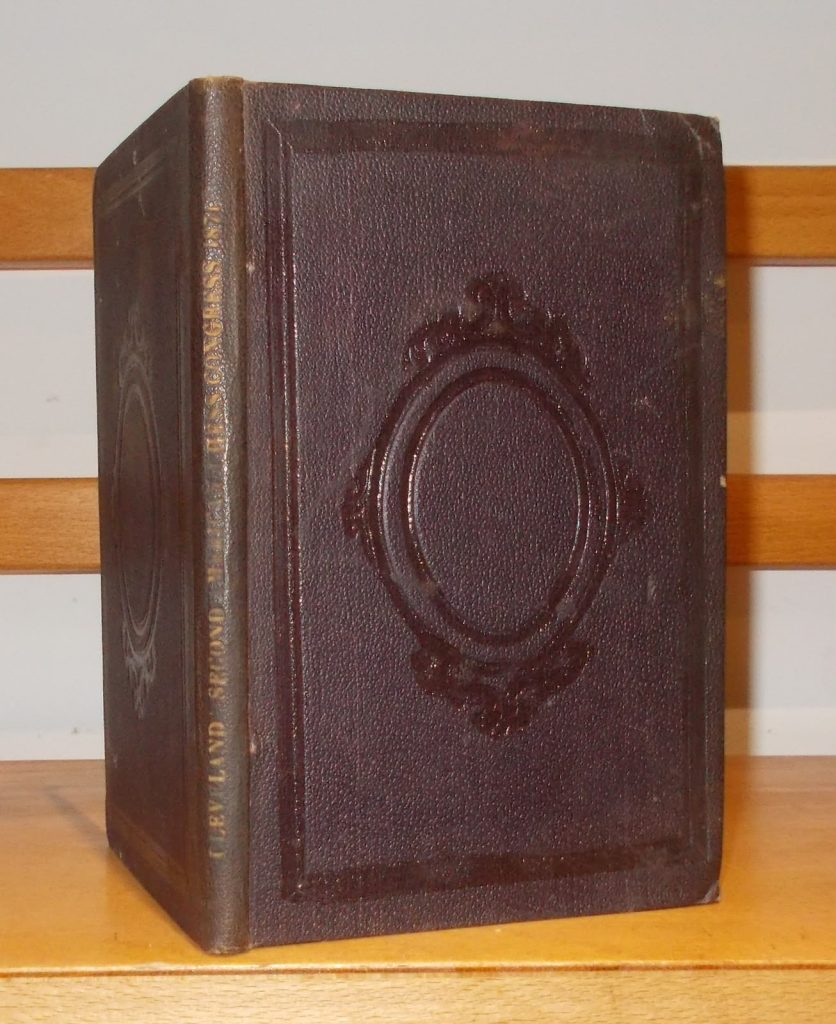
It became common practice, as had happened in some past cases, for the games and circumstances surrounding the major tournaments of the period to be recorded in books. This occurred, for example, with the Second US Congress held in Cleveland in 1871; the First German Congress in Leipzig in 1879; and the London International Tournament of 1883.
In 1885, George Hope Verne’s (1842-1896) Chess Eccentricities: Including Four-handed Chess, and Several Other Games of Chess Playable by Four Persons, and Various Openings and Normal Positions Features was published in London. This work, which benefited from the collaboration of Henry Bird (1829-1908), as its title suggests, goes beyond traditional chess, encompassing games played on various boards (including a cross-shaped board with 3×8 extensions). While related to chess, these games incorporate new pieces, particularly to allow four players to participate. The book documents Bird’s own attempts to expand the traditional board by adding two new pieces: the Guardian (or Centaur, combining the movement of a rook and knight) and the Chancellor (combining a bishop and knight), on a 10×8 board.
Chess columns in widely circulated newspapers became increasingly recognizable, one of the most prominent being that written by Steinitz in the London weekly The Field, between 1873 and 1882. In that same city, after resigning from the other publication, he was responsible for the chess column in The City of London Chess Magazine, between 1874 and 1876. Already in the USA, the Prague-born man founded the International Chess Magazine (ICM) in January 1885, which would eventually publish seven volumes of his articles, concluding in that magazine in December 1891. In these columns, he disseminated his redesigned chess principles, in which strategic considerations now prevailed over tactical ones within the framework of the Modern School. He also promoted the game in the New York Tribune and other New York newspapers between 1885 and 1895.

Zukertort, for his part, who from 1867 to 1871 had been, together with Anderssen, editing the magazine Neue Berliner Schachzeitung in Berlin, after settling in London from 1872, will collaborate first with Westminster Papers, which operated between 1868 and 1879, in which chess and whist activities were recorded, to, in 1879, and until his death in 1888, first found, and then direct, together with the Hungarian-born Leopold Hoffer (1842-1913), The Chess Monthly, the most prestigious technical and analytical magazine in the Anglo-Saxon world during the decade of the 1880s.
In France, and always centered around the activity at the Café de la Régence in Paris, the magazine La Stratégie: Journal d’échecs circulated, running from 1867 to 1940. During this period, it was edited first by its founder, Jean Preti (1798-1881), and later by his son, Numa Preti (1841-1908), both of whom were French. In Germany, meanwhile, the Deutsche Schachzeitung, founded in 1846 and published until 1944, was a prominent publication, during which time it was led by several figures, including the legendary Anderssen.
In 1876, the Cuban Andrés Clemente Vázquez (1844-1901) founded the chess magazine La Estrategia Mexicana: Revista de juegos y problemas de algunos aficionados mexicanos y de los mejores ajedrecistas del mundo (The Mexican Strategy: A magazine of games and problems by some Mexican amateurs and the best chess players in the world), which only lasted until the following year. This event prompted the writer José Martí, his compatriot, who is documented in 1875 in Mexico, to make the following comment in the Revista Universal on July 20, 1876:
«The disciples of La Bourdonnais and Staunton are in luck. As we know, starting next Sunday, a newspaper dedicated solely to chess will begin publication in this capital, printed at the San José de Gracia printing house.»
» Our friend Andrés Clemente Vázquez will edit the newspaper, and several notable foreign chess players and the most distinguished amateurs from the Mexico City Chess Club will contribute. The first thing subscribers to La Estrategia will receive is the match recently played in London for the unofficial world championship between Henry Blackburne, Briton, and Wilhelm Steinitz, Austrian; and the book Morphy’s Games, written in English by Lowenthal and translated into Spanish by A.C. Vázquez and Antonio Fiol.
Our sincerest congratulations to the chess players of Mexico, and may La Estrategia enjoy such a long run that it achieves the same renown as that which Saint Amant and La Rivière have published and continue to publish in the French capital».
CHESS: POLITICS AND SOCIETY
Chess clubs and cafés continued to be the hub of chess activity, both socially and as a sport. The Café de la Régence in Paris, rebuilt and flourishing during the French Third Republic, remained a landmark for chess and culture, a meeting place for artists, intellectuals, and politicians. In London, Simpson’s-in-the-Strand stands out, frequented by Steinitz, Zukertort, and Blackburne, among many other renowned chess players. Berlin boasted the Café Royal and Café Bauer; Vienna, the Kaffeehauskultur; Saint Petersburg, the Domino and the Central; and Rome, the Caffè Greco, thus extending the game to all the major European cities.
In the US, the Café Logelin in New York stood out, where in 1877 chess players met and decided to found the Manhattan Chess Club in New York, a city where the Cosmopolitan Chess Club had been operating since 1872. In the south, in Montevideo, from 1873, enthusiasts gathered at the Confitería Oriental. Meanwhile, in Buenos Aires, where the game had been played at the Café de los Catalanes since 1819, several more clubs appeared, including 24 Billares, Katuranga, and Lloveras.

In terms of clubs, the process of institutionalization accelerated. The old cafés, while maintaining their presence, gradually gave way to the founding of organizations with legal status, headquarters, their own regulations, and membership dues. These new clubs also organized the first modern international tournaments and supported the specialized publications of the time.
Great Britain was the organizational and institutional epicenter of world chess in the Victorian era, with London’s St. George’s Chess Club, founded in 1843, an aristocratic place that served as Zukertort’s base of operations after his arrival in England; it also promoted the 1883 London International Tournament; the City of London Chess Club, founded in 1852, which brought together the middle class, professionals, and the elite of masters (including Steinitz, Blackburne, and Bird); the Westminster Chess Club, very active in the 1870s, famous for publishing the Westminster Papers; and the Metropolitan Chess Club. In the north of England, there were the Manchester Chess Club and the Liverpool Chess Club; in university circles, the Cambridge University Chess Club and the Oxford University Chess Club emerged, holding an annual match from 1873; and in Ireland, the Dublin Chess Club existed from 1867.
In Central Europe, the founding of chess clubs was closely linked to German unification in 1871 and the subsequent creation of the German Chess Federation (DSB) in 1877. The Berlin Chess Club, founded in 1827 in the capital, continued to be the parent institution of Prussian chess. The sport was also cultivated in Leipzig by the Leipzig Chess Club, organizer of the 1879 tournament; the Hamburg Chess Club, which sponsored the Hamburg tournament in 1885; and clubs in Munich, Frankfurt, Nuremberg, and Cologne, among other German cities.
In Vienna, the central hub of the Austro-Hungarian Empire, was the Wiener Schachgesellschaft, which enjoyed the patronage of Baron Albert Salomon von Rothschild (1844-1911) and the support of the Slovak Ignatz Kolisch (1837-1889), who, having given up playing to dedicate himself to finance, never forgot his beloved chess. As a club in Paris, though linked to the Café de la Régence, the Cercle des Échecs operated, hosting the 1878 Paris International Tournament. Also in France were the Cercle d’Échecs de Lyon and the Cercle de Marseille.
In Italy, we have the Circolo Scacchistico Romano, founded after the unification and integration of Rome as the capital of Italy around 1870. Among other locations on the peninsula, the Accademia Scacchistica Modenese (in Modena) and the Circolo di Torino (in Turin) also operated. In the capital of the Russian Empire, the St. Petersburg Chess Club was active, influenced by Chigorin from 1880 onwards; while in Moscow there was the Chess Society. At that time, Poland was part of the Russian Empire, and Warsaw boasted a very active Chess Club, where Winawer, among others, shone.
In 1877, the mentioned Manhattan Chess Club, would become the essential reference point in America, serving as Steinitz’s refuge after his arrival in the USA in 1883 and the organizer/financier of the third phase of the first official World Championship in 1886. The New York Chess Club also operated in that city, within the burgeoning activity in a country that was becoming a power in all areas, which, in chess, in other places, offered from 1885 the Franklin Chess Club, in Philadelphia; from 1880 the New Orleans Chess, Checkers and Whist Club, in New Orleans; and, in the Midwest, the Chicago Chess Club and the St. Louis Chess Club. Canada, for its part, had two recognized entities in the cities of Toronto and Montreal, pillars of the first national organization, the Canadian Chess Association, created in 1872.
In Latin America, in 1880, in Cuba, then under Spanish rule, the Havana Chess Club was founded. With the patronage of aristocrats such as the Cuban-Spanish Celso Golmayo (1820-1898), it financed visits by Steinitz, Chigorin, and Zukertort. In Argentina, although chess was played at the Club del Progreso, the first dedicated chess club appeared in 1882: the Club de Ajedrez de Buenos Aires (Buenos Aires Chess Club), though it was short-lived. From the late 1870s onward, on the other side of the Río de la Plata, the Montevideo Chess Club emerged in Uruguay. Still in the Southern Hemisphere, and now specifically in Australia, the Melbourne Chess Club has existed since 1866. It regularly played against other cities in the country, such as Sydney and Adelaide, which had their own chess clubs.
In the social sphere, a timid step forward in women’s participation occurred in London in 1872 when the Englishwoman Mary Rudge (1842-1919) became the first woman admitted to a chess club, joining the Bristol Chess Club. However, the situation was far from encouraging parity: for example, the Italian-British player Louisa Matilda Fagan (1850-1931) won a tournament in the Indian city of Bombay (now Mumbai) in 1882, defeating all twelve male opponents she faced, but was disqualified…because she was a woman! Furthermore, there were some achievements: the Irish champion Frideswide Beechey (1843-1919), known as Mrs. Thomas Rowland (since the reference to them couldn’t be independent, but had to allude to their husbands, a clear sign of inequality), in 1882 became the first woman to win a prize for chess composition, and was also the first to write a chess column.
Combining spectacle with chess, and always closer to hoax than truth, events involving supposed chess automatons continued to occur during this period. With The Turk now a thing of the past—the one that operated from 1770, first in Europe and then with a controversial American tour, where it was suspected of being a fraud (that a player was inside the device), and which was destroyed in 1854—it was now Ajeeb’s turn. Built by Charles Hopper in 1868, following the same format as the Turk, Ajeeb made numerous appearances at exhibitions in England and the USA during that period. It consisted of a chess cabinet with a hidden player inside, among them the American Harry Pillsbury (1872-1906). In September 1885, in New York, it was seen facing, and indeed defeating, the short-lived US Vice President Thomas Hendricks (1819-1885), in the presence of President Grover Cleveland (1837-1908).

Numerous political, social, and cultural figures have been associated with chess. Among them, the following stand out:
Figures of political and financial power and of culture who cultivate chess
| Name | Dates | Primary Role | Country | Chess Connection |
| Domingo Faustino Sarmiento | 1811–1888 | President of Argentina, educator, and writer | Argentina | In his role as a writer, considered chess in several of his writings. |
| Sir John A. Macdonald | 1815–1891 | 1st Prime Minister of Canada | Canada | Keen player and patron of the Ottawa Chess Club. Frequently played casual games with fellow Members of Parliament and supported tournaments across the Dominion. |
| Otto von Bismarck | 1815–1898 | Chancellor of the German Empire | German Empire | Chess enthusiast since his university years in Göttingen. Regularly played informal games with diplomats and chancellery staff. |
| John Ruskin | 1819–1900 | Art critic and sociologist | United Kingdom | Vice President of the London Chess Club. Maintained correspondence with Wilhelm Steinitz and frequently used chess as an aesthetic and educational metaphor in his essays. |
| Bartolomé Mitre | 1821–1906 | President of Argentina, historian, and military leader | Argentina | Avid player from his youth. Frequently played within his political and intellectual social circles. His wife and sister were chessplayers. |
| Rutherford B. Hayes | 1822–1893 | 19th President of the United States (1877–1881) | United States | Dedicated amateur player since his youth. Played regularly during his White House presidency and recorded casual games in his personal diaries. |
| James A. Garfield | 1831–1881 | 20th President of the United States (1881) | United States | Had a strong passion for mathematics and chess. Played regularly with fellow congressmen during the 1870s and enjoyed solving chess problems published in the press. |
| Vicente Riva Palacio | 1832–1896 | General, Minister of Development, and writer | Mexico | Presided over the Club Mexicano de Ajedrecistas «Moctezuma» during the 1870s, sponsored early Mexican chess publications, and served as the central figure of chess social life during the Porfiriato. |
| Nathaniel Meyer von Rothschild | 1836–1905 | Financier and philanthropist | Austro-Hungarian Empire / United Kingdom | Brother of Albert; a strong amateur who played high-level games and sponsored the European tours of several continental masters. |
| Albert Salomon von Rothschild | 1844–1911 | Head of the Rothschild banking branch in Austria | Austro-Hungarian Empire | The greatest chess patron of the 19th century. Funded the Vienna tournaments (1873 and 1882), granted pensions to masters like Wilhelm Steinitz, and served as president of the Wiener Schachgesellschaft. |
| Sir George Newnes | 1851–1910 | Member of Parliament and publishing magnate | United Kingdom | Major patron of Victorian chess; President of the British Chess Club, sponsor of the Hastings 1895 International Tournament, and founder of the Transatlantic Cable Match Trophy between the US and UK. |
| Prince Leopold, Duke of Albany | 1853–1884 | Prince of the United Kingdom (son of Queen Victoria) | United Kingdom | President and patron of the Oxford University Chess Club. Patron of international tournaments and personal friend of Steinitz and Zukertort. |
| Carlos I of Portugal | 1863–1908 | King of Portugal (from 1889) | Portugal | Enthusiastic player from his youth; collector of chess literature and patron of the emerging club movement in Lisbon. |
| Nicholas II of Russia | 1868–1918 | Last Tsar of Russia | Russian Empire | Active amateur and patron. Funded the Chigorin Memorial Tournament in St. Petersburg (1909) and supported the creation of the Russian Chess Union (1914). |
LITERATURE, ART AND CHESS
From the British writer Lewis Carroll (1832-1898), a very influential book emerged in 1872 regarding the relationship of chess with literature, within the framework of a story that, in the future, would be brought, time and again, to the audiovisual medium. This is Through the Looking-Glass and What Alice Found There, a work in which Alice, upon passing through the looking-glass and immersing herself in another reality (perhaps a dreamlike one?), participates in a human-scale chess game, where she assumes the role of a pawn before ultimately becoming a queen.
Among the chess references, in subsequent moves modeled on a position the author himself, aided by illustrations from the English artist John Tenniel (1820-1914), suggested, various characters appear, alluding to chess pieces. A lazy king is seen remaining in the center of the board until he receives checkmate. The Argentine writer Jorge Luis Borges (1899-1986), et al., commenting on this work, said:
«Alice passes through a looking-glass and arrives in a region of strange beings; many are chess pieces.» that have come to life. In the end, it is revealed that this region is a chessboard and that each adventure corresponds to a chess move. We will never know if Lewis Carroll felt that in this unstable world of figures that dissolve into one another there is a principle of nightmare…”.


Between 1875 and 1877, the Russian Leo Tolstoy (1828-1910), a passionate chess player, conceived his great novel Anna Karenina, in which the game is ever-present. For example, we find the following passage:
«The two men walked on, chatting, and greeting their friends, and passed through all the rooms, — the main room, where men accustomed to one another as partners were playing cards for small stakes; the divan-room, where others were having games of chess, and Sergyef Ivanovitch was talking with some one ; the billiard-room, where, in the bay of the room, around a divan, a gay party, among them Gagin, had gathered and were drinking champagne. They glanced in also at the Infernalnay a, where, at the gambling-table, Yashvin, surrounded by men betting, was already established. With hushed voices, they entered the reading-room, where, under a shaded lamp, a young man with a stern face was turning over the leaves of one journal after another, while near by was a bald-headed general absorbed in reading. They passed quietly into a room which the prince called the Hall of the Wits, and there they found three gentlemen talking politics».
In the paragraph, by mentioning Sergio Ivanovich, a clear allusion is made to the son (1862-1937) of the chess prince Urusov, who was named Sergio Semenovich (1827-1897), to whom a gambit bearing his name is owed, which is verified after the following moves: 1.e4 e5 3.d4 exd4 2.Bc4 Nf6 4.Nf3. As can be seen, chess was a common activity in palace and aristocratic circles in the Russian Empire.

In 1877, the French writer Jules Verne (1828-1905) published his story Hector Servadac, which describes an extremely long chess game played by its protagonists on the surface of the comet Galia, traveling through space. This could be interpreted as the first literary depiction of chess set on a plane beyond Earth’s surface. However, it’s worth noting that in French, servadac, spelled backward, is the word for corpses (cadavers), so rather than outer space, the story might be taking place in the realm of the scatological.

In 1873, the English writer Thomas Hardy (1840-1928) published A Pair of Blue Eyes, in which chess is repeatedly mentioned both as a practice within Victorian society and as a parable of seduction strategies, emotional sacrifices, and social inequalities. Furthermore, technical aspects are alluded to, with a mention of the Muzio Gambit. In this regard, the following passages from the text are significant:
«They did little besides chat that evening, Mr. Swancourt beginning to question his visitor, closely yet paternally, and in good part, on his hopes and prospects from the profession he had embraced. Stephen gave vague answers. The next day it rained. In the evening, when twenty-four hours of Elfride had completely rekindled her admirer’s ardour, a game of chess was proposed between them».
«This was a full explanation of his mannerism; but the fact that a man with the desire for chess&nb sp;should. have grown up without being able to see or engage in a game astonished her not a little. She pondered on the circumstance for some time, looking into vacancy and hindering the play».
«In the drawing-room, after having been exclusively engaged with Mr. and Mrs. Swancourt through the intervening hour, Knight again found himself thrown with Elfride. She had been looking over a chess&nbs p;problem in one of the illustrated periodicals».
“Chess is a bad thing just before bedtime; especially for excitable people like yourself, dear… Don’t ever play late again.’ (…) A man was straightway despatched on horseback to Castle Boterel, and the gentleman known as Dr. Granson came in the course of the afternoon.’ He pronounced her nervous ‘system to be in a decided state of disorder; forwarded some soothing draught, and gave orders that on no account whatever was she to play chess again».
“The game continued. Elfride played mechanically; Stephen, on second thought, considered that checkmating her after so much effort was the cruelest thing to do. What dishonesty had she committed in her compassion? To allow him to checkmate her. A second game followed; and, being herself quite indifferent to the outcome (her level of play was above average for women, and she knew it), she allowed him to checkmate her again. A final game, in which she adopted the Muzio Gambit as the opening, ended with Elfride’s victory on the twelfth move.”
In the social circles depicted, the game was quite appropriate, so it’s surprising that anyone would be unfamiliar with it; moreover, it was discouraged for nervous people and, true to form, could also be a pretext for falling in love. Also interesting is the mention of how gambling was treated in newspapers of the time.

The Peruvian historian Ricardo Palma (1833-1919), in his Tradiciones Peruanas (Peruvian Traditions), which he began publishing in 1872 and finished in 1899, records the history of the first Spaniards who played chess in the Viceroyalty of Lima and, in that context, he will relate the episode that had as its protagonist the Inca Atahualpa (1502-1533) and chess, a game of which he would have been a practitioner, probably the first native of the southern part of the continent, which could also have determined his tragic destiny since, in the framework of a game not his own, he intervened in favor of one of the opponents when the other, who was very displeased, would be one of the captors who would decide his subsequent execution.

The Englishman Thomas Henry Huxley (1825-1895), biologist and fervent defender of the theory of evolution, dedicated several pages to chess when analyzing the scope of «liberal education,» which he did in a work from 1876/1877. For him, the key to this type of education lay in developing in students the aptitudes to: be prepared for the harms of natural disasters; know how to take advantage of them; and prepare them to be put at the service of the workforce. From an individual perspective, and for this education was key, it was about putting the body (nature) at the service of the will.
In this context, he suggests that life and fortune are similar to what happens in chess, where one can win or lose a game. He believes it’s essential to begin by learning the names and movements of the pieces in order to make a gambit or deliver a check. He places such importance on this that he disapproves of parents who don’t teach their children the basics of chess. However, he concludes that the game of life is far more complex than chess, where everyone plays their own game. And in this context, he states:
«The chess-board is the world, the pieces are the phenomena of the universe, the rules of the game are what we call the laws of Nature. The player on the other side is hidden from us. We know that his play is always fair, just, and patient. But also we know, to our cost, that he never overlooks a mistake, or makes the smallest allowance for ignorance.»
For Huxley, those who play well will display overflowing generosity, while those who play poorly will be checkmated, without haste or remorse. Alluding to a famous image by the German painter Moritz Retzsch (1779-1857), depicting a man gambling his soul with Satan, he inversely suggests replacing that figure with that of an angel, where, in any case, everything is gambled for love. In this scenario, it would be preferable to lose to one’s opponent, unlike what happens when facing the denizen of hell. Huxley, always concerned with education, and particularly with those lacking it, was convinced that life was a cosmic chess game, and therefore one had to learn its rules, which were none other than the laws of nature, including those pertaining to human nature. And, failing to do so, as he warned us—a lesson we sometimes forget—would relentlessly exact its price in terms of ignorance.

The German philosopher Friedrich Nietzsche (1844-1900) argued that chess could be a metaphor for New Comedy but not for ancient musical drama, as he expressed in The Birth of Tragedy (1872):
«Thus prepared and enlightened, the masses could now be addressed by the New Comedy, for which Euripides had to a certain extent become the chorus leader; only that this time the chorus of spectators had to be rehearsed. As soon as the chorus had been trained to sing in the Euripidean key, that genre of drama which resembles chess, the New Comedy, rose up, with its continual triumph of cunning and artfulness».

In his 1884 work, The Dilemma of Determinism, the American philosopher William James (1842-1910) sees God as a chess master playing a game of give and take with us, mere novices. We are free to make our own moves, yet the master knows all the possible moves, the probabilities of our choice falling on one move over the others, and the best way to respond to any move we choose to make.

Although it was published in 1913, at least part of the work in Gustave Flaubert’s (1821-1880) Dictionary of Accepted Ideas dates from this period, where this definition, «too serious for a game, too frivolous for a science«, is coined:
«CHESS, GAME OF Simulates military tactics. All the great generals were good chess-players. Too serious for a game, too frivolous for a science»

In 1872, the third edition of the Rubáiyát was published, a work compiling ancient Persian poems, more than a hundred of which are by Omar Khayyám (1048-1131), in a translation from the English by Edward FitzGerald (1809-1883). It is in this edition that the poem alluding to chess appears for the first time; it is poem LXIX, which reads as follows:
«Tis all a Chequer-board of Nights and Days
Where Destiny with Men for Pieces plays:
Hither and thither moves, and mates, and slays,
And one by one back in the Closet lays».

In La Gran Aldea (The Great Village), a work by the Argentine writer (born in Montevideo) Lucio V. López (1848-1894), alluding to the customs of Buenos Aires in a scene set in 1884, he paints a picture of the atmosphere at the Club del Progreso in the city of Buenos Aires, where chess had been played since its founding in 1852. The club was also known for its gatherings with political and intellectual discussions among powerful men of the time.

From the beginning of the period, or rather slightly earlier, from 1870, we have a painting by the French Jean-Léon Gérôme (1824-1904), titled Almées jouant aux échecs (Almées Playing Chess), which belongs to the academic genre, with Orientalist influences. Demonstrating how the game was being incorporated into regions where old-style chess prevailed, a very similar style is shown in the early 1870s in Joueurs d’échecs au Caire (Chess Players in Cairo).

In The Chess Players, by the American Thomas Eakins (1844-1916), a painting from 1876, the artist’s father appears standing, facing two chess masters. The work can be seen at the Metropolitan Museum of Art (MET) in New York.
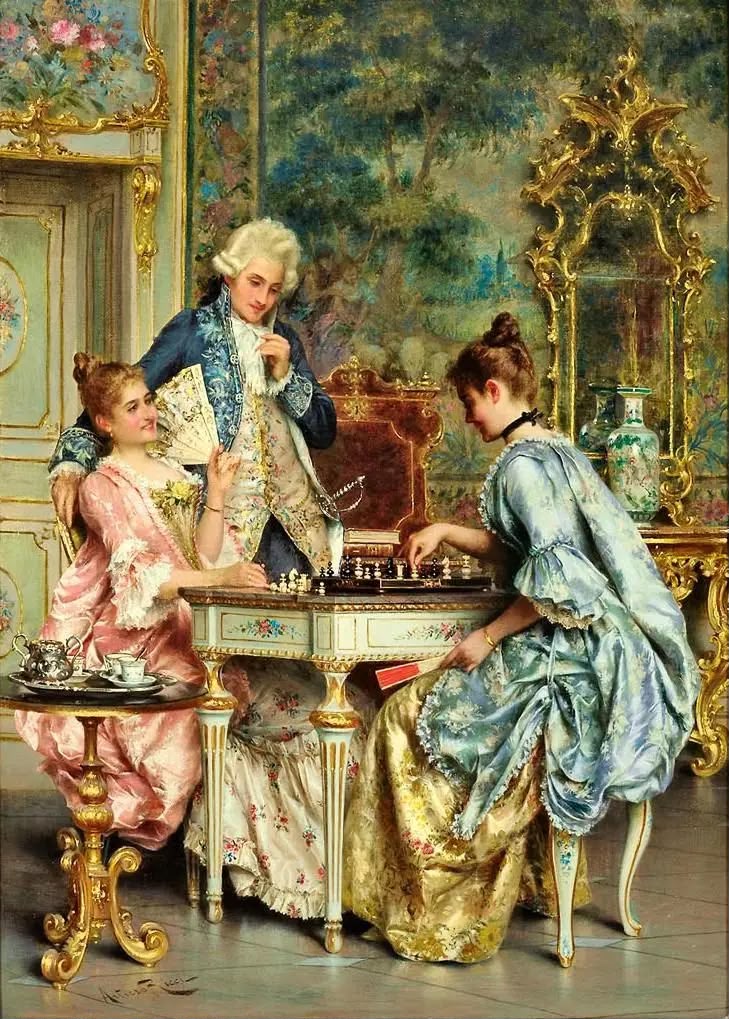
The Italian artist Arturo Ricci (1854-1919) presents two works with chess-related themes in the Rococo style. One is called Il studio dell’artista (Artist’s Studio), which dates from 1884; while the other, more specifically, is titled Il gioco degli scacchi (Playing Chess), and is from a later date.

Chess also had a strong presence in the graphic media during this period, demonstrating its social integration. As an example, we present two images originating in England; the first reflects its practice in the university setting in the 1870s; the second captures the atmosphere surrounding the London tournament of 1883, published in The Illustrated London on May 5th of that year.