Philidor, an exceptional figure of the 18th century, a turning point in the history of chess
By Sergio Ernesto Negri

HISTORICAL CONTEXT
The 18th century, with its focus on a West that remained the primary driver of change, represented the historical hinge between the Old Regime and bourgeois modernity. It was characterized by constant tension between the old absolutist structures and the rise of new economic, philosophical, and social forces. The Modern Age was drawing to a close, giving way to the Contemporary Age.
The hegemony of monarchical absolutism at the beginning of the period gave way to enlightened despotism («everything for the people, but without the people») in monarchies such as those of Frederick II (1712-1786) in Prussia; Charles III (1716-1788) in Spain; Catherine II (1729-1796) in Russia; and Maria Theresa (1740-1780) and Joseph II (1780-1790) in the Austrian Empire. which will not prevent the model from becoming unviable by the end of the century, as a prelude to the revolutions, of modern constitutionalism, of respect for popular sovereignty and of the separation of powers, based on ideas given by the Englishman John Locke (1632-1704) and the Frenchmen Montesquieu (Charles-Louis de Secondat: 1689-1755) and Jean-Jacques Rousseau (1712-1778, of Swiss origin), oriented, respectively and especially, on civil government, the spirit of the laws and the social contract.

If the era had to be defined in one word, it would undoubtedly be revolution: the revolution of ideas, which culminated in the French Revolution of 1789, with the Storming of the Bastille and the Declaration of the Rights of Man, and the eternal principles of Liberty, Fraternity, and Equality, a profound break with the old order, despite its subsequent deviations into terror and the return to imperialism years later with Napoleon (1769-1821), who in 1799 would stage his coup d’état of 18 Brumaire. And the Industrial Revolution, with its epicenter for now in England, marking the path of the new era, with an economic model based on the factory system, the more intensive use of capital, and the transformation of technology through the steam engine and the mechanization of cotton production.
Both revolutions, to which was added a less spectacular, more gradual, and entirely persistent transformation, which will occur in the political system, based on the model of democracies and republican constitutionalism that appears on the scene, having as a point of reference the independence of the USA in 1776.

Two wars would reconfigure power, both internally and geopolitically: the War of the Spanish Succession (1701-1714), with the establishment of the Bourbon dynasty, and the Seven Years’ War (1756-1763), which encompassed territories on four continents, after which Great Britain would emerge as an undisputed maritime power. In social terms, the established power structures of the royal houses and the clergy were joined by the rise of a bourgeoisie that accumulated economic resources, without political concessions, through overseas trade and finance. The peasantry remained bound by feudal obligations in much of Europe, while in Great Britain, the urban proletariat was beginning to take shape.
Beyond what was happening in influential Europe, India witnessed the collapse of the Mughal Empire after the death of Alamgir I (1618-1707) and the subsequent rise of the British East India Company after the Battle of Plassey in 1757, showing how a private trading corporation came to govern millions of people. Meanwhile, under the long reigns of Yongzheng (1722-1735) and Qianlong (1735-1796), China reached its greatest territorial extent, annexing Xinjiang and Tibet and consolidating control over Mongolia, within a context of isolation that went hand in hand with a strong economy and population growth. Japan, ruled by the Tokugawa Shogunate, was also averse to global integration, with some contact with the Dutch and Chinese, developing inwards on a cultural level with expressions such as kabuki theater, haiku poetry and pleasure quarters.
Ottoman control eroded in North Africa and the Near East, especially in Egypt, the Levant, and Baghdad. In Arabia, Wahhabism emerged around 1744 with an alliance between the fundamentalist theologian Muhammad ibn Abd al-Wahhab (1703–1792) and the local emir Muhammad bin Saud (1687–1765), giving rise to the first Saudi state. Meanwhile, the Turks lost Crimea to Russia. In the Americas, in addition to the independence of the United States, the Haitian Revolution erupted around 1791—the first successful slave uprising in history—culminating in abolition and independence. The Spanish Crown reconfigured the territory of America, creating new viceroyalties (New Granada in 1739 and Río de la Plata in 1776), modernized customs, and expelled the Jesuits (1767) to centralize imperial power and maximize tax revenue. Colonial rule was not without indigenous and popular rebellions, such as those led in the Andes by Túpac Amaru II (1738-1781) and Túpac Katari (1750-1781), and the Revolt of the Comuneros in the aforementioned Viceroyalty of New Granada around 1781.
The century consolidated the Scientific Revolution in the West through the mathematical formalization of the universe and the systematization of nature. In this sense, the work of the Englishman Isaac Newton (1643-1727) was perfected; in 1713 he presented the second edition of Philosophiae Naturalis Principia Mathematica, in which he described the law of universal gravitation and established the laws of mechanics that bear his name; and that of the German Gottfried Wilhelm Leibniz (1646-1716), engaged in a debate with Newton regarding the primacy of the discovery of infinitesimal calculus. To these were added figures such as the Swiss Leonhard Euler (1707-1783), who gave mathematics its modern notation and unified mathematical analysis; and the Frenchman Antoine Lavoisier (1743-1794), from whom modern chemistry was born. The Swede Carl Linnaeus (1707-1778), who established the systematic classification of living beings with Systema Naturae in 1735; the American Benjamin Franklin (1706-1790), who invented the lightning rod and made contributions to electromagnetism; the Frenchman Charles-Augustin de Coulomb (1736-1806), who described the law of attraction between electric charges; and the Italian Luigi Galvani (1737-1798), who discovered animal electricity and biophysics.
In music, the Baroque period culminated and the power of the nascent Classicism emerged, with composers of the stature of Johann Sebastian Bach (1685-1750), Wolfgang Amadeus Mozart (1756-1791), Joseph Haydn (1732-1809), Antonio Vivaldi (1678-1741), Georg Handel (1685-1759), Christoph Gluck (1714-1787) and, towards its end, the great Ludwig van Beethoven (1770-1827). While not reaching those heights, and still a great musician, there was also the chess player François-André Danican Philidor (1726-1795), as we will explore later.
In literature, and also closely linked to chess, the French philosophers, not without ties to chess themselves, such as Denis Diderot (1713-1784), Rousseau, Montesquieu, and Voltaire (François-Marie Arouet: 1694-1778), shone, coining the new ideas that would transform reality; the German Johann Wolfgang von Goethe (1749-1832), ushering in Romanticism, and mentioning the chess in Götz von Berlichingen, a drama written in 1773 in which he says, with typical German conciseness: “Chess is a touchstone for the brain.” And his compatriot, the philosopher Immanuel Kant (1724-1804), who, with his Critique of Pure Reason, revolutionized the world of thought. The Irish writer Jonathan Swift (1667-1745), with his Gulliver’s Travels, published in 1726, in an apparently fantastical and more amiable tone, also ventured, albeit in the form of allegory, into political criticism, exposing moral contradictions of human nature.
We are in the midst of a period culturally characterized by the Enlightenment, which enthroned reason, the scientific method, secularism, and the notion of indefinite progress, in opposition to the ecclesiastical dogma of the past. Salons, cafes, and academies expanded the public sphere, and within them chess found fertile ground for practice, widespread adoption, and dissemination, diminishing the prominence of courtly spaces. This occurred within the context of a diverse era, crystallized in monumental projects such as the Encyclopédie, by Diderot and Jean Le Rond D’Alembert (1717-1783), published between 1751 and 1772.
These changes are considered so profound that, in effect, we enter the Contemporary Age, leaving the Modern Age behind. Indeed, the 18th century, more precisely its end, marks the hinge between these two periods, with definitive transformations in the political system (from absolutism to democracy and parliamentarianism); in the social structure (societies more open than those of the past); in the economic model (the rise of industrial and financial capitalism); a clear revolution in transportation; and a secularization of society.

All of this will occur, at least in the West, where chess, as a cultural expression, will also have to adapt perfectly to the new times, no longer only as a courtly pastime and in its intrinsic intellectual reputation, but, from now on, introduced as a social practice, played especially in settings where new ideas were discussed—those that would soon definitively change the landscape.
And Philidor, in this context, with the hierarchy he establishes for the humblest piece, the pawn, will connect with those guiding principles of Liberty, Equality, and Fraternity. Pawns that want to be free, and not mere assistants to the major pieces; pawns that want to be respected, beyond class differences with respect to more powerful pieces; pawns that, as a phalanx, can gather collective strength and, in their own way, propose a revolution in the way the age-old pastime is played.
PHILIDOR, A TURNING POINT IN THE HISTORY OF CHESS
“The game of chess, which everyone knows, and which very few people play well, is of all mental games the most learned, and one in which the breadth and strength of the mind can be most easily observed.”
L’Encyclopédie ou Dictionnaire raisonné des sciences, des arts et des métiers, Diderot and d’Alembert, 1751
Is it possible that one of the greatest exponents of the game of all time, and undoubtedly the best of his era by an overwhelming margin, was not a chess player in the fullest sense of the term? Indeed, this is the case of Philidor, whose primary profession was that of a musician; he was a renowned composer, an activity for which he would also become famous, as he was for his contribution to the ancient game.
His real name was François-André Danican, having born on September 7, 1726, in Dreux, a small town near Paris, a spiritual center linked to Druidic culture. His father was André Danican Philidor (c. 1647-1730), a member of a dynasty of musicians who were celebrated in the 17th and 18th centuries, particularly for their performances at the court of Versailles, having played for King Louis XIV (1638-1715).
Another monarch, Louis XIII (1601-1643), gave the chess player’s great-uncle, Michel Danican (c. 1610-1659), born in Dauphiné (in southeastern France), the nickname Philidor, which would be passed down through generations of musicians in the family. At the time, the way this ancestor played the oboe reminded the sovereign of an Italian musician, born in Siena, called Filidori (or perhaps Filidoro), a name of a sound similar to that of the definitive name that would be given to the French musicians.
PHILIDOR, THE MUSICIAN
Philidor, at the age of six, was accepted as a page at court, four years before the permitted age limit, a fact facilitated by his musical ancestors’ connections. From his arrival, he displayed early talent and a very positive attitude. He joined the choir of the Royal Chapel of Versailles, where he learned music, developing exceptional skills as a pianist and taking his first steps as a composer. His first original work in this capacity was a motet for full choir, written at the age of eleven, which earned the praise of Louis XV (1710-1774) and a reward of five gold louis d’or. Three years later, he left the Choir, settled in Paris, and, at the age of fourteen, began teaching music, embarking on his career as a composer, music copyist, and pianist.

Over time, he would become very prolific and successful in music, particularly excelling as a composer. Stylistically, he would move from sacred music to works in a more modern and Italianate style. His most celebrated work was Tom Jones, considered one of the pinnacles of 18th-century comic opera. It premiered, with little impact at the time, at the Comédie-Italienne in Paris on February 27, 1765. However, after the original libretto was revised, it was performed again on January 30, 1766, this time becoming a great success and bringing him widespread popularity. It was translated into German, Russian, and Swedish. One of the most renowned musicologists, the Belgian François-Joseph Fétis (1784-1871), enthusiastically described it as Philidor’s «chess-like work.» Finally, his genius would be recognized for its two-faced nature: that of a musician and that of a chess player.

Another great success was Ernelinde, Princesse de Norvège, a work premiered in the Salle des Machines of the Tuileries Palace at the Paris Opera on November 24, 1767. The king attended one of the performances and was so pleased that he rewarded the musician with a pension of twenty-five gold louis d’or. Several musicologists consider it the most important opera premiered in that setting between the eras of his compatriot Jean-Philippe Rameau (1683-1764) and the German Christoph Gluck (1756-1787).
Among his extensive musical output, Carmen saeculare, a work from 1779, stands out as an ambitious choral and symphonic work based on the secular poem by Horace (65-8 BC), which garnered great praise both in Paris and in its London performances; Le déserteur, from 1769, perhaps his greatest popular and dramatic success, a moving lyric drama with sentimental and military undertones; and Sancho Pança dans son isle, from 1762, a successful opera buffa based on the work of Miguel Cervantes (1547-1616).

That, in broad strokes, was the great Philidor as a musician. But what about him in the realm of chess?
PHILIDOR AND CHESS
At just eight years old, in his free time, watching the other court musicians practice the game (card games were forbidden), he learned its rules simply by observing. One day, he was offered the chance to replace another player and, to the surprise of those present, he demonstrated his innate talent. A new path opened up for him.
Once in Paris, around 1740, he began frequenting the Café de la Régence where, due to his remarkable skills, he quickly had to play giving his occasional opponents an advantage, sometimes even by a single piece. There, he also developed other skills: giving simultaneous exhibitions against three players and even playing blindfold chess.

One particularly spectacular event occurred when he played without seeing the board against two opponents simultaneously, whom he defeated (and one of them also won in the classical style, but giving him the advantage of a knight), when he was eighteen years old. At one point, he noticed an illegal move a few moves earlier, so he urged his opponent to backtrack, and then won, to the general astonishment of those present.
This way of playing without seeing the board or the pieces would, from then on, become a regular practice for Philidor, one he would display in every city he visited. Particularly in London, some time later, where it would generate income for him, since attendees paid admission to witness what they considered not only a prodigious feat but also, although that assessment contained an inaccuracy, a novelty. But, this wasn’t an unprecedented practice: it’s known, for example, that in the 13th century, in the Italian city of Florence, there was a Saracen player called Buzecca (perhaps Buchecha? Borzaga?), who had already displayed these skills with notable success. Also, in the Arab caliphates, although it wasn’t chess proper, but its earlier version, shatranj, there were renowned players who gave exhibitions without looking at the board. And the same thing happened later, still before Philidor, with some great Spanish and Italian players of the 16th and 17th centuries. But these stories weren’t necessarily on the minds of those who frequented the cafés and clubs of Paris and London in the 18th century.
His first teacher was Kermur sire de Légal (1702-1792), whom he met when the latter was forty years old. This is the same person credited with the authorship of the famous Legal mate, who was in his time the leading figure at the Café de la Régence. Initially, the tutor gave Philidor a rook advantage, although three years later they were playing on equal footing, with the veteran still proving superior to his student. At least for now… For the time being, it was Légal who discovered Philidor’s skill in playing without looking at the board, which he immediately demonstrated by defeating Abbé Chenard, and then many others.
At the end of 1745, Philidor went to the Netherlands to work as a musician, but he encountered difficulties, which he managed to overcome financially by playing chess. He also played Polish checkers, another game he knew, in the cities of Rotterdam, Amsterdam, and The Hague. Games was already allowing him to supplement his income from music. A sign of things to come.
In 1747, he went to London for the first time to a city that would eventually become his second and final home. At Old Slaughter’s Coffee House (opened in 1692), on an unspecified date, he decisively defeated the Syrian Philipp Stamma (1705-1755) in a ten-game match, consistently giving him the advantage from the start, after eight wins, one loss, and one draw. Since it had been established that draws counted in favor of the Aleppo native, the final score recorded in the usual chronicles is eight to two. Unfortunately, no records of these matches have survived.

Given that his rival had been dominating at this chess center, and had also done so previously (around 1737) at the Café Régence in Paris, this triumph led Philidor to be considered the best player of his time. Symbolically, it should also be noted that a European was able to defeat, and with absolute ease, someone born in an Eastern region—territories from which the game’s Arabic, Persian, and Indian prototypes originated. It could be argued that, in addition to continental primacy, from a temporal perspective, the present, at that time, triumphed over the past.
Philidor also defeated Stamma, and all the local rivals, even giving them the advantage of a knight, in a variant of chess called The Duke of Rutland’s Chess. This game is played on a board of ten rows by fourteen columns and, in addition to the standard pieces, includes two crowned rooks (which move like a rook plus the possibility of moving one square diagonally); a queen (which moves like a rook and a knight); a third knight; two more bishops; and, of course, six extra pawns (which on the first move could move up to three squares). This variant was created by John Manners (1696-1779), the third Duke of Rutland, around 1747.

During his stay in England, which lasted approximately a year, Philidor defeated Abraham Janssen (1720-1795), the most renowned local player, four to one in traditional chess. He also easily defeated all the other amateurs he faced, a feat he would repeat later during a visit to Germany, even giving away the knight advantage and the first move in some games. These victories, and those he would achieve upon returning to Paris, definitively cemented his reputation.
However, one question remained unanswered: no games between Philidor and the members of the Modena school, who were prominent at the time, such as Domenico Ercole del Rio (1718-1802) and Domenico Ponziani (1719-1796), were ever recorded. Tassilo von Heydebrand und der Lasa (1818-1899) particularly lamented that Philidor and del Rio had not managed to clash in terms of style and strength by crossing the Alps. At that time, the axis of Paris was oriented towards London, not southwards. While Philidor, due to his remarkable successes, can be considered the best of his time, the German scholar qualifies this assertion, given the scarcity of recorded games played by the Frenchman and the fact that many of them were played blindfolded or with a material advantage, making them more spectacular than accurate. Anyway, these circumstances clearly demonstrate the Frenchman’s great superiority over his rivals, to whom he had to offer concessions in order to play on a more level playing field.
In 1748, upon returning to the Netherlands, he wrote Analyse du jeu des Échecs, or L’analyze des échecs (Analysis of the Game of Chess), a treatise in which he demonstrated his advanced understanding of the game. In this country, a critical mass of subscribers was generated, joined by interested English and French readers, which allowed for the book’s future publication in London in 1749, presented in French.
This work undertaken a popularization effort, for which there were few precedents regarding the reformulated chess in Europe, particularly the Trattato Dell Inventione Et Arte Liberale Del Gioco Di Scacchi (Treatise on the Invention and Liberal Art of the Game of Chess) published in Naples in 1604 by the Italian Alessandro Salvio (1570-1640). From its publication, the Frenchman’s treatise would have a decisive influence and, in fact, would be reprinted in all European capitals, in various languages, contributing to the standardization of chess rules and their dissemination.
In 1777, new expanded versions appeared in English and French (there was also a German version during those years), which included recommendations for conducting a game and the study of various endgames with the typical ways to deliver checkmate or win: queen versus rook (or rook and pawn); rook and bishop versus rook; knight and bishop, and rook, and models for drawing in the following cases were also established: rook versus rook and pawn; queen versus queen and pawn; and knight versus pawn. Additionally, many games are included, among them those he played without seeing the board in matches held in London. Furthermore, the Philidor Defense (1.e4 e5 2.Nf3 d6) was introduced, and, as a deeper and more universal legacy, it is here that the famous notion that pawns are the soul of chess (ils sont l’ame des Échécs, as it reads in the original) is presented.

We are in the presence not only of a comprehensive modern text on the game of chess but also a virtual set of rules, which was immediately adopted by the London Chess Club, the organization in which Philidor played in the last years of his life, particularly from 1775 onwards. From its publication, it would become a source of inspiration and dissemination for the entire chess world. For instance, it would be one of the first books to enter, if not the very first, the Viceroyalty of the Río de la Plata, headquartered in the distant city of Buenos Aires.
It stipulates many conditions that would eventually become canonical (conditions that had existed in the past but were not always uniformly respected), among them the principle of «touch piece, move piece«; the placement of the board with a black square to the left of the first rank; the en passant capture and castling moves, and the fact that the stalemate position implies a draw (previously, at least in England, it meant that the player who stalemated their rival won the game). And automatic draws are established after fifty moves without either player being able to checkmate the other:
“In all game conclusions, when a player seems unable to deliver a difficult checkmate, such as knight and bishop against king, or rook and bishop against rook, etc., at the opponent’s request, 50 moves on each side must be considered for the end of the game: it is declared over and the game is declared a draw.”

Stamma, his rival in London, had published another text in Paris, Essai sur Le Jeu des Echecs (Essay on the Game of Chess), in 1741, in which the algebraic system for notating games was established for the first time. Philidor, when presenting his own text, followed this system.

The chess ideas expressed by Philidor implied a radical change from the way the game had been played previously. The aforementioned concept that pawns are the soul of chess entailed a recognition and a vindication, very much in tune with new sectors that had previously felt oppressed and now wanted to be able to express themselves. Philidor perfectly captured the spirit of the times, a time that was ending, foreshadowing another that would inexorably arrive. His approach, to a certain extent, embodied, from the game itself, projecting itself onto the broader context, a process that aimed at the genesis of radical changes, both on and off the board. If pawns could now be powerful simply by uniting, then sectors of the bourgeoisie and intellectuals, united, could also promote the Revolution.
The chess player and musician traveled between Paris and London, and vice versa: he usually split his summers in France with winters in England, where he went alone. On the island, in addition to local clubs, he played chess at the home of the French ambassador, Duke Gaston Pierre de Lévis-Mirepoix (1699-1757), a great chess enthusiast.
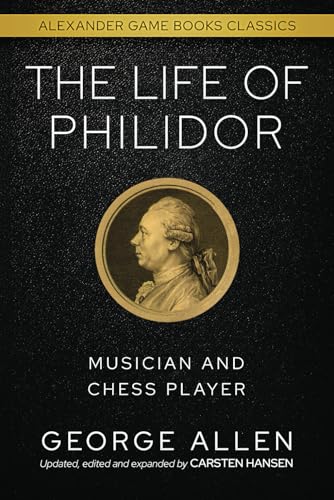
In 1751, he traveled to Germany, and it is well known that the King of Prussia, Frederick II the Great (1712-1786), loved chess. Philidor met him in Potsdam, but they never played, at least according to the American historian George Allen (1808-1876) in The Life of Philidor, Musician and Chess-player. What Philidor did do in Germany, besides performing as a musician, was showcase his talent with spectacular simultaneous chess exhibitions against three opponents without seeing the board.
In that country, he spent more than half a year as a guest of a local prince in the city of Bad Arolsen, before returning to England, where he was met with disappointment. When he gave a performance of his music, doubts were raised about its authenticity, as he was recognized there primarily for his chess skills, not his artistic pursuits. In France, as we know, the opposite was true; he was seen as a musician, and chess was considered a diversion from his main activity.
This tension between the two professions that coexisted in the Frenchman seemed to have been resolved when, for example, in an advertisement published in an English newspaper on December 9, 1753, he stated that his primary study and profession was music, while chess was merely a pastime. However, those who frequented him in the English capital, and some in Paris as well, did not share this view. Looking back, we don’t think so either.
To demonstrate his ability to compose outside the world of chess, Philidor presented his Ode for St. Cecilia’s Day in London. It premiered at the Haymarket Theatre on January 31, 1754, before a distinguished audience member: the great composer German-British George Frideric Händel (1685-1759). However, on that occasion, Händel expressed more admiration for the choir’s performance than for the wind instruments. His ear was not lacking; what he had lost was his sight, a loss that occurred in 1751, and he rarely left his house. Nevertheless, he attended this performance, as he clearly held Philidor in high regard as a musician.
In November 1754, upon returning to his homeland after nine years away (a young man left, a man will return), he suffered another great disappointment when he was rejected for the position of Master of the Chapel Royal. A style that had strayed from the sacred to cultivate Italian and German influences was not well received. Nevertheless, in the world of chess, he would manage to defeat his old master, Légal, in Paris—at the Café de la Régence, no less—who was still considered the best local player. This occurred in a match in 1755, though few details of it survive. What is certain is that, from that moment on, the supremacy of world chess definitively changed hands.
But for the time being, Philidor’s primary focus would remain music, and more specifically, comic opera, of which he was a leading figure, producing one work after another (sometimes even two a year). The first of these was Blaise le savatier, which premiered on March 9, 1759, to considerable acclaim.
Following the chronological sequence, he married Angélique-Henriette-Elisabeth Richer on February 13, 1760. She was the daughter of another composer and sister of three talented musicians, and a renowned singer herself. They had seven children: five sons and two daughters, two of whom died young. He never taught chess to any of them, although several would learn it on their own without achieving any particular distinction. Only Elyse (1776-1819), however, would become an artist, like her parents.
The fourth time he arrived in the English capital was in 1769, intending to stay for a month to visit friends. There he frequented the Salopian Coffee House, founded a year later, and another establishment created in 1774 on St. James’s Street called Parsloe’s, where funds were regularly raised to enable the French player to come to London every year, always alone (his wife and numerous children remained on the other side of the English Channel), between February and June, which he began doing in 1775.
Under these circumstances, with a stay in an England that showed Philidor both respect and affection, he was able to definitively shift his focus from music to chess. Moreover, in London, he began to earn a very good living from his exhibitions. By around 1780, it was believed that chess had become his primary source of income, supporting him and his family.
Another factor influenced Philidor’s favoritism towards chess during this period of his life: in France, the Belgian André Ernest Modeste Grétry (1741-1813) emerged, debuting in Paris in 1768. He began to make an increasingly prominent name in comic opera, gradually shifting the spotlight that had previously been solely on chess.
On May 25, 1782, he played blindfold chess in London against two opponents: the German Count Hans Moritz von Brühl (1736-1809), a very good local player, with whom he drew, and Thomas Bowdler (1754-1785), against whom he lost. The match lasted one hour and forty minutes, during which the Frenchman unexpectedly withdrew, something quite unusual for him.
In the same venue, on May 8, 1783, he faced three opponents in blindfold chess: he defeated Brühl in one hour and twenty minutes; he defeated Mr. Maseres (giving him the advantage of a pawn in addition to the first move) after two hours; and he drew with Bowdler after one hour and three-quarters of play.
PHILIDOR’S GAME ANNOTATED BY IM ALEJO DE DOVITIIS
There are other matches of this kind, some of which Philidor himself records in his book (in the later editions published during his lifetime): those played on May 10, 1788 (three wins, in two of the matches he gave a pawn advantage) and on March 13, 1790 (three wins). In 1788 there were two public simultaneous exhibitions of this type, and in 1789 there were four.
It was evident that the differences between Philidor and his contemporary players were so great that only by granting them such advantages, either by giving them material to move or by playing them without them seeing the board and pieces, could the games become more interesting. However, in this type of exhibition, one could see more spectacle than actual chess, an observation already noted by von der Lasa.
This continuation of meetings, with increasing frequency, stemmed from a very personal and dramatic situation. With the French Revolution, he settled permanently in Great Britain, and the year 1792 proved pivotal, given that from September 2nd to 6th, massacres took place in Paris, in which thousands lost their lives, some accused of being counter-revolutionaries and others simply prisoners.
Philidor, who had initially sympathized with the cause, distanced himself upon witnessing the deviations of the political process. Therefore, in February 1793, upon making his annual visit to England, he decided not to return to his homeland, where rivers of blood were flowing and where he, perhaps, also faced risks. Relations between England and France, once cordial, became strained after the French government executed Louis XVI on January 21, 1793. This act united much of Europe, including Spain, Naples, and the Netherlands, against the Revolution, with Great Britain, a place so frequented by the French chess player and musician, that he joined the First Coalition against France.
Under these circumstances, Philidor appeared, in the eyes of some overly critical observers, to be on the wrong side of a process that was clearly beyond his control. It should not be forgotten that the extremely radical leader Maximilien Robespierre (1758-1794), a chess enthusiast, lived in his native land and, incidentally, had shared more tranquil moments with Philidor at the Café de la Régence. Or not so much, since it is said that he, in a blindfolded game, wanted to cheat with a false move, which was duly noticed by Philidor.
This virtual ostracism of Philidor was an injustice, having been closely associated with the great minds of the Enlightenment, the cultural and intellectual movement that took shape in his country and whose ideas would be of great importance in driving the French Revolution and the American independence movements, from north to south. From the Café de la Régence, he established a particularly close relationship with Denis Diderot (1713-1784), who was one of the subscribers to his book, and Philidor having been the musical tutor of the philosopher’s daughter.
Diderot, at one point, had his disagreements, as he would have preferred that his friend had focused more on music than on gambling. For example, in a letter from 1782, he questioned Philidor’s fondness for playing blindfolded chess, which he considered a «dangerous experiment» since, with it, he could «run the risk of going mad over matters of vanity.» An additional argument was that, with this practice, at least in Paris (London would be different), he didn’t even obtain any financial reward. A somewhat annoyed Diderot, finding his admonition unconvincing, predicted a sad end for his friend, saying that if he continued to prefer chess to music, people might one day say of him: «Here’s Philidor, he’s nothing; he lost everything he had moving small wooden pieces on a board.» How wrong the thinker would be on this point!
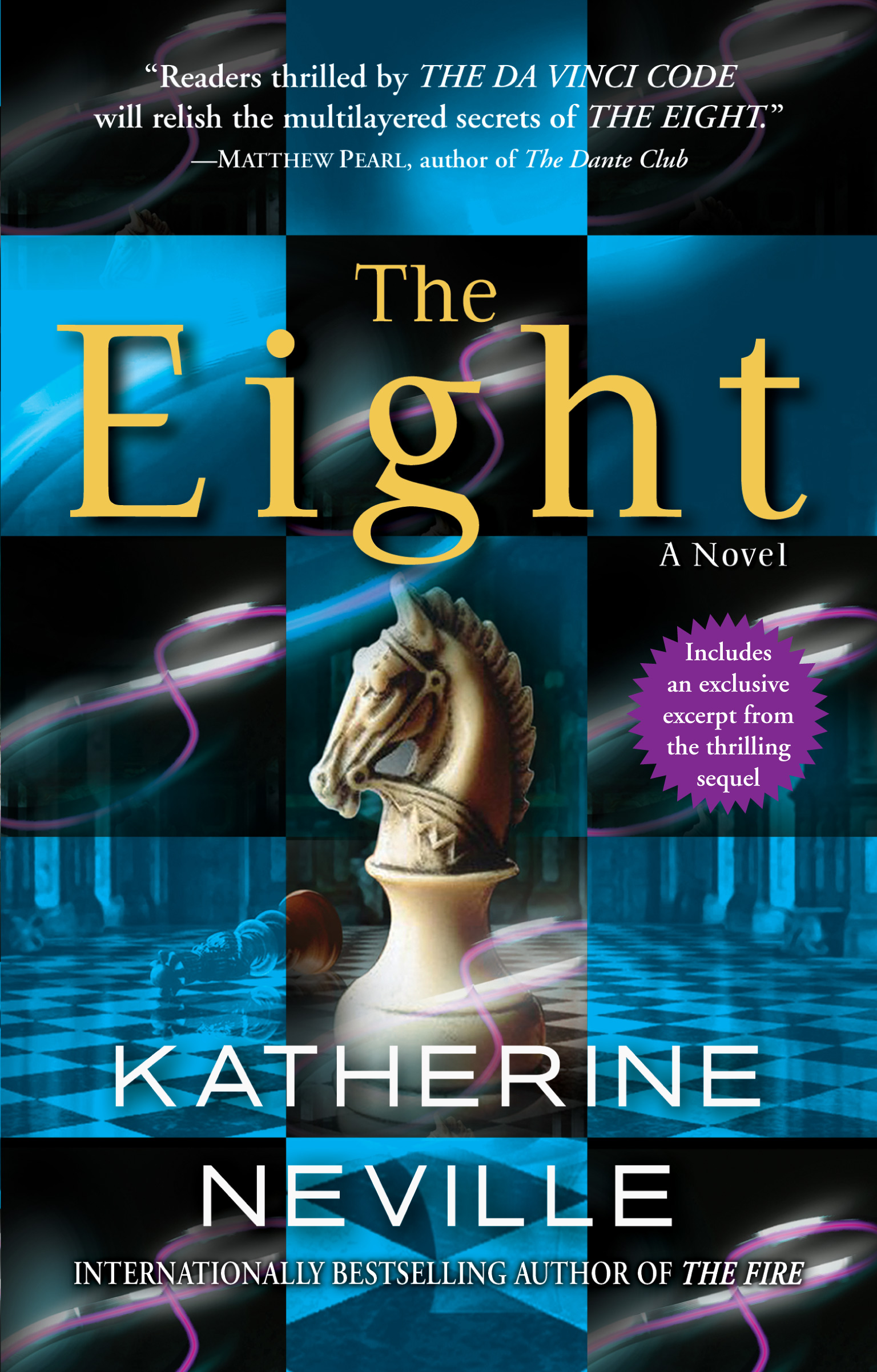
Another philosopher who would play with Philidor in that arena was the Swiss Jean-Jacques Rousseau (1712-1778), an illustrious figure of the Enlightenment, who was also a good musician. Thus, in addition to chess, he would find another point of contact with Philidor in this other field, and Philidor even assisted him around 1745, before he moved to the Netherlands. The great philosopher Voltaire, François-Marie Arouet (1694-1778), was also a friend and patron of Philidor, a relationship fictionalized in the novel The Eight by the American writer Katherine Neville (born in 1945).
The American Benjamin Franklin (1706-1790), in his capacity as a diplomat, while living for a time in Paris, frequented the Café de la Régence to meet Philidor. This occurred in 1781 so that he could have his autograph in a copy of his already famous book. Too, when the American Paul Morphy (1837-1884) visited the Café de la Régence some time later, during his famous European tour in the late 1850s, he noticed, upon looking up, an image in one of the corners that bore a striking resemblance to the great Philidor.
Returning to the chronology of the chess-playing musician’s final years, when the worst of the turmoil in his homeland had passed, after Robespierre fell victim to the guillotine with which he had so often executed his adversaries, Philidor longed to return. However, he could not, as he was officially listed in the records as an émigré, a status assigned to those deemed to have sympathized with or cooperated with the invaders of France. He would have had to navigate a cumbersome process to return, including providing witnesses (and facing ever-present risks). Thus, London would remain, until his dying day, his adopted home.
The last episodes linked to the game occurred when he faced two opponents blindfolded and a third with the board visible, shortly before his death, always at the club located on St. James’s Street, specifically on June 20, 1795; and on June 29, when he played two games with the celebrated English mathematician and physicist George Atwood (1745-1807), to whom he gave the opening advantage and two pawns, ultimately losing one of the games. This is the last known chess record of the great Philidor.
It was in London, the city that had been so fruitful for him, that he would spend his final days, on Monday, August 24, 1795, in complete solitude, lying on a sofa in his final hours. He was suffering from gout and greatly distressed by passport problems preventing him from returning home, where his family and many of his memories remained. The English chess community was informed of the event only on the 29th, so in some chronicles, that day is usually given as the date of his death.

He died, surely overcome with grief, far from a homeland that had fallen into a climate of terror after a Revolution with which he initially sympathized, but which, paradoxically, would later label him a counter-revolutionary. This was he who not only dedicated his life to French art but also, as a chess player, brought his country to the pinnacle of success. This was he who, prophetically, enshrined the concept that pawns are the soul of the game, a statement that could well have been considered a synodic for a movement that, in the political and social sphere, claimed to want to combat absolutism and the prevailing privileges.
Beyond all of this—beyond the accolades he received during his intense and fruitful life, the problems with his homeland in his final hours, and his lonely death—Philidor’s genius must always be acknowledged. A distinction that applies to him doubly, which is quite unusual: he was a pioneer in music, having been the leading figure of comic opera in his time; and he was also, and particularly so, a pioneer in chess, being by far the best exponent of his era and author of an iconic book that enabled the definitive codification and dissemination of the game.
Philidor, the greatest chess player of the 18th century. Philidor, who established a school of thought as a popularizer of the game. Philidor, a watershed moment in the history of chess. Philidor, someone who must be recognized as the starting point of modern chess.
The following works can be consulted on Philidor:
Sergio Negri’s lecture on Philidor in Pamplona, Spain: https://ajedrezlatitudsur.wordpress.com/2026/08/30/conferencia-sobre-philidor-de-sergio-negri-en-pamplona-espana/
A Profile of Philidor The Chess Player-Musician Who Opened the Doors to Modernity: https://ajedrezlatitudsur.wordpress.com/2026/08/30/semblanza-de-francois-andre-danican-philidor/
Philidor and the Intellectuals of His Era: https://ajedrezlatitudsur.wordpress.com/2026/08/30/philidor-y-los-intelectuales-de-su-era/
Philidor Analyzed from an Astrological Perspective by Silvia Méndez
https://ajedrezlatitudsur.wordpress.com/2026/08/30/analisis-astrologico-de-philidor/
THE 18TH CENTURY BEYOND PHILIDOR
From the beginning of the century, we have the case of two Scottish players with the same name, Alexander Cunningham (de Block) (1655–1730) and Alexander Cunningham (1654-1737). The first, a Jurist, who lived in Netherlands, was renowned for his analyses of the King’s Gambit (there is a variation that bears his name, following the sequence: 1.e4 e5 2.f4 exf4 3.Nf3 Be7), who was the teacher and frequent rival of Charles Spencer, the third Earl of Sunderland (1675–1722), one of the most powerful politicians in England, and ambassador in The Hague. The other, was also a Diplomat and a Historian, who played chess, although without particularly excelling at it.
Francis Godolphin, 2nd Earl of Godolphin (1678-1766), and the German Count Hans Moritz von Brüh (1736-1809), who served as a diplomat in England for four decades until his death and was one of the founders (in 1774) of Parsloe’s Chess Club, played chess with Philidor and Stamma in London.
Also from those early years, we have Captain Joseph Bertin (c. 1690 – c. 1736), born in France, who, being a Huguenot, emigrated to England due to religious persecution. He authored the first book in English on the game, The Noble Game of Chess: Containing Rules and Instructions, for the Use of Those Who Have Already a Little Knowledge of this Game, published in 1735, in which he analyzed games, shared concepts (such as piece development and avoiding bringing out the queen early), and studied openings. His work was centered at the Old Slaughter’s Coffee House in London.

Abraham de Moivre (1667–1754), a French mathematical scholar who was also a Hugont, passed most of his life into exile in England dedicated to religious persecution. Be a pioneer in the theory of probability and trigonometry. He was an avid aficionado of the world and, of course, who soon predicted that Philidor would become the best player in the world and a revolutionary figure in the understanding of the game.
Another prominent figure from the first half of the century, and part of the next, came from Aleppo, Syria (part of the Ottoman Empire), someone who settled first in Paris and then in London. This is Philip Stamma (c. 1705–1755), who frequented the aforementioned Old Slaughter’s Coffee House, who introduced algebraic notation, which he contemplated in his book Essai sur le jeu des échecs, published in Paris in 1737 in French, then translated into English in 1745 under the title The Noble Game of Chess, and into German, in Strasbourg, in 1754, under the name Des Arabers Philipp Stamma, gebürtig von Aleppo in Syrien, entdeckte Schachspiel-Geheimnisse (Secrets of the game of chess discovered by the Arab Philipp Stamma, a native of Aleppo in Syria), in which a hundred chess compositions are included following the tradition of the Arabic texts of the shatranj. When in 1747 he played against Philidor in London in the duel we have already discussed, it became clear, despite the renowned skill of the Oriental, who was the best player in the world.

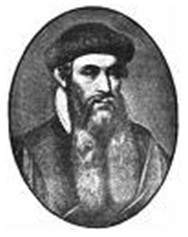

Philidor, with his seminal work Analyse du jeu des Échecs, in which he immortalized the maxim «pawns are the soul of chess» laid the foundations of modern positional strategy, becoming the pioneer of the dominant French school, which had the Café de la Régence in Paris as its focal point. In contrast, the Modenese school, which promoted an aggressive, dynamic style of chess focused on rapid combinations against the enemy king, was prevalent in Italy.
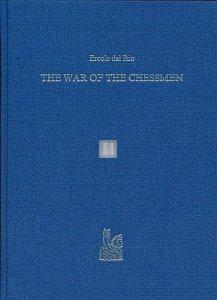
Among these figures, we find Domenico Ercole del Rio (c. 1718–1802), a renowned problemist and tactical player, considered «The Devil Who Could Never Be Defeated,» who published Sopra il giuoco degli Scacchi (On the Game of Chess) in 1750, a treatise presented as the work of an «anonymous Modenese» in which he did not hesitate to criticize Philidor’s ideas, championing the Italian tactical approach.
In 1782 he presented a second text, deepening the ideas outlined in the previous one, and incorporating numerous problems, called La guerra degli scacchi, which would be published posthumously, in 1802, which was lost, until it was located in Cleveland, USA, having its first modern printed version in 1984, under the title The War of the Chessmen.
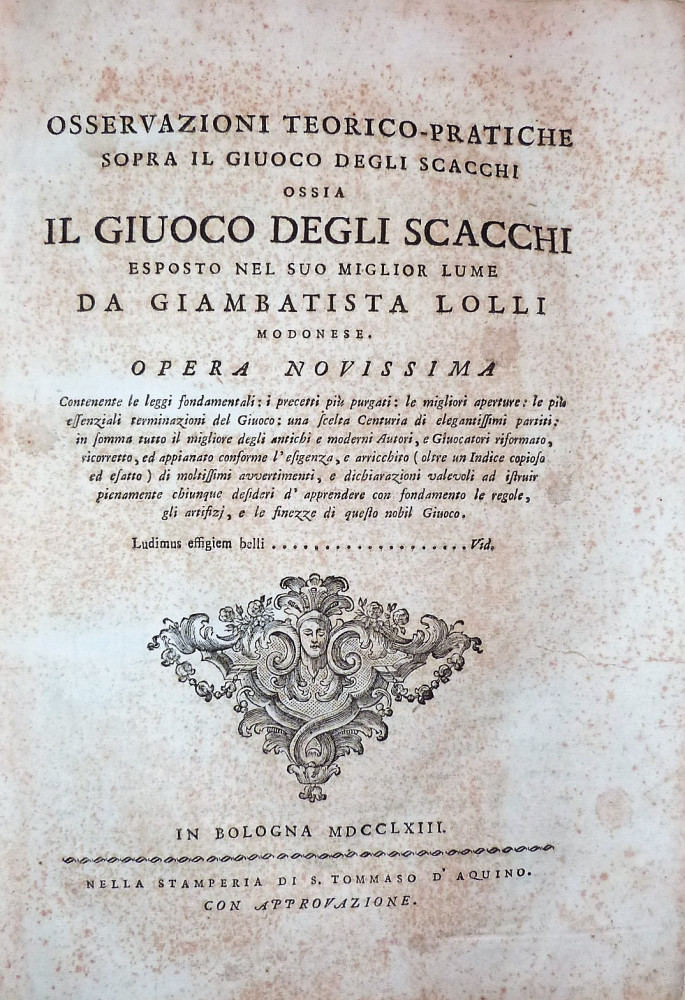
Following the work of del Río, Giambattista Lolli (1698–1769) presented Osservazioni teorico-pratiche sopra il giuoco degli scacchi (Theoretical and practical observations on the game of chess), a work published in Bologna in 1763, providing analyses of endgames and tactical combinations, such as the Muzio-Lolli Gambit (1.e4 e5 2.f4 exf4 3.Nf3 g5 4.Bc4 g4 5.Bxf7+!?)
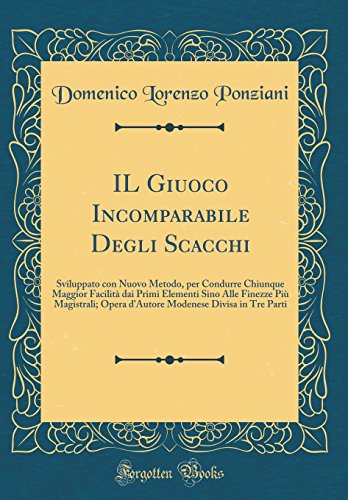
Completing the Modenese triangle, we have Domenico Lorenzo Ponziani (1719–1796), author of Il giuoco incomparabile degli scacchi (The incomparable game of chess), published in 1769, who popularized the opening that bears his name (1.e4 e5 2.Nf3 Nc6 3.c3).
It is to be noted that these ideas so different from those of Philidor, expressed by the three integral members of the Modena school, cannot be contradicted in practice and that never happen between them (that all on the trajectory in Paris and London, these, do not come from their town), with what they everything was at the level of an ideological conflict which, sadly, can never be contrasted at a factual level.
Another leader of the Italian peninsula was Carlo Cozio, count of Montiglio and Salabue (c. 1715 – c. 1780), author of the book Il giuoco degli scacchi (The Game of Chess), dated 1740, also published in two volumes in 1766 in Turin, with whose name a defense was known (1. e4 e5 2. Nf3 Nc6 3. Bb5 Ng-e7) and a mate.

Among Philidor, the French school of all other exponents, especially François Antoine de Legall de Kermeur (1702–1792), born at the court of Versailles and mentor of him, in the Café de la Régence, where he practiced the game, of whom he was the greatest referent in the first half of the century, until his student shifts it to 1755. Legall was a professional of chess, and this is a novelty of these times, living thanks to the fact that, in the previous era, the Italian Gioachino Greco (c. 1600 – c. 1634) was in some way an antecedent of it.
Another new thing emerging was the rivalry between the French and the British. In the case of Legall, he faced and broke for four to one, in a match in Paris, among the great mediators, at which time the best British player, Abraham Janssen (1720-1795). The player, also, was immortalized by the famous «Legals´s Mate» applied against a player named Saint-Brie in a match around the year 1750.

On the other hand, in an experimental form, Legall introduced a different type of trick for which a player could receive in place of the king, for new players, which are located on the third and fourth rows (for example on b3, c3, c4, d4, e4, f3, f4 and g3) and, in another alternative, there was the possibility of receiving three or four additional pawns next to a tower.
In the magazine London Magazine, in the May issue of 1825, there is a portrait of this chessplayer, in the well-known title Chess and Chess Players, by an Ancient Amateur, the following portrait:
« I am probably, without any exception, the oldest chess-player in Europe. I have not only had the honour of contending «on the checquer’d field» with M. Philidor, but I have frequently played at the Cafe de la Regence with M. de Legalle, the master of that distinguished Professor, who, in my younger days, was a better player than his celebrated pupil. »
« There is no man of whose person and deportment I retain a more vivid recollection than M. de Legalle; he was a thin, pale old gentleman, who had sat in the same seat at the Cafe, and worn the same green coat for a great number of years when I first visited Paris. »
« While he played at chess, he took snuffs in such profusion that his chitterling frill was literally saturated with stray particles of the powder, and he was, moreover, in the habit of enlivening the company during the progress of the game, by a variety of remarks, which every body admired for their brilliancy… »
« M. de Kermur, Sire de Legalle, at that time about forty years old, reigned supreme in that famous Cafe, and was undoubtedly a player of extraordinary strength; for Philidor alone was ever able to beat him, and that, too, not until he had developed his entire force by playing with Sir Abraham Janssen and the Syrian Stamma… »
« The «first player of the band» found it necessary to accept the Rook from M. de Legalle; and it took full three years to work his way up, through the various degrees of odds, to the honour of confronting his master, on even terms, as a «first-rate». »

At the Café de la Régence, an Italian player named Verdoni or Verdini (Carmine Vendane/Verdone, as he is alternately recorded in England), whose birthdate is uncertain, also distinguished himself. He died in 1804 and, along with three colleagues, Bernard, Carlier, and Leger (whose birth and death dates are also unknown), compiled and published in 1775 the Traité théorique et pratique du jeu des échecs (Theoretical and practical treatise on the game of chess), a theoretical work presented as the work of amateur chess players. In 1783, he is listed among the members of a chess club established in Paris under the patronage of the Count of Provence, later Louis XVIII (1755-1824), along with Bernard, Carlier, Leger, and Claude de Thiard (1721-1810), the Count of Bissy. After the French Revolution, he emigrated to London, where he played at Parsloe’s Chess Club, assisted Philidor in his blindfold exhibitions, mentored British Jacob Sarratt (1772-1819), and spent his final days there. Sarratt, incidentally, was another prominent player who straddled the 19th and 20th centuries, and he introduced the rule in his country that stalemate resulted in a draw (as in France), since previously it was considered a victory for the player who stalemate their opponent.
In the London chess scene, among others, Sir Abraham Janssen (1720–1795) stood out. Around the middle of the century, he was seen facing the formidable Philidor and Stamma, among other local chess players, at the Old Slaughter’s Coffee House. Also on the island was Thomas Bowdler (1754–1825), named after a historical and orthodox variant of the Sicilian defense (1.e4 c5 2.Bc4), which he employed in his party against Philidor in 1783 and, moreover, to whom he owed the first double sacrifice of towers, who died in a party of 1788 against General Henry Seymour Conway (1721-1795).
Elias Stein (1748–1812), a chess teacher of Alsatian Jewish origin who settled in The Hague, Netherlands, published Nouvel essai sur le jeu des échecs, avec des réflexions militaires (New Essay on the Game of Chess, with Military Reflections) in 1789, a work he dedicated to Stadtholder William V of Orange (1748–1806), whom he often tutored. In it, he explored the interrelationship between the tactical strategy of chess and the principles of military tactics of his time and, like Philidor, re-evaluated the value of pawns.
Moses Hirschel (1754–1839), a German writer, published Das Schach des Herrn Philidor ein Mustergültiges Spie (Mr. Philidor’s Chess Is an Exemplary Game) in 1784, a meticulous study and adaptation into German of Philidor’s strategic ideas. Years later, in 1795, he released Ueber das Schachspiel. Meist nach Stamma und Philidor (On Chess, Based Mainly on Stamma and Philidor), a comprehensive manual that structured the classic openings and checkmates for amateurs of the time.

Meanwhile, in the latter part of the century, several figures with future chess achievements would be born, among them the German Aaron Alexandre (c. 1766–1850) who, when he settled in Paris in the next century, would launch Collection des plus beaux problèmes d’échecs (published in English as Chess Pride / Beauties of Chess), one of the largest and most celebrated compilations of chess problems and compositions in history and, also, his monumental Encyclopédie des Échecs (Encyclopedia of Chess), an effort that systematically compiled and cataloged the openings known to date.
Also emerging during this period were the German Julius Mendheim (c. 1788-1836), mentor of his compatriot, the great Ludwig Bledow (1795-1846), co-founder of the Berlin school, also born during this period; the British (Welsh) William Evans (1790-1872), inventor of the Evans Gambit (1826/1827), a tactical milestone of the Romantic era; the Bohemian-born, future resident of England, Edward Lowe (1794-1880), host of the historic match against the American Paul Morphy (1837-1884) in 1858; and, in Russia, Aleksandr Petrov (1794-1868), the father of Russian chess, author of seminal treatises, inventor of the popular Petroff Defense, and one of the greatest chess players of his golden age.

Towards the end of this century, around 1798, someone who, in the coming years, would at times be the best player in the world, the Frenchman Alexandre Deschapelles (1780–1847), began to play in Paris, confirming the power of his country on the international stage.
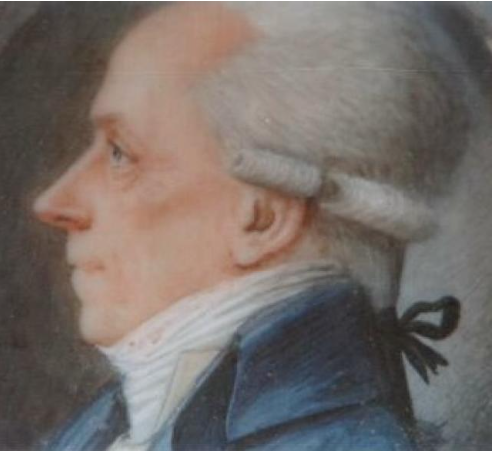
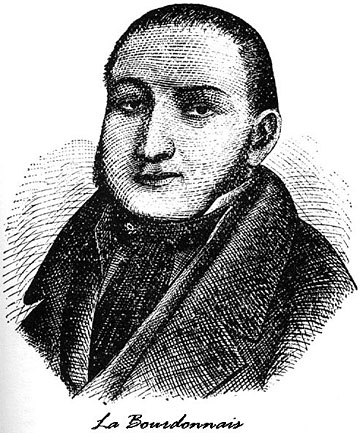
Other chess players born at the end of the century, but without yet playing in the world of chess, are the Englishman William Lewis (1787-1870), future hidden operator in the chess automaton the Turk, as well as a rival in France of Deschapelles and also of Louis-Charles Mahé de La Bourdonnais (c.1796-1840), student of Sarratt, as was also the situation of the Scotsman John Cochrane (1798-1878), who will be a rival of the two French chess players mentioned, who will practice the game in his prolonged stay in Calcutta, India, being one of the best English players upon his return, as well as author of a book.
Not everything about chess in that century was about games, of course. The French composer Élie Stein (1748-1812) published in The Hague in 1789, Nouvel essai sur le jeu des échecs, avec des réflexions militaires relatives à ce jeu (New Essay on the Game of Chess, with Military Reflections on this Game), a pedagogical work that gave rise to the Dutch Defense (1. d4 f5). Besides technical matters, the book draws a systematic parallel between the arrangement of the pieces on the board and the formation of armies on the battlefield.

Historical studies of the game are also explored in depth. The Englishman William Jones (1746-1794) is the author of On the Indian Game of Chess, originally published in 1790 in the journal Asiatic Researches (Vol. II). He expanded upon the thesis of his compatriot Thomas Hyde (1636-1703), which was reinforced by his compatriot Hiram Cox (1760-1799), that the origin of chess should be recognized as India. Furthermore, at a very young age, in 1763, he composed the poem Caissa, enthroning a deity of the game, an image immortalized by the Italian Domenico Fratta (1696-1763) in a beautiful painting of the same year. The poem begins thus:
«Of armies on the chequer’d field array’d, / And guiltless war in pleasing form display’d; / When two bold kings contend with vain alarms, / In ivory this, and that in ebon arms; / Sing, sportive maids, that haunt the sacred hill / Of Pindus, and the fam’d Pierian rill.»

Similarly, the Austrian Friar Paulino of Saint Bartholomew (1748-1806), in his 1796 work, Viaggio alle Indie orientali (Journey to the Eastern Indies), written in Italian and presented to Pope Pius VI (1717-1799), mentions that Indian youth, among various other sciences and games in which they practice—including a variety of activities encompassing poetry, fencing, botany and medicine, nautical science, foot combat, ball games, stick dancing, logic, astrology, the science of law, and even silence—also includes chess, which they call ciadurangam (alluding to chaturanga).
However, there are some references from the 16th century suggesting that Chinese chess also had an ancient origin. The British scholar Eyles Irwin (1751-1817), born in Calcutta and who served in the East, mentions chess in a letter written in Canton on March 14, 1793, to the Earl of Charlemont (1728-1799), President of the Royal Irish Academy. He includes references to a horizontal line in the middle of the board representing a river and describes the characteristic pieces, asserting that it dates back to the second century BC, its name being Chong ké (or Royal Game), and that it was invented by an experienced soldier (whom he identifies as Hansing, a name very similar to xiang-qi). Similarly, the English lawyer Daines Barrington (1727-1800), in a 1789 article, argued that chess entered Tibet and India from China, reversing the generally accepted sequence.

On the other hand, regarding the connection given to the queen piece, since its European appearance, associated with the Virgin Mary, in the case of France, the scholar of that origin Nicolas Fréret (1688-1749), in L’origine du Jeu Des Échecs (The Origin of the Game of Chess), an essay he presented in 1719 at the court of King Louis XV, gave the following semantic evolution: vierge/Virgen Marie/Reine des Cieux/reine. Furthermore, there, when discussing the source of the game, he adopted the classic idea of the reward of grains of cereal that the sage Sissa received for the miracle. Regarding this piece, which appeared gradually in different parts of the continent, it is noted that in Russia, thanks to the reign of Catherine II the Great (1729-1796), it began to be recognized in place of the oriental vizier, its predecessor, which, nevertheless, continued to be used in some cases well into the 19th century.
In 1793, the Genoese Francesco Giacometti conceived his Nuovo Giuoco di Scacchi ossia Il Giuoco della Guerra, Invenzione (New Chess Game, or the Game of War, Invention), which proposed an unorthodox chess game with a design that further emphasized the theme of war. Among the pieces, one observes the presence of a General within the Citadel, a Commander-in-Chief, a Lieutenant General, two Generals, and a Cavalry General; the queen is eliminated, as it is considered strange that a person of that sex could lead an army, and, as in xiang-qi, a river (fiume) is incorporated. It is played on a 9×17 board, consisting of 153 squares, black and white, with seventy-two pieces, corresponding to two armies per player. The game was dedicated to Napoleon Bonaparte (1769-1821) and, in fact, in 1797 the city where the author was born became a French protectorate under the name of the Republic of Liguria.

CHESS IN CULTURE, ART, AND LITERATURE
The ubiquitous Philidor, in his dual role as chess player and musician—and we have already seen that in France he was primarily considered a musician, while in England he was seen at the chessboard—is a perfect example of the symbiosis between art and play. Let us explore how chess, as a cultural expression, appeared in various branches of art during a period characterized as the «Age of Enlightenment» given that culture was now moving away from its view as a courtly pastime and becoming linked to reason, intellect, and activities in cafés and salons—all aspects that chess perfectly encompassed.
In painting, the Genevan artist Jean Huber (1721-1786) famously portrayed Voltaire playing chess. This is Voltaire jouant aux échecs avec le père Adam (Voltaire playing chess with Father Adam), a painting commissioned by Catherine II of Russia (1729-1796), which is exhibited at the Hermitage Museum in St. Petersburg.
Regarding the Tsarina, and as evidence of the insertion of chess in palace circles, she herself practiced it, possessed very valuable sets (carved in walrus ivory, and other prized materials, such as ebony and amber), which were objects of art in themselves, and spread it as a pastime at court and, even during her reign, exhibitions of living chess were held, organized by her protégé, Grigory Potemkin (Potemkin; 1739–1791) and the wealthy Count Alexander Stroganov (1733–1811).
From the French painter Rémy-Fursy Descarsin (c. 1747/1750–1793), we have Portrait du Dr de C. jouant aux échecs avec la Mort (Portrait of Dr. de C. Playing Chess with Death), which corresponds to the height of the Reign of Terror. Here, the doctor smiles as he checkmates Death (the position shown is that of the typical, and difficult, bishop and knight mate), it being very significant that, as we know, Death always ends up prevailing: in fact, the painting, which is exhibited at the Musée de la Révolution française in Vizille, France, is from the same year as the death of its author (in fact, it is unfinished), which occurred after he was tried for his former ties to the royal family, having been another victim of the guillotine and of that dark period into which the Revolution descended.
The painting depicts the chess set that was typical in the courts of Versailles and the Café de la Régence in Paris. The king and queen pieces have slender, turned silhouettes. The material used was usually boxwood, natural for the white pieces and stained for the black ones. In luxury versions, ebony and rosewood were used, and even ivory.
Jeu d’échets chinois (The Chinese Chess Game, c. 1741–1763) is a work by the French artist François Boucher (1703–1770), who created the original preparatory drawing in sanguine/ink around the 1740s. The composition became popular throughout Europe thanks to the copperplate engraving made by the English engraver John Ingram (1721–c. 1771), who worked in Paris reproducing Boucher’s chinoiseries. The engraving and its variations are held in institutions such as the Metropolitan Museum of Art (Met) in New York and the National Library of France. It depicts a noblewoman dressed in oriental attire and with a Rococo hairstyle, playing chess on a board with a child. Although the title explicitly alludes to Chinese chess, Boucher recreated the pieces with figurative and turned three-dimensional shapes (similar to Western chess or small exotic figurines), instead of the traditional flat circular pieces of xiang-qi, that practice so closely related (a direct antecedent?) to the evolved chess.
From England, we have Francis Wheatley (1747–1801) who, in Shakespeare. Tempest. Act V, Scene I. Ferdinand & Miranda playing at Chess, an engraving published in 1795, recreated the famous scene from The Tempest, a text by William Shakespeare (1564-1616) in which chess is mentioned in the very title of the scene in question.

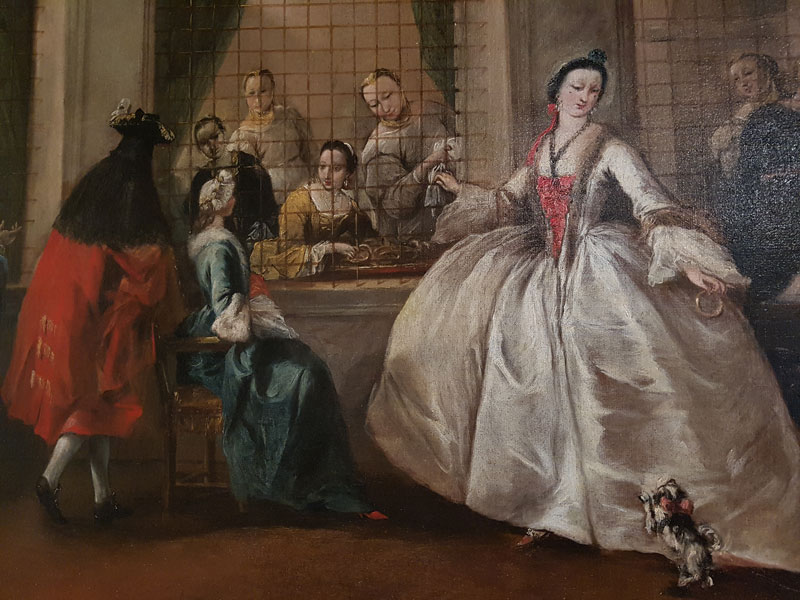
In painting, and also in architecture, the use of the checkerboard pattern as an image on the floors of residences or emblematic places was quite common. For example, in Il parlatorio delle monache di San Zaccaria (The Nuns’ Parlour at San Zaccaria), by the Venetian Francesco Guardi (1712–1793), the possible allusion to chess is quite evident in an oil on canvas that dates from c. 1745–1750.
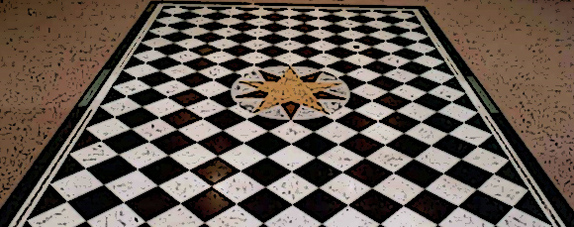
In this sense, with the formalization of modern speculative Freemasonry from 1717 onwards, the checkered floor or tapestry—known in Masonic tradition as mosaic pavement—became established as one of the central symbols of temples and lodges. The duality and contrasts of human existence—good and evil; light and darkness; joy and sorrow; life and death—could be aptly reflected by alluding to the black and white squares of the chessboard.
Few names remain inextricably linked to the French Revolution of 1789, which bequeathed to humanity the principles of Liberty, Equality, Fraternity, becoming a cornerstone of the Contemporary Age. Denis Diderot (1713-1784) is undoubtedly one of them. He was one of its principal forerunners in the realm of ideas and thought, along with Voltaire (François-Marie Arouet: 1694-1778) and Jean-Jacques Rousseau (1712-1784), forming a magnificent trio of that cultural and intellectual phenomenon known as the Enlightenment, which would have such a profound influence throughout the world, particularly in the West. All of them were closely associated with chess, which they played at the Café de la Régence, an intellectual center of the time.
Diderot, in his magnum opus, to which he dedicated a good part of his life, L’Encyclopédie, a monumental work co-authored with Jean-Baptiste le Rond d’Alembert (1717-1783), did not hesitate to mention chess in a specific entry under the title “Échecs” («Chess«) which appears in the taxonomy of Games, specifically in the Moral category, which was actually written by Louis Jaucourt (1704-1780). Here we already have a clue to the importance of games that were included as a moral category. Regarding this, it is said:
«Jeu d’échecs que tout le monde connoît, & que très-peu de gens savent bien jouer»
(«The game of chess, which everyone knows, and very few people know how to play well«)
It is argued that this activity is a conclusive proof of the power of memory and imagination. And it is debated whether its practitioners are particularly gifted for more general thought, a notion that is very analytically questioned.
Within an extensive treatment that will cover everything concerning its rules and history, the Greek origin (from those who supposed it arose in the context of the Trojan War), a thesis very much in vogue at that time, will be rejected. Instead, the Indian thesis will be upheld as the original source, mentioning the well-known legend of the sage Sissa, its mythical inventor, and the reward of grains of wheat demanded for each square of the board, which, as recorded in the authors’ encyclopedic work, reaches an enormous dimension.
When describing the pieces, regarding the introduction of the queen, something very interesting is asserted: since chess was beginning to be seen as an image of human life, without any female figure on the board everything would be too imperfect; that is why it is argued that the old vizier would disappear, giving way to the new trickster.

Diderot maintained a friendship with Philidor, who was his daughter’s musical tutor. He helped him financially to publish his book, but warned him against playing blindfolded games, considering it a «dangerous experiment.» He expressed this in a letter of 1782, stating that it was foolish «to risk going mad for reasons of vanity. Furthermore, he predicted that if Philidor continued to prefer games to music, people might one day say of him: «Here is Philidor, he is nothing more; he lost everything he had moving small wooden pieces on a board.» At this point, we see that the philosopher was quite wrong.
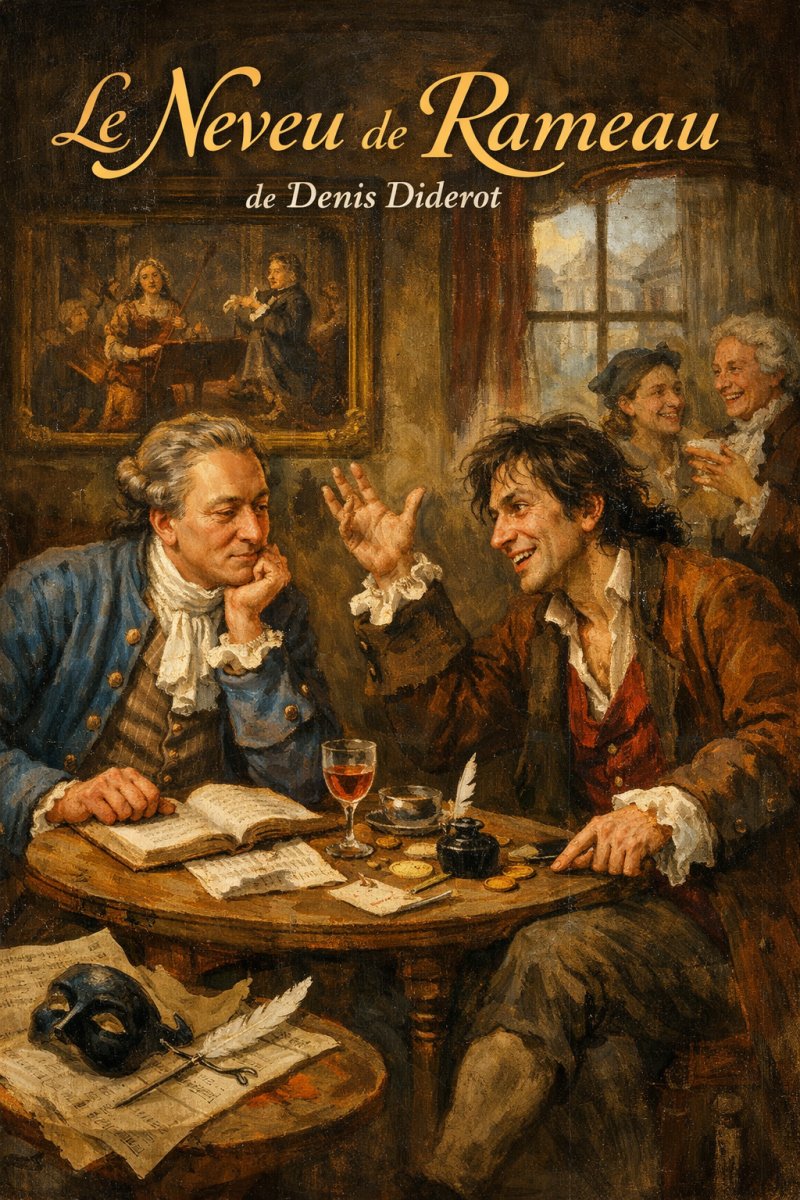
Diderot is the author of the novel Le Neveu de Rameau ou La Satire seconde (Rameau’s Nephew«), a satire from 1761. The main character’s uncle, named Jean-François Rameau, is presented as a musician, but he is none other than the real-life figure of the great French composer Jean-Philippe Rameau (1683-1764). Chess plays a prominent role in the novel, reflecting the bohemian atmosphere of Paris, centered around the Café de la Régence, and mentioning several of the game’s finest players. A significant passage is the following:
«It is a habit of mine to go for a walk in the Palais Royal pleasure gardens every afternoon at five, whatever the weather (…) If it’s too cold or too rainy, I like to take shelter in the Café de la Régence and watch chess being played. Paris is the place in all the world, and the Café de la Régence the place in all of Paris, where it is played the best. Rey’s café is where Legal the Unfathomable,’ Philidor the Cunning,f and Competent Mayot do battle, and where you can see the most surprising moves and hear the most vulgar things, for if you can be a clever man and a great chess-player like Legal, you can also be a great chess-player and a dunce, like Foubert and Mayot.’ One afternoon, when I was there, doing a lot of watching, not much speaking, and listening as little as I could, I was approached by one of the most bizarre characters in a country which, thanks to God’s bounty, isn’t short of them. He’s a mixture of the lofty and the sordid, of good sense and unreason. The notions of what’s decent and what’s indecent (…)».
In a somewhat critical tone, it will also be said (and from here comes the famous idea that playing chess is like pushing small pieces of wood):
«He comes up to me. Aha! There you are, Mister Philosopher, and what are you doing hanging around here with this bunch of layabouts? Don’t tell me you too are wasting your time pushing pawns about a board? That’s what people mockingly call playing chess or draughts».
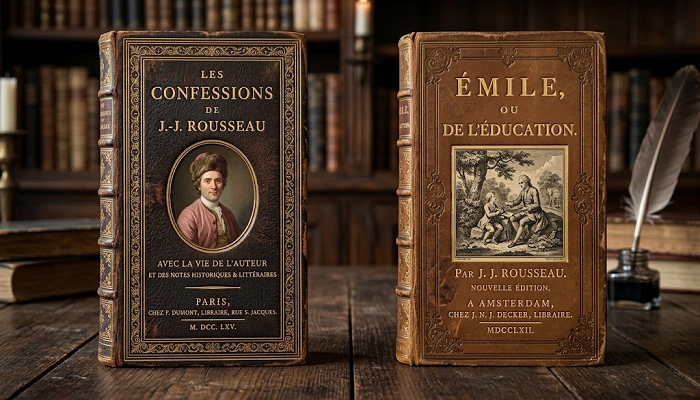
Jean-Jacques Rousseau, in his Les Confessions (The Confessions), an autobiographical work from 1770, recounts his youthful obsession with chess (which he played from 1737), the entire days he spent locked away studying the treatise by the Calabrian Gioachino Greco (1600-1634), and his frustration upon realizing that memorizing variations alone did not guarantee victory on a real chessboard. In time, his rivals included Diderot, Louis François de Bourbon, the Prince of Conti (1717-1776), Louis François I of Bourbon (1717-1776), Philidor and Legall (who were more like tutors to him), and, during his time in England, the Scottish philosopher David Hume (1711-1776). He mentions how it was introduced into the game in this way:
«There was a Genevese, named Bagueret, who had been employed under Peter the Great, of the court of Russia, one of the most worthless, senseless fellows I ever met with; full of projects as foolish as himself (…) I did not like
him, and he plainly perceived this, for with me it is not a very difficult discovery, nor did he spare any sort of meanness to gain my good will, and among other things proposed teaching me to play at chess, which game he understood something of. I
made an attempt, though almost against my inclination, and after several efforts, having learned the march, my progress was so rapid, that before the end of the first sitting I gave him the rook, which in the beginning he had given me. Nothing more was necessary; behold me fascinated with chess! I buy a board, with the rest of the apparatus, and shutting myself up in my chamber, pass whole days and nights in studying all the varieties of the game, being determined by playing alone, without end or relaxation, to drive them into my head, right or wrong. After incredible efforts, during two or three months passed in this curious employment, I go to the coffee-house, thin, sallow, and almost stupid; I seat myself, and again attack
M. Bagueret: he beats me, once, twice, twenty times; so many combinations were fermenting in my head, and my imagination was so stupefied, that all appeared confusion. I tried to exercise myself with Phitidor’s or Stamina’s book of instructions, but I was still equally perplexed, and, after having exhausted myself with fatigue, was further to seek than ever, and whether I abandoned my chess for a time, or resolved to surmount every difficulty by unremitted practice, it was the same thing. I could never advance one step beyond the improvement of the first sitting, nay, I am convinced that had I studied it a thousand ages, I should have ended by being able to give Bagueret the rook and nothing more…».
Besides, in his philosophical novel Emile, or On Education, written in 1762, says:
«Play is not an amusement for a rich man, but the resource of an idler; and my pleasures would give me too much employment to leave me much time to be so poorly employed. Being solitary and poor, I do not play at all, save sometimes at chess, and this is too much. We rarely see thinkers who take much pleasure in play, for it suspends this habit, or employs it in dry combinations, and so one of the benefits, and perhaps the only one, which a taste for the sciences has produced, is to deaden somewhat this sordid passion».

Rousseau’s close affinity for chess throughout his life meant that, particularly in his later years, the game became his favorite pastime. It was a game closely intertwined with his practice and his connection to the vibrant thought of an era that would be pivotal in the development of the Western world. It was a game that permeated all his work. In this vein, the French researcher Florian Vauléon, author of the 2014 monograph Reading Jean-Jacques Rousseau through the Prism of Chess, argues that:
«Over a period of forty years, Rousseau combined his devotion to writing with his enthusiasm for chess, and these two passions necessarily intertwined. Rousseau was able to transfer his power of concentration and the strict dialectics of his literary writings to his chess strategy. If Rousseau’s analytical skills influenced his attitude toward the game, then the game of chess inspired his logic and affected his discourse. Interpreted as a form of rationality, as a conceptual paradigm, the rules and strategies of chess accurately describe Rousseau’s ideas for social management, political power, and organization. Reading Jean-Jacques Rousseau through the Prism of Chess shows that Rousseau’s political theory, though allegedly inspired by Nature, found a perfect model in a game created by mankind; chess thus became a reference for his philosophical discourse and practice as well as a method to systematize Nature and organize society».

The perfect equilateral triangle, with its edges formed by French philosophers linked to chess, is completed by Voltaire, another of Philidor’s financiers. As we have seen before, Voltaire was portrayed with Father Antoine Adam (1705–1807), an expelled Jesuit whom he welcomed into his castle at Ferney. Besides serving as chaplain and librarian of the house, Adam’s main role was to be Voltaire’s chess opponent in the afternoons. This intellectual, who subscribed to the idea that chess was an Indian invention, also mentions the game in his Dictionnaire philosophique portatif (Portable Philosophical Dictionary), which appeared in its first version clandestinely and anonymously in Geneva in 1764. The quote is as follows:
«À la honte des hommes, on sait que les loix du jeu sont les seules qui soient partout justes, claires, inviolables & exécutées. Pourquoi l’Indien qui a donné les règles du jeu d’échecs, est-il obéi de bon gré dans toute la terre, & que les décrétales des Papes, par exemple, sont aujourd’hui un objet d’horreur & de mépris ? c’est que l’inventeur des échecs combina tout avec justesse pour la satisfaction des joueurs, & que les Papes dans leurs décrétales, n’eurent en vuë que leur seul avantage. L’Indien voulut exercer également l’esprit des hommes & leur donner du plaisir ; les Papes ont voulu abrutir l’esprit des hommes. Aussi le fond du jeu des échecs a subsisté le même depuis cinq mille ans, il est commun à tous les habitans de la terre ; & les décrétales ne sont reconnues qu’à Spolette, à Orviette, à Lorette, où le plus mince jurisconsulte les déteste & les méprise en secret».
(To the shame of mankind, we know that the rules of the game are the only ones that are everywhere just, clear, inviolable, and enforced. Why is it that the Indian who gave the rules of chess is willingly obeyed throughout the world, while the decretals of the Popes, for example, are today an object of horror and contempt? It is because the inventor of chess combined everything perfectly for the satisfaction of the players, and the Popes, in their decretals, had only their own advantage in mind. The Indian wanted to exercise the minds of men equally and give them pleasure; the Popes wanted to dull the minds of men. Thus, the essence of the game of chess has remained the same for five thousand years; it is common to all the inhabitants of the earth. and the decretals are recognized only in Spoleto, Orvieto, Loreto, where the most insignificant jurist detests and despises them in secret.)»
Voltaire is often credited with the phrase «C’est le jeu qui fait le plus honneur à l’esprit humain» («Of all games, chess does most honor to the human mind«), one that perfectly represents the chess universe.
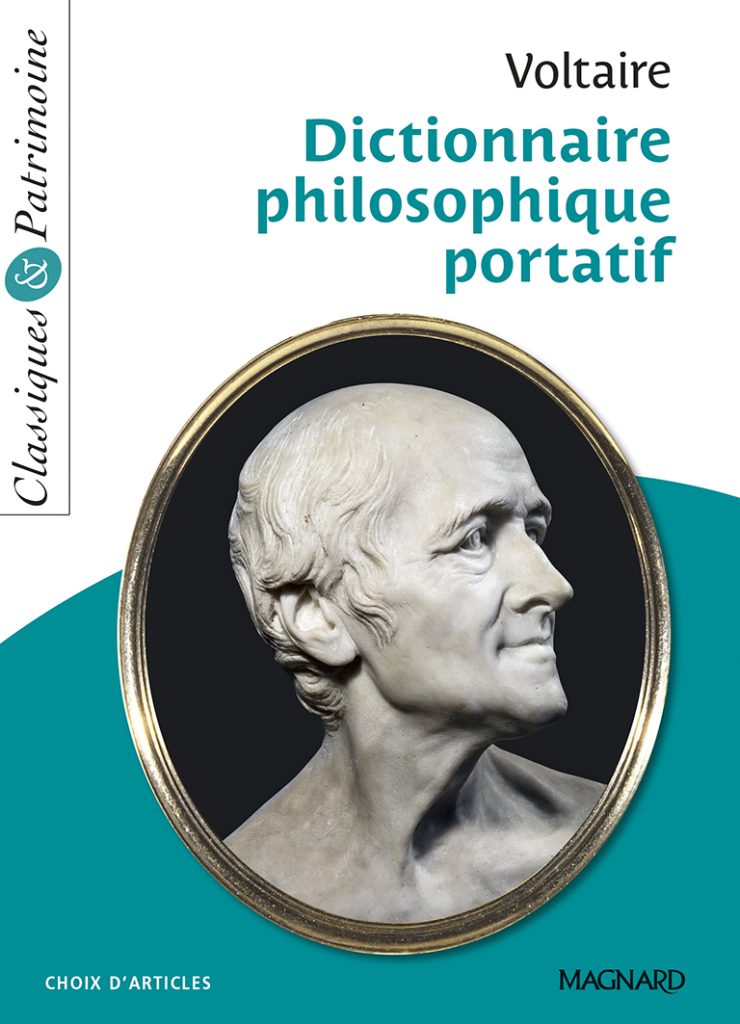
Another Frenchman, Montesquieu (1689-1755), in his Lettres persanes (Persian Letters), also refers to chess, albeit more incidentally. This book, presented in Amsterdam in 1721, offers an ironic view of the French court of that time. In that context, in letter XXXVI, written by Usbek to Rhedi in Venice, he says:
«Coffee is very much used in Paris; there are a great many public houses where it may be had. In some of these they meet to gossip, in others to play at chess».

The American (and the country emerged thanks to his preaching) Benjamin Franklin (1706-1790), who played chess in London and Paris, in the latter case at the Café de la Régence, and in the former in residences where he did not refrain from carrying out, thanks to the game, actions of espionage, is the author of The Morals of Chess, a text that appeared in the magazine The Columbian Magazine in December 1786, publishing lines that he had already outlined in 1732. There he argues that the game is not a mere idle entertainment, but a school of civic and intellectual virtues, upholding in particular these values: caution, foresight, and circumspection.
While this text is often cited as the first chess treatise written in the Americas, it may actually have been preceded by another attributed to Reverend Lewis Rou (1676-1750), a French evangelical pastor, who is believed to have written it in 1734 in New York. This earlier work is a lost manuscript of approximately eighteen pages, published by The Landi Press under the pseudonym Willard Fiske (1831-1904) in 1902. The work is titled «Critical Remarks upon the Letter to the Craftsman on the Game of Chess» although some research has questioned its authenticity.
Franklin, in addition to his iconic text on the game, presented a magic square, numbering the squares from one to sixty-four, aiming for a sum that, when added together in various directions, primarily horizontally and vertically (and also diagonally, though with some adjustment), would always equal two hundred and sixty. In these inventive games, he somehow followed the old model from India, the so-called Rudrata problem (9th century), which involved imagining a knight’s path across all the squares of the board, without repeating a position, until the space was exhausted.

That question, that of the knight’s journey in chess, was addressed by the Swiss mathematician Leonhard Euler (1707-1783), who provided several solutions, one of them, as in Franklin’s case, making the rows and columns add up to two hundred and sixty.

From the pen of the German writer Gotthold Ephraim Lessing came, in 1779, Nathan der Weise (Nathan the Wise), a masterpiece of the German Enlightenment on religious tolerance among Jews, Christians, and Muslims. In it, chess plays a direct dramatic role. In Act Two, Scene One takes place in the sultan’s palace, where Sultan Saladin and his sister Sittah are seen playing a game. She prevails against a distracted opponent, and in the conversations that accompany the moves, in a quote such as the following:
«SALADIN. To SITTAH pay a thousand dinars. Hari. Pay? And not receive—that’s something less than nothing— To SITTAH and again to SITTAH—and Once more for loss at chess? Is this your game? SITTAH. Dost grudge me my good fortune? Hart (examining the board). Grudge! you know— SITTAH (making signs to Hafi). Hush, Hafi, hush! Hari. And were the white men yours? You gave the check? SITTAH. Tis well he does not hear. Hart. And he to move? SITTTAH. (approaching Hafi). Say then aloud that I Shall have my money. ‘ Hari (still considering the game). Yes, yes! you shall have it— As you have always had it. SITTAH. Are you crazy? Hart. The game is not decided; Saladin, You have not lost. SALADIN (scarcely hearkening). | Well, well—pay, pay. Hari. Pay, pay— There stands your queen. SALADIN (still walking about). It boots not, she is useless. SITTAH (low to Hafi). Do say that I may send and fetch the gold. Hart. Aye, aye, as usual—But altho’ the queen Be useless, you are by no means check-mate. SALADIN (dashes down the board). 1 am. 1 will then— Hari. So! small pains, small gains; As got, so spent. SALADIN (to SITTAH). | What is he muttering there?«

ON THE CHESS-PLAYING AUTOMATON
The French philosopher René Descartes (1596-1650), in the previous century, had already proposed that animals were simple automatons without souls (mere machines of flesh and blood). In this century, materialist thinkers like the French Julien Offray de La Mettrie (1709-1751) took this a step further, arguing in his work Man a Machine (1747) that human beings themselves are complex automatons, and that thought is nothing more than the result of the brain’s mechanical organization.
In this context, the debate about the soul and free will arose: if an automaton could play music, write, or even play chess by imitating reason, it was possible to ask what truly distinguished humans from a well-designed machine. Was the soul a separate entity, or were we simply pieces of biological clockwork?
The idea that an automaton could play chess was, at that time, perfectly acceptable. Moreover, the creation of one, more a product of artifice than of truth, was within the reach of human nature; it could generate economic benefits, but of course, it was far from being considered a true automaton.
At the Viennese court of Empress Maria Theresa I (1717-1780), a chess enthusiast, it was the Hungarian engineer Wolfgang von Kempelen (1734-1804) who presented his famous chess-playing automaton («The Turk«) in 1769. It was so named because the device depicted a figure dressed in oriental attire, seated behind a wooden cabinet filled with gears, cogwheels, and clockwork mechanisms, playing chess interactively and defeating most of its human opponents. The entire contraption was housed in a wooden booth measuring 1.2 meters long, 60 centimeters deep, and 90 centimeters high, containing the mannequin dressed in a tunic and turban.

Of course, there was a detail that was long concealed, or perhaps, given the overwhelming spectacle of the marvel, was conveniently ignored: that inside the device was a person (a skilled chess player) who, with ingenious technique, moved the keys that indicated the moves of the supposed automaton in question.
After that impressive presentation, Kempelen went a step further, touring Europe for several years in the 1780s. In Paris, he played against King Louis XVIII (1755-1824) and Benjamin Franklin, and later, in 1809, he defeated Napoleon Bonaparte at Schönbrunn Palace during the Battle of Wagram.
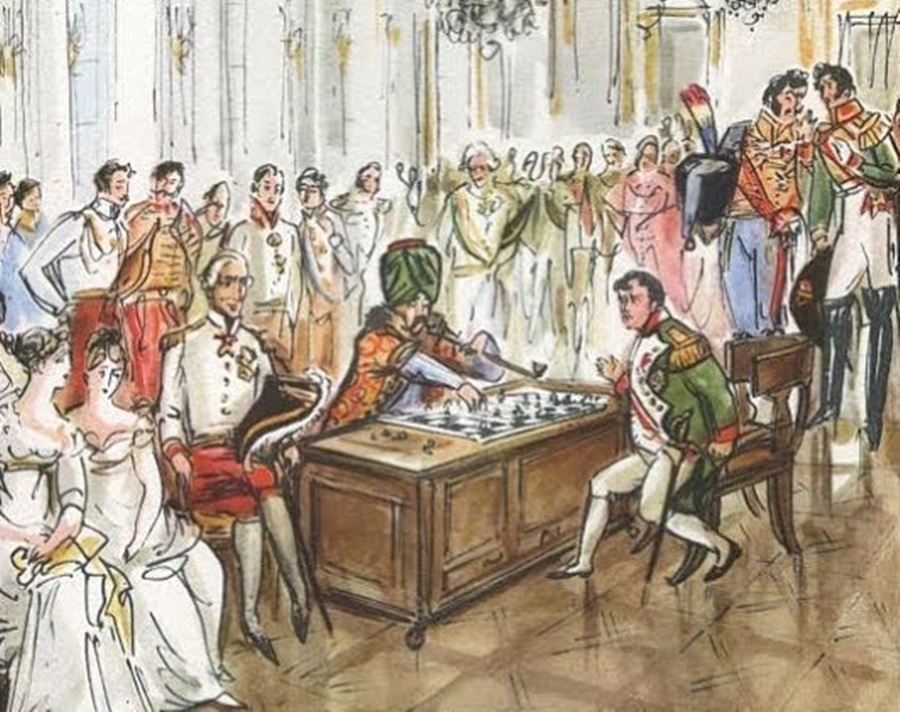
The inventor, more precisely, created a talking machine. It was a sophisticated scientific attempt to replicate the human voice in a purely mechanical way, a project in which he invested more than twenty years of research. He then published his book, Mechanismus der menschlichen Sprache (Mechanism of Human Language), in 1791, to understand and build this device.
The Turk changed hands over time, after the death of its creator, and it is believed that at least fifteen chess players operated the automaton from within during its existence, among them Johann Baptist Allgaier (1763–1823), writer and officer of the Austro-Hungarian army (born in Württemberg, settled in Vienna), to whom we owe the gambit that bears his name, within the King’s Gambit (1.e4 e5 2.f4 exf4 3.Nf3 g5 4.h4 g4 5.Ne5), author also of a work from 1795 entitled Neue theoretisch-praktische Anweisung zum Schachspiele (New theoretical and practical instructions for playing chess).
Karl Gottlieb von Windisch (1725–1793) was an Austrohungarian writer (born in Bratislava, Pressburg), author of Briefe über den Schachspieler des Hrn. von Kempelen (Letters about the chess player of Mr. von Kempelen), one of the first ones to be repaired on the device, some hubs of various authors that are dedicated to the theme. In this exhaustive treatise of 1783, dedicated to investigating the operation of the automated system, describing in detail the machine, its impact on European society and bringing pioneering reflections on the relationship between human engineering, mechanical illusion and capabilities of chess. To do so, we do not log revealing the secret of the internal mechanism, but only because the knowledge of the movements of the Turck exists a brilliant human mind behind us.
When it was presented in the US in the following century, it came under scrutiny, with Edgar Allan Poe (1809-1849), though unable to factually prove it, nevertheless managing to expose the hoax, which he recorded in his 1836 essay The Chess Player of Maezel (that was the name of the person responsible for the device at the time). It was, in fact, nothing more than an illusionist’s trick. In 1854, the automaton was destroyed in a fire.

We will have to wait for future times to see that the possibility of an automaton that actually plays chess was not far-fetched. In any case, in this century, and beyond the deceptive device, there was a prescient vision regarding this matter.
THE CAFÉ DE LA RÉGENCE AND OTHER CHESS SPACES OF THE ERA
While the Café de la Régence in Paris would eventually become the most important and renowned place where chess was played, it actually had a significant predecessor in the Café Procope, founded in 1686 in the French capital by the Sicilian Francesco Procopio dei Coltelli (1651-1727), known in French as François Procope-Couteaux. This café is considered the oldest literary café in Paris and the original cradle where public chess culture in Europe germinated.
The café was located on the rue des Fossés-Saint-Germain (now the rue de l’Ancienne Comédie), opposite the former headquarters of the Comédie-Française, and, in addition to offering the infusion that gives this type of establishment its name, it introduced the first ice cream to the country.
Among others, Voltaire, Jean-Jacques Rousseau, Denis Diderot, Montesquieu, Benjamin Franklin, and later, leaders of the French Revolution such as Danton (1759-1794) and Robespierre frequented the café. It is said that Diderot conceived his Encyclopedia there, and Franklin drafted the U.S. Constitution.

The Procope was the center of chess until 1740, establishing a new model: the game was no longer confined to the court, but could be played in public spaces and, moreover, in clear connection with intellectual and philosophical debates. From that date onward, the Café de la Régence took center stage, as chess enthusiasts sought a more private and spacious environment, and the Procope was a more boisterous place given its connection to theatrical activity.
This new venue, which would be the epicenter of chess until virtually the mid-19th century, was linked to chess milestones and gave rise to the concept of the chess master. Its practitioners, who in many cases earned a living through bets associated with the game, favored this space, not only for locals but also for foreigners who came to the world capital of that phenomenon known as the «Age of Enlightenment.«
In reality, the Régence had been founded earlier, in 1681, under the name Café de la Place du Palais-Royal, adopting its definitive name in 1718, during the regency of Philippe II, Duke of Orléans (1674–1723), who had assumed this role three years earlier since King Louis XV (1710–1774) was a minor, having been crowned after the death of Louis XIV (1638–1715).
It was here that Sire de Légal moved from the Procope, and where his disciple Philidor began to shine. It was in this setting that Philidor conceived the foundations of his revolutionary treatise, L’Analyse du jeu des Échecs. It was this setting immortalized by Diderot in one of his novels. This would become a place frequented by everyone, including Emperor Napoleon Bonaparte and, in the future, figures like Paul Morphy, among so many chess players; the meeting point, moreover, where two philosophers who would mark history met: Germans Karl Marx (1818-1883) and Friedrich Engels (1820-1895). And where the automaton The Turk was presented in 1783, suffering a defeat against the great Philidor.
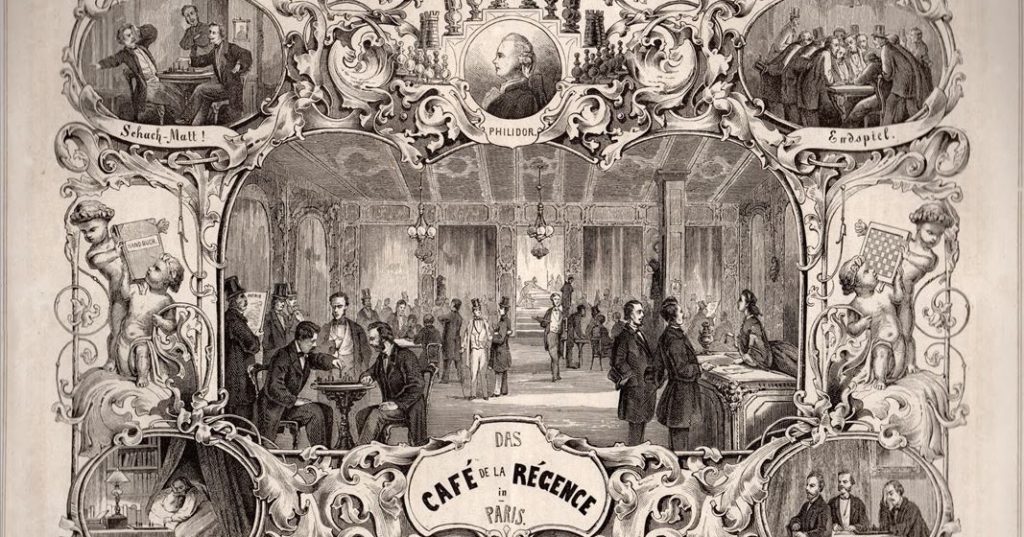
The Café de la Régence, once the epicenter of chess.
From this experience of chess in cafés, other spaces dedicated to games would emerge. In Paris, there was the Café Manoury, near the Palais-Royal, where Polish checkers were played (on 10×10 boards); the Café Gradot, located on the Quai de l’École, more geared towards scientists, so chess was seen not so much as a pastime but as a form of mental calculation; the Café Conti, near the Pont Neuf, quite active at the beginning of the century; and the Café de Foy, founded in 1700 in the galleries of the Palais-Royal, which housed the first formal chess club in France, Le Salon des Échecs, a hub for intellectuals and aristocrats with restricted access for those who paid a fee and were accepted by the existing members.
The model also took hold in London, where establishments like the Old Slaughter’s Coffee House on St. Martin’s Lane, Philidor’s base during his early visits to England in the 1740s, were established; as were Parsloe’s Coffee House on St. James’s Street, where the exclusive London Chess Club was founded in 1774 with a limited aristocratic subscription of one hundred members; the Salopian Coffee House in Charing Cross; and Tom’s Coffee House in Covent Garden. In this respect, England was a pioneer in the trend of transitioning from coffeehouses to clubs through paid memberships.
Chess cafés also existed in Berlin, such as the Royal and Belvedere; in Venice, the Florian; in Amsterdam, the De Roode Leeuw; and in Vienna, other similar establishments. In contrast, in the Russian Empire, the activity took place in salons and in the so-called mandatory social assemblies, decreed by Tsar Peter I (1672-1725), which operated from 1718, in which the nobility, high officials, officers and rich merchants met, in rotation in the mansions of the main dignitaries of St. Petersburg and Moscow, where chess was a favorite game.
The fact that chess was played in more public and social spaces, and not exclusively in courtly settings as before, represented a qualitative and quantitative leap in its practice. Gradually, it became a more inclusive game, and to be entirely fair, it could be played by members of social classes who had leisure time.
Furthermore, as previously stated, and reiterated here in conclusion, the emerging values of the new era, so aptly summarized by the motto of the French Revolution, resonated perfectly with the style of play instilled by Philidor, the period’s most celebrated figure, with his message highlighting the importance of pawns.
He became a turning point figure in the history of chess, an activity that must recognize him not only as the best of his time but, even more importantly, as a masterful ancestor to whom we owe the opening of a new path.