Chess in the 19th Century. Milestones of 1892
By Sergio Ernesto Negri

Global Context
Several scientific advances: the Frenchman Henri Poincaré (1854-1912) in thermodynamics; the Dutchman Hendrik Lorentz (1853-1928), who would receive the Nobel Prize in Physics in 1902, made progress in electromagnetism and its application to moving bodies. In the town of Necochea, the perpetrator of a double murder was identified for the first time using the novel fingerprint detection technique discovered by the Argentine (of Croatian origin) Juan Vucetich (Ivan Ante Vučetić) (1858-1925): it was not the victims’ neighbor, as the mother of the dead children had accused, but the mother herself who was the murderer. The immigration station on Ellis Island, in New York Harbor, was inaugurated, serving as the gateway for many who in the coming years would seek to embrace “the American Dream.” German engineer Rudolf Diesel (1858-1913), born in Paris, patented his internal combustion engine, which utilized the self-ignition of fuel caused by the heat of compression.
The Italian composer Giuseppe Verdi (1813-1901) premieres his opera Faslatff, while the French composer Jules Massenet (1842-1912) does the same in the same genre with Werther; the Russian composer Pyotr Tchaikovsky (1840-1893), for his part, presents his world-famous ballet The Nutcracker. Also premiering in France is the animated film Poor Pierrot!, directed by the Frenchman Émile Reynaud (1844-1918), using the illusion of movement made possible by the optical theater.

Chess in 1892
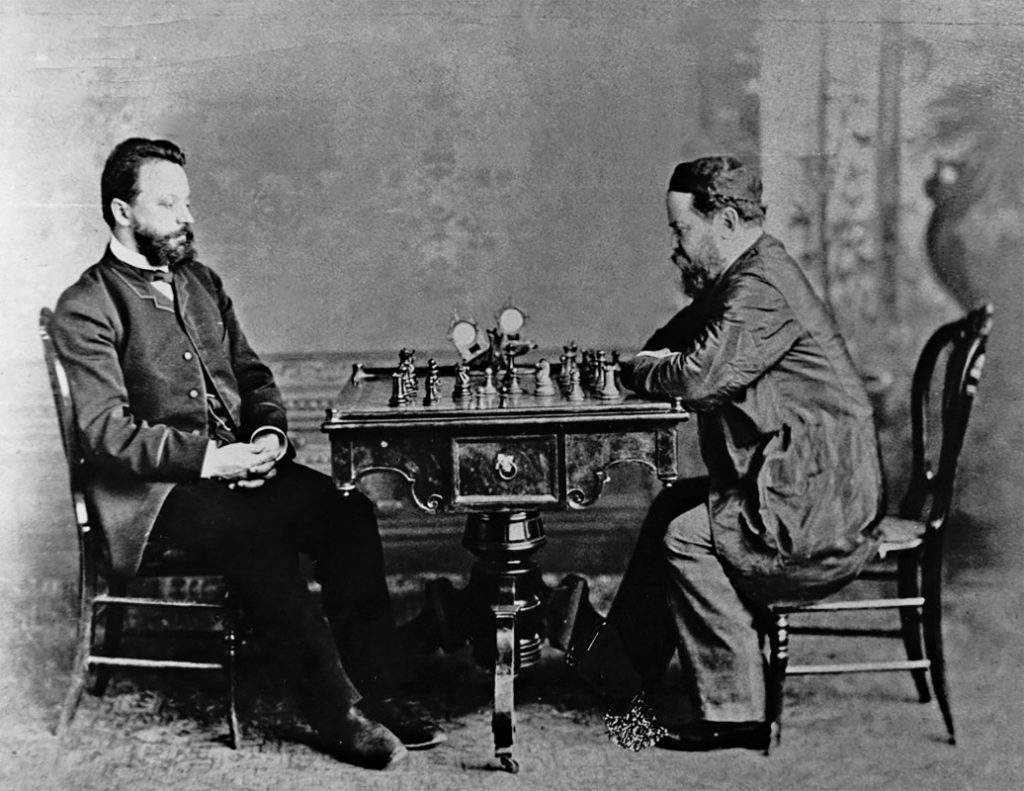
Second world title match between the now American (born in Prague) Wilhelm Steinitz (1836–1900) and the Russian Mikhail Chigorin (1850–1908), again in Havana, with renewed success for the champion, who this time prevailed after ten wins, eight losses, and five draws. The event received extensive press coverage, particularly in two specialized publications: The British Chess Magazine and Deutsche Schachzeitung. It all began with a win for the challenger, and as the match progressed, with its inevitable ups and downs, it seemed the Russian had taken control of the situation. In fact, he held the advantage—albeit a minimal one—until the nineteenth game. Nevertheless, Steinitz managed to win three of the last four games, definitively tipping the balance in his favor. Fatigue took its toll, bringing to mind the blunder committed by Chigorin in the final game, in which he moved a bishop protecting the king to the opposite flank, allowing a checkmate in two moves, even though the Russian held a material advantage. It was clear that, once again, the champion, despite being older than his opponent, was able to demonstrate greater resilience.
At the German Congress in Dresden, local player Siegbert Tarrasch (1862–1934) emerged victorious, finishing two points ahead of his closest rivals: the Hungarian Gyula Makovetz (1860–1903), the Pole Szymon Winawer (1838–1920), and the Czech Moritz Porges (1857–1909). This marked his third consecutive victory in international competitions (Tarrasch had previously won in Breslau in 1889 and Manchester in 1890).
In this context, in the summer of that year, the Havana Club sent the Prussian an invitation to play a match for the world title against Steinitz, which Tarrasch declined, preferring to prioritize his professional career in Europe (he was a doctor practicing in Nuremberg), though he also did not care for the long boat trip and the heat at the venue. It is considered that he missed a unique opportunity, as he was at the peak of his powers; in fact, when they faced each other years later (between 1895 and 1898), he held a favorable record against the champion, defeating him three times and drawing on the other occasion.
Another rising star of the era, the Prussian Emanuel Lasker (1868–1941), also challenged Tarrasch to a match that year—in this case, a friendly one—but Tarrasch declined, saying, “You must first win a major international tournament before I can consider playing a match against you.” Many years later, with Lasker as world champion, Tarrasch had one last chance, though by then he was in personal decline, and was defeated without mercy.
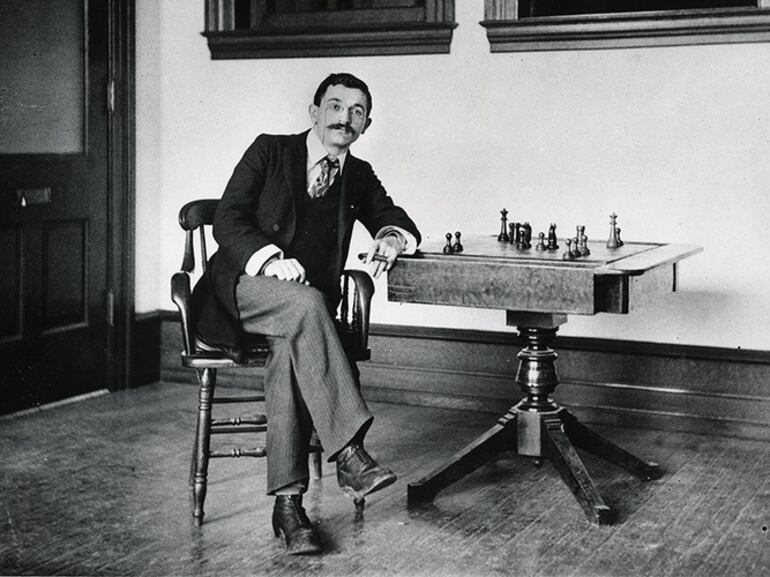
Lasker won two tournaments in London, in which the Irish-American James Mason (1849–1905) and the British player Joseph Blackburne (1841–1924) finished second in each case; the latter was part of a five-player tournament that also included Mason, the Hungarian (resident on the island) Isidor Gnnberg (1854–1930), and another local, Henry Bird (1829–1908). Furthermore, at that same venue, he soundly defeated Blackburne and Bird in separate matches, by scores of 8–2 and 5–0, respectively. At the Café de la Régence in Paris, a tournament was held in which the local player Alphonse Goetz (1865–1934) triumphed over the Belarus-born, France-based Dawid Janowski (1868–1927).
For the month of December, the Chessmetrics ranking lists the top players in the following order: Steinitz; Chigorin; Tarrasch; Winawer; Gunsberg; Lasker. According to EDO Historical Chess Ratings, Lasker was already in the lead, followed by Tarrasch, Steinitz, Chigorin, and Makovetz, with Winawer in eighth place and Gunsberg not listed.
Alexander Alekhine (1892–1946) was born in the Russian Empire; he would become the fourth world champion in history and eventually adopt French nationality. His life was very intense: captured by the Germans while playing in a tournament in Mannheim in 1914; with the Russian Revolution, he was arrested, ostracized, and had his assets confiscated; and just when he thought things had settled down—with so many titles won and a certain personal fortune accumulated through very advantageous marriages— the Nazi advance led him to be complacent toward that regime, causing him to be repudiated by many of his colleagues for an article he wrote distinguishing the playing styles of Aryan and Jewish players; he died in solitude in Portugal, far from his family and home, under somewhat mysterious circumstances. Beyond the ups and downs of a life lived in such turbulent times, his talent at the chessboard was unmatched, taking the title to his grave, though at one point, perhaps overconfident, he lost it only to immediately regain it—the title he had won in Buenos Aires in 1927 against the Cuban José Capablanca (1888–1942), who was considered invincible at the time. However, on that occasion, he defeated him comfortably and subsequently denied him a rematch time and again. Along the way, Alekhine would play in tournaments here and there, achieving notable successes and cementing his undisputed reign, the one who abdicated for a brief period in favor of the Dutchman Max Euwe (1901-1981).

Also born this year was the Ukrainian-Canadian Fedir Bohatyrchuk (1892–1984), a regular participant in national tournaments, in one of which he tied for first place, among many other achievements; he was also a renowned physician, who may have inspired the main character in Boris Pasternak’s (1890–1960) novel (later adapted for the big screen) Doctor Zhivago, and Pyotr Romanovsky (1892–1964), with whom he had been co-champion of the Soviet Union in 1927, but before that, he had been runner-up in the USSR in 1920, behind Alekhine, and sole champion in 1923—a man who, in 1935, became the first chess player to receive the title of Honored Master of Sports. Despite these merits, FIDE excluded both of them from the GM titles conferred in the 1950s; in the first case, due to the Soviet federation’s blockade of a figure who had gone into exile.

Also born this year: János Balogh (1892–1980), who won a team bronze medal for Romania at the 1926 Budapest unofficial Olympics and individual and team gold medals with Hungary at the 1936 Munich unofficial Olympics; the Swede Karl Berndtsson (1892–1943), part of his country’s team that won a bronze medal at the 1933 Olympics; the Hungarians Kornél Havasi (1892–1941), a member of his country’s teams that won six Olympic medals (three gold, including one at the 1936 unofficial competition, and three silver, including one at the 1924 unofficial competition), as well as an individual silver in 1935, who met a tragic fate following the Nazi occupation of his country; the American (born in a city in Belarus) Géza Nagy (1892–1953), with two Olympic gold medals at the team level in the 1920s; Abraham Kupchik (1892–1970), a team Olympic gold medalist and individual bronze medalist in 1935; the Czech Karel Opočenský (1892–1975), a four-time national champion with several Olympic medals: an individual gold in 1933; a silver and a bronze for his country as a team; in addition, he was a renowned international arbiter, who oversaw the world championship matches in 1951 and 1954, the 1952 Olympics, and the 1953 Candidates Tournament.
The Peruvian writer César Vallejo (1892-1938), born this year, was close to chess, having frequented cafes during his permanent residence in Paris, including the Régence, that which is an emblem of chess, in which in 1926 he met Henriette Maisse, who worked there, who would be his partner. For him, that café was not only the place of chess (where Napoleon or Philidor played), but the place where a fundamental stage of his life in Paris began. Furthermore, it could be argued that he uses games as a metaphor in his work, for example, in his poem Los dados eternos («The Eternal Dice«), where he imagines a sort of game with God: «My God, on this dark and silent night, / you cannot play anymore, / because the Earth / is already a die worn smooth and round / from rolling by chance; / and it can stop only in a void, / in the hollow of the huge grave!» or, in Piedra negra sobre una piedra blanca («Black Stone on a White Stone«), where he speaks of his own death, in a title that could well allude either to the contrast of colors that characterizes chess or, in the same vein, to the coloring of the pieces in a game of Go or, perhaps, some Andean game.

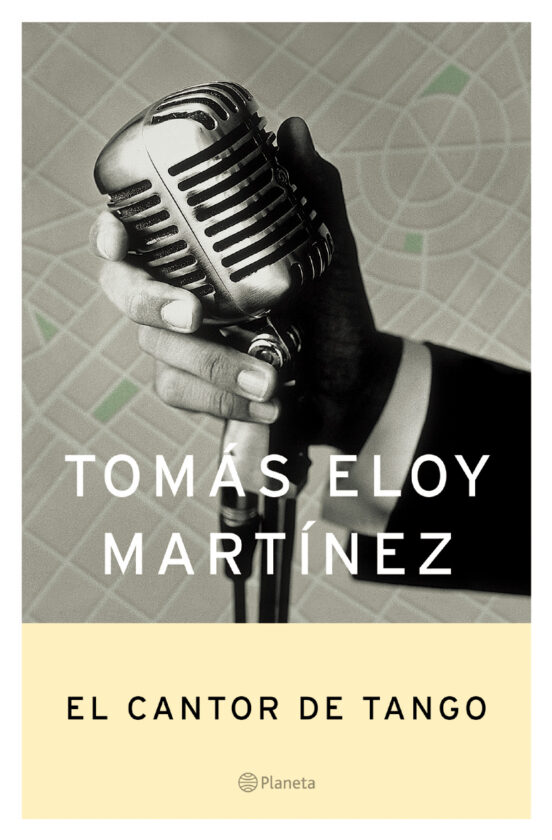
In Argentina, the writer Roberto Mariani (1892–1946) is born, and his colleague Juana Manuela Gorriti (1818–1892) passes away. In Peregrinaciones de una alma triste («Pilgrimages of a Sad Soul«), she writes: “Nothing is as pleasant as the prefect’s social gatherings in Cobija. General V., who was in exile, attended these gatherings. Imagine how much wit he would bring with his eloquent and humorous speech, whether recounting an anecdote or discussing politics; sometimes playing chess, sometimes playing rocambor. I amused myself by cheating at this game, just to see what he thought of it…” and, in a more descriptive tone, she states: “…amidst the enchanting landscape that served as its backdrop, the city, with its towers, its white rooftops, and its red roofs, clustered like a chessboard at the foot of San Bernardo…”; while the former includes the game in his novel En la penumbra («In the twilight«), published in 1932, stating: “… Alain Gerbault sailing alone for endless nights across the world’s most desolate seas; like the chess enthusiast who spends an entire night alone before his board” and “He suspected this state of his own—of indecision, of disorientation, of the need to pause and think again. He reduced it to a comparison with chess: ‘I am strong in the openings, weak in the middlegame, and I don’t know endgames.’” In a fictional tone, another Argentine writer, Tomás Eloy Martínez (1934–2010) sets a scene this year in a chess room, as part of a delightful story involving the Norwegian writer Henrik Ibsen (1828–1906) and his compatriot Olaf Petrus Boye (1864–1933), the architect who designed the exterior of the beautiful Palacio de Aguas Corrientes in Buenos Aires (completed in 1894), who, as stated in the 2004 novel El cantor de tango («The tango singer«) “…died of a heart attack in the middle of a chess game on October 10, 1892, when he had not yet completed the drawings for the southwest attic”.
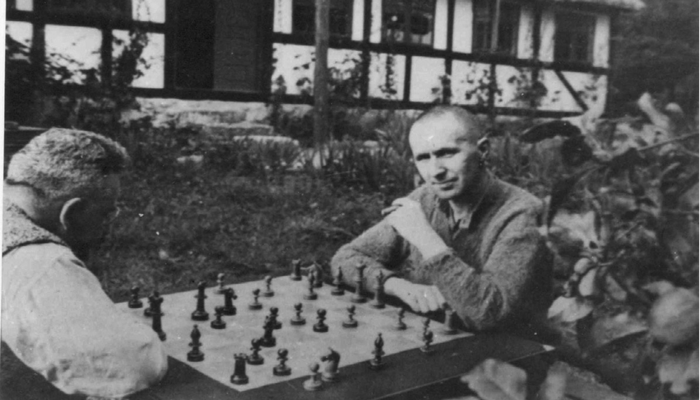
The German philosopher Walter Benjamin (1892–1940), born this year, who was an avid chess player, employed the parable of the chess-playing automaton when referring to the construction of historical narrative. In the first of the eighteen theses he formulated on the subject (plus several addenda), in Über den Begriff der Geschichte («Theses on the Philosophy of History«), he stated:
“The story is told of an automaton constructed in such a way that it could play a winning game of chess, answering each move of an opponent with a counter-move. A puppet in Turkish attire and with a hookah in its mouth sat before a chessboard placed on a large table. A system of mirrors created the illusion that this table was transparent from all sides. Actually, a little hunchback who was an expert chess player sat inside and guided the puppet’s hand by means of strings.”