Chess in the 19th Century. Milestones of 1891
By Sergio Ernesto Negri

Global Context
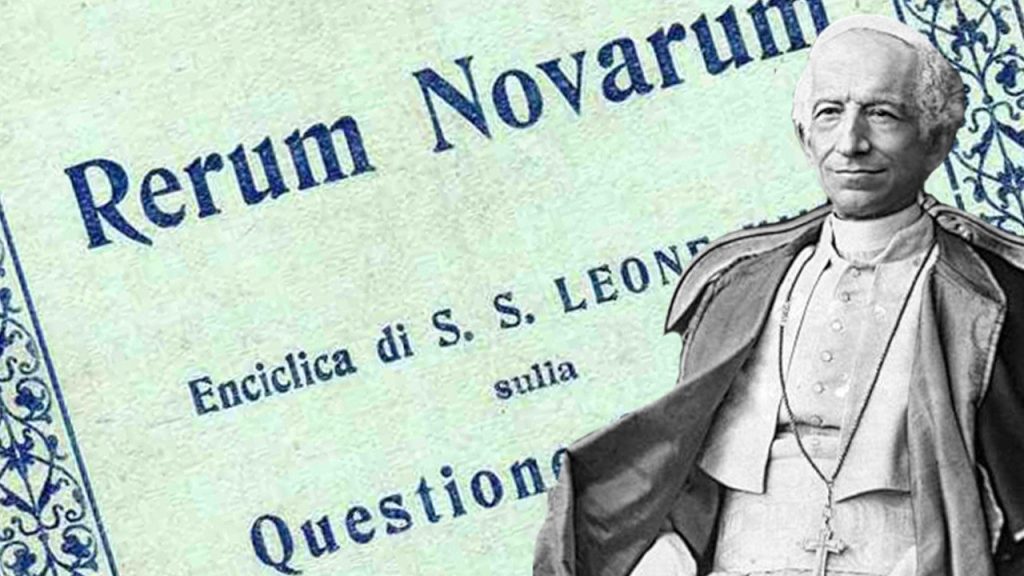
Brazilian Emperor Pedro II (1825-1891) dies. Pope Leo XIII (1810-1903) publishes Rerum Novarum, considered the Catholic Church’s first social encyclical, which addresses the plight of workers. Chile is engulfed in a civil war. Argentine police officer Juan Vucetich heads the Dactyloscopic Laboratory, the world’s first initiative to identify individuals through fingerprints. A devastating earthquake strikes Japan. The future Tsar Nicholas II (1868-1918) lays the cornerstone of the Trans-Siberian Railway in Vladivostok.
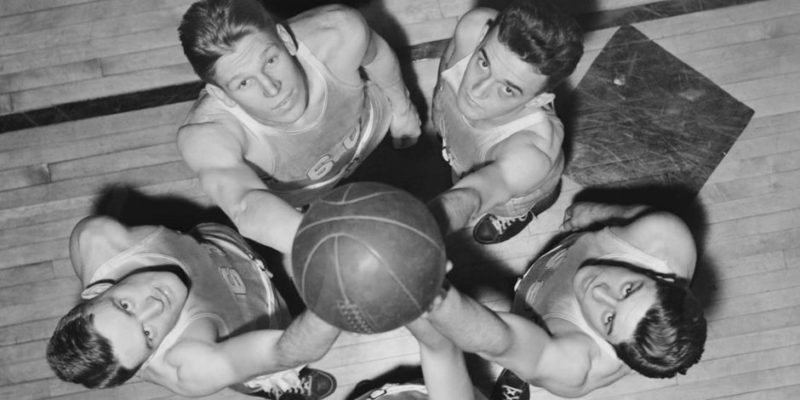
Irish writer Oscar Wilde (1854-1900) publishes The Picture of Dorian Gray; his Scottish colleague Arthur Conan Doyle (1859-1930) does the same with The Adventures of Sherlock Holmes. Serbian-American inventor Nikola Tesla (1856-1943) introduces the high-voltage transformer. At the YMCA, Canadian-American James Naismith (1861-1939) invents basketball in the United States.
Chess in 1891
Early in the year, the world championship match in New York came to a close, in which the Prague-born, now American citizen, Wilhelm Steinitz (1836–1900), defended his title against the Hungarian (resident in England) Isidor Gunsberg (1854–1930), with the champion winning 10.5 to 8.5 in a match that was much closer than expected, following six wins for the champion, four losses, and nine draws.

Steinitz and the Russian Mikhail Chigorin (1850–1908) concluded their two-game match via telegraph; Steinitz was in the United States (New York), while Chigorin was in the Russian Empire (St. Petersburg). And in the end, it was Chigorin who prevailed in both games, and decisively so, in a clash of styles where the champion’s modern ideas faltered in the face of his rival’s creativity. The match had begun on October 23, 1890, and concluded on April 28 of this year.

No particularly notable international tournaments are recorded. However, a few interesting matches do take place, such as the one in Havana—a highly regarded chess venue at the time—featuring the British player Joseph Blackburne (1841–1924) and the local, César Golmayo Zúpide (1820–1898), who was born in Spain, with the visitor winning six to four; and another, in the same location, in which Chigorin defeated Golmayo 3–1. Meanwhile, in Nuremberg, the Prussian Siegbert Tarrasch (1862–1934), under the same format, defeated the Polish-French Jean Tabenhaus (1850–1919) 6.5–1.5.
For the month of December, Chessmetrics presents this top 5: Steinitz; Chigorin; Gunsberg; Tarrasch; and the Slovak Miksa Weiss (1857–1927). EDO Historical Chess Ratings, for its part, offers this alternative ranking: Tarrasch; the Prussian Emanuel Lasker (1868–1941); Steinitz; the Hungarian Gyula Makovetz (1860–1903); the Czech Johann Bauer (1861–1891), relegating Weiss to sixth place, Chigorin to eighth, and Gunsberg to sixteenth.
lya Rabinovich (1891–1942) was born in Russia; he was one of the Soviet Union’s leading figures in its early days, the first to compete abroad (in Baden-Baden in 1925), and he shared first place in the national tournament in 1934–35, among other achievements, before perishing in the fateful siege of Leningrad. Also was born: German IM Alfred Brinckmann (1891–1967), who achieved notable success by winning the 1927 Berlin tournament, ahead of the Ukrainian-German Yefim Bogoljubow (1889–1952), the Latvian-Danish (1886–1935) Aron Nimzowitsch, and the German Friedrich Sämisch (1896–1975), as well as the Romanian Alexandru Tyroler (1891–1973), who won a bronze medal with his country at the unofficial 1926 Budapest Chess Olympiad.
Three great players pass away: the German Ludwig (Louis) Paulsen (1833–1891), remembered for having faced local player Paul Morphy (1837–1884) in the 1857 final round of the North American Championship and for later defeating several notable opponents in matches, in particular, and on two occasions, the Prussian Adolf Anderssen (1818–1879), which catapulted him to being considered one of the best chess players of his time, ranking, according to Chessmetrics, as the best of all for thirty-nine months; the Scot, who became an American, George Mackenzie (1837–1891), who achieved success in countries on both sides of the Atlantic—for instance, he was national champion in both his native country and his adopted one—notably winning the German championship in Frankfurt am Main in 1887 (against a constellation of stars) and, while competing in a tournament in Vienna, we also see the death of the aforementioned Bauer (1861–1891), best remembered for falling victim to a double bishop sacrifice delivered by Lasker in a game they played in Amsterdam in 1889.

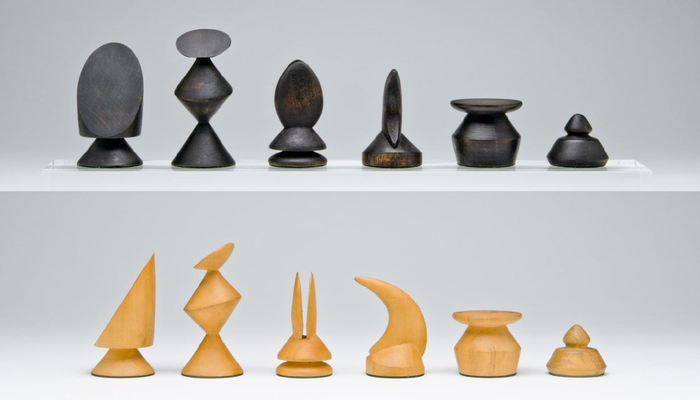
German artist Max Ernst (1891–1976) is born; a member of the Surrealist movement, he created a beautiful collection of works. His connection to the game was as close as his friendship with another chess enthusiast, the French artist Marcel Duchamp (1887–1968).

Argentine poet Oliverio Girondo (1891–1967) is born. In Espantapájaros («Scarecrow«), a work originally published in 1932, he describes himself as follows:
“One may question my ornithological knowledge and the effectiveness of my chess openings. There will always be some fool who denies the astronomical accuracy of my horoscopes—but that’s for sure! No one will ever think to doubt, even for a single moment, my perfect, my absolute solidarity…”