Chess in the 19th century. Milestones of 1887
By Sergio Ernesto Negri

Global context
A destructive and deadly earthquake strikes France (Cannes) and Italy; another affects Kazakhstan. More than two million victims of flooding from the Yellow River in China and its aftermath. The British Empire occupies Baluchistan, an Asian region that today belongs to several countries, and Yemen becomes a protectorate of that nation. The French create the Indochina Union.
Construction of the Eiffel Tower begins in Paris, and the first car race in history is held in that city. The opera Otello by Italian composer Giuseppe Verdi (1813-1901) premieres in Milan. The Esperanto language is introduced. German philosopher Friedrich Nietzsche (1844-1900) publishes The Genealogy of Evil. German physicist Heinrich Hertz (1857-1894), future Nobel Prize winner, discovers the photoelectric effect. American scientists (born in Poland) Albert Michelson (1852-1931) and Edward Morley (1838-1923) attempted to measure the speed of the Earth through the «luminether,» a substance believed to fill space, but failed to prove that hypothesis.The German-American inventor Emile Berliner (1851-1929) patented the gramophone. German glassblower August Müller (1864-1949) and physician Adolf Fick (1829-1901) independently manufactured the first functional contact lenses made of blown glass.
Chess in 1887
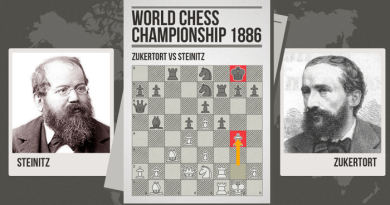
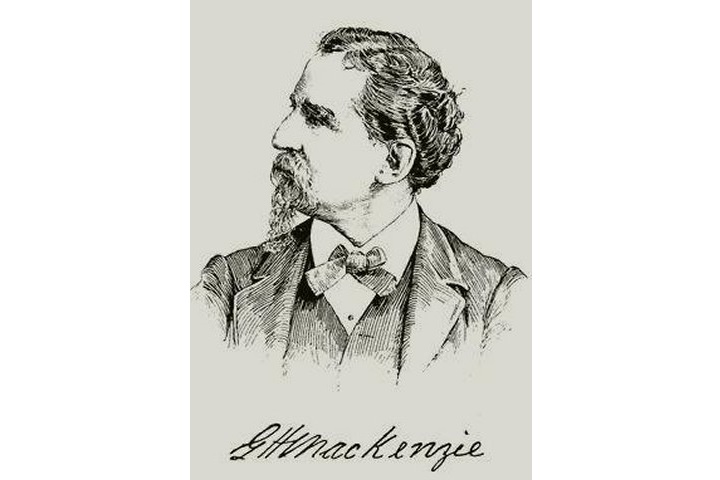
The most important tournament of the year takes place in Frankfurt am Main, with the American (of Scottish origin) George Mackenzie (1837-1891) winning ahead of the British Joseph Blackburne (1841-1924) and the Slovak Miksa Weiss (1857-1927); within the illustrious list of participants, the presence of the Prussian Siegbert Tarrasch (1862-1934) can be observed; the German Ludwig (Louis) Paulsen (1833-1891), the Hungarian-English Isidor Gunsberg (1854-1930); the British Amos Burn (1848-1925); the Czech Berthold Englisch (1851-1897), and a very lagging Johannes Zukertort (1842-1888), the Polish-British in free fall after his defeat the previous year for the world title against the Prague-born and American citizen Willhelm Steinitz (1836-1900). In another competition, this one held in London, Gunsberg and Burn (with eight points out of nine, plus both without an undefeated record) prevailed, ahead of Blackburne and Zukertort.
Some matches were held between prominent or up-and-coming players. The most exciting were two in which the Prussians Emanuel Lasker (1868-1941) faced Tarrasch in Berlin, with Tarrasch winning 1.5 to 0.5 in one match and drawing 1 to 1 in the other; while in London, Blackburne, in a longer competition, beat a weakened Zukertort 9 to 5, although in another contest in English cities, he lost to Gunsberg 8 to 5.

According to the EDO Historical Chess Ratings, the top five are Steinitz, Mackenzie, Tarrasch, Blackburne, and Weiss, with Zukertort receiving little weight at only twenty-second place; Lasker is further down the list at seventeenth, while the Russian Mikhail Chigorin (1850-1908) appears seventh and Gunsberg eighth. Chessmetrics, largely in agreement, places Steinitz, Blackburne, Weiss, Gunsberg, and Mackenzie in the top five for December, with Tarrasch sixth, Zukertort twelfth, and no mention of Lasker.
The Polish player Savielly Tartakower (1887-1956), like as historian Dominique Thimognier explains, was born in Rostov-on-Don, Russian Empire, to an Austrian father and a Polish mother; he represented Poland in international competitions from 1924 (he played previously under the Ukrainian flag), and would eventually become a French citizen. He achieved great individual results and represented Poland and France in the Olympics; he was also a renowned war hero, for which he even had to adopt a false identity; in 1950, FIDE included him in the list of the first GMs in history. Also born: Serbian Borislav Kostić (1887-1963), silver medalist in 1926 and gold medalist in 1936, both in team events, in two unofficial Olympic competitions, an outstanding player who was detained in a Nazi concentration camp during World War II for refusing to play in tournaments organized by the invaders, and Czech Karel Hromádka (1887-1956) who, in the 1924 Tournament of Nations in Paris, came first in the Consolation phase and was part of his country’s team that received the gold medal in that unofficial Olympic event.
French artist Marcel Duchamp (1887-1968) is born, for whom the words chess and art are synonymous. As an artist, he revolutionized the prevailing concept with his idea of the “ready-made”; as a chess player, he competed in the Olympics and, in his work, he integrated the game time and again, created a specific exhibition, designed a beautiful set, painted allusive pictures, made sculptures inspired by the game, and appeared in films where chess had a sublime presence.

Under the name Oscar Agustín Alejandro Schulz Solari, the Argentine artist Xul Solar (1887-1963) was born, inventor of pan-chess or Creole chess, a game of metaphysical or spiritual scope, played on a 13×13 board, with sixty pieces (thirty for each player), where the pawns are marked with numbers, the remaining pieces with consonants, and the squares with vowels. Therefore, when transcribing the game, it was possible to compose a poem or construct a narrative story. Additionally, the squares correlate with time, constellations, and zodiac signs, so that the course of the game could be understood as a kind of horoscope, given that each piece represents a planet. The development of the game sequence can also generate the creation of a sound or pictorial motif, as the squares include references to musical notes and meaningful images in intense colors. Another possible consideration is that each position alludes to historical events or vicissitudes. A total game.

Argentine historian and president Bartolomé Mitre (1821-1906), a chess enthusiast, in a letter addressed to Adolfo Saldías (1849-1914), another renowned historian, dated October 15, 1887, displeased by the treatment given to Juan Manuel de Rosas (1793-1877), a local caudillo, in one of his works, he says:
«Here you are unaware of a law of history. The great final battles that usher in new eras are not the result of chance. They represent the clash of living forces that condense, in which a new and superior principle always prevails, becoming an efficient force. These battles cannot be corrected like poorly played chess games: they are checkmate in the true sense of the word. The flags of the vanquished become the shroud of the old life. They not only conquer: they convince, because they are in the regular order of things and of the new needs to which they correspond. That is why they are not theoretically remade, and because they are definitive…» .
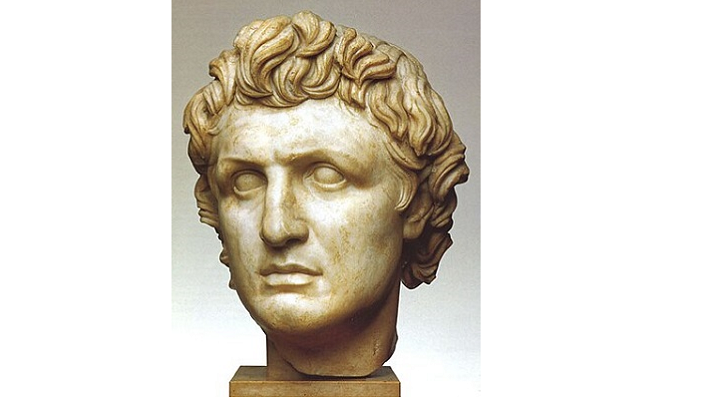
Attalus I (269 BC-197 BC) was a king of Pergamon who is believed to have invented the game of chess to distract the Greeks during the siege of Troy, according to a legend mentioned in the novel Aurora de Nevers by French writer Paul Henri Féval (1816-1887), who died this year.

Spanish painter Juan Gris (1887-1927) is born, painter of several works centered on chess.