Milestones of 1851/1860 – The first International Tournament and the meteoric emergence of Paul Morphy
By Sergio Ernesto Negri

GLOBAL CONTEXT
Two significant events occurred at opposite ends of the period. On the one hand, 1851 saw the Foucault pendulum experiment, which experimentally demonstrated the Earth’s rotation; on the other, in 1860, Abraham Lincoln (1809-1865) assumed the presidency of the United States, opening a political space that would lead to abolitionism and the reunification of the country after the Civil War that would engulf it in the following decade.
Furthermore, there were other important milestones, beginning with the Great Exhibition in London, held at the Crystal Palace. This exhibition, a celebration of a nation eager to showcase its technological advancements within the context of the Industrial Revolution, took place in 1851, the same year that the first international chess tournament in history was held. Its modular iron and glass structure demonstrated that it was possible to create monumental, luminous, and airy spaces at an unprecedented speed.

Politically, the Second Anglo-Chinese Opium War (1856-1860) erupted, preceded by a massive and bloody civil war sparked by a mystical-social movement against the Qing Dynasty, which cost between twenty and thirty million lives. Another civil war took place in Mexico between liberals and conservatives, with the former emerging victorious. The Crimean War (1853-1856) also occurred, in which the Russian Empire faced a coalition formed by the Ottoman Empire, the United Kingdom, France, and the Kingdom of Piedmont-Sardinia. This war is considered the first modern war in history, as it employed technologies such as the railroad and the telegraph. The first major nationalist uprising against British rule took place in India. When the United States forced Japan to sign the Treaty of Kanagawa, the island nation’s isolation ended.

Photograph by: Roger Fenton – Crimea, 1855.
America and Europe will be connected by a submarine cable. British scientist Charles Darwin (1809-1882) publishes The Origin of Species in London, thus revealing his theory of evolution based on natural selection. The first dirigible flight is recorded; the chemical component of what will become aspirin is synthesized, and the telephone and the incandescent light bulb are invented. The pioneer inexpensive industrial process for the mass production of steel is patented.
The old monarchies were restored in some cases, but real power definitively shifted to the industrial and financial bourgeoisie, driven by the unification of markets, the adoption of the gold standard, and British free-trade theories, the world economy grew at an unprecedented rate.
It was a period in which the Western world consolidated the foundations of capitalist, industrial, and globalized modernity. And, as the British historian Eric Hobsbawm (1917-2012) asserts, «the age of capital» was beginning, with a bourgeoisie triumphantly expanding, fueled by the railroads and steam power that propelled global trade. Nevertheless, the first crisis of the model did occur during this period, beginning in 1857 at the financial level, starting in the United States and continuing in England, destroying fortunes and interrupting the boom, albeit only temporarily.
Figures such as Napoleon III (1808-1873) and Baron Georges-Eugène Haussmann (1809-1891) in France, or, toward the end of the decade, Otto von Bismarck (1815-1898) in Prussia, imposed Realpolitik, a pragmatic policy based on state power, military force, and economic development. In 1853, the massive demolition of medieval Paris—with its narrow, unsanitary streets—began to make way for the construction of grand boulevards, circular squares, public parks, and modern sewer systems. This architectural transformation responded not only to hygienic and commercial needs but also to a military strategy (preventing the workers’ barricades that had toppled governments in 1830 and 1848). Paris became the capital of aesthetic modernity. And there, as throughout the world, Romanticism and idealism were left behind.
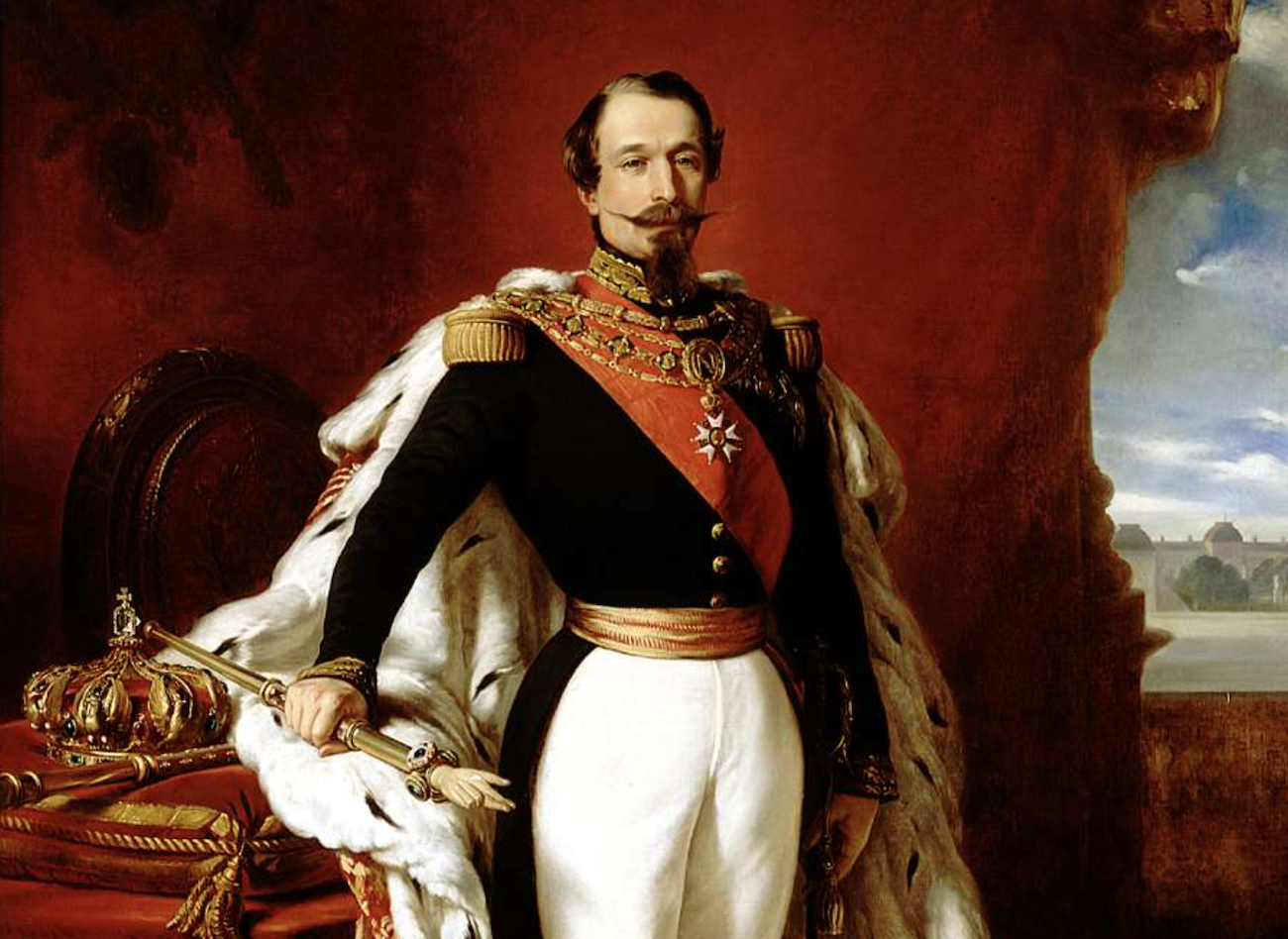
It was an era of technological optimism, blind faith in material progress, and violent imperialist expansion into Asia and Africa. The massive construction of railways connected the continental interiors with the ports, while steamships shortened ocean distances. World trade multiplied. The massive gold discoveries in California and Australia injected liquidity into the global economy, boosting international banking and triggering mass migrations. There was a rural exodus and the rise of metropolises. Cities like London, Paris, and New York doubled their populations, leading to overcrowding, cholera epidemics, and the need for drastic sanitation reforms.
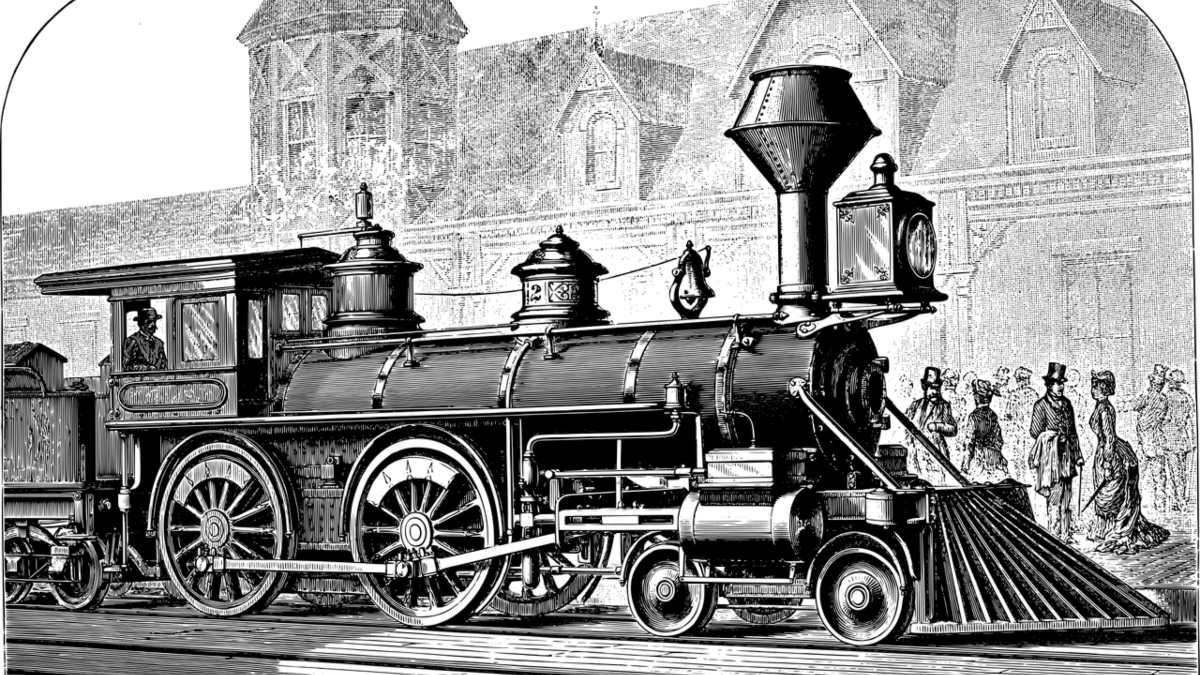
Social polarization intensified. While the bourgeoisie celebrated its wealth in salons, theaters, and exhibitions, the working class began to organize underground, drawing on the ideas of early trade unionism and the publications of the German philosophers Karl Marx (1818-1883) and Friedrich Engels (1820-1895). Marx, between 1851 and 1852, published his work The Eighteenth Brumaire of Louis Bonaparte, in which he attempts to explain how the 1851 coup d’état of Louis Bonaparte was brought about by the class struggle and the material conditions that each class defended.

Art and culture were caught between two great forces: the final decline of Romanticism and the rise of Realism, which sought to portray the world as it was, with its industrial lights and the miseries of the working class. At the same time, the birth of photography forever redefined the concept of visual representation.
In literature, the golden age of the novel emerged, with works such as Madame Bovary (1857) by the Frenchman Gustave Flaubert (1821-1880), addressing a certain state of unease among the bourgeoisie, and Bleak House (1853) and Hard Times (1854) by the Englishman Charles Dickens (1812-1870), portraying the dehumanization of English industrial cities. Meanwhile, Russian realism began to hone its psychological and social weapons, with Ivan Turgenev (1818-1883) publishing A Sportsman’s Sketches (1852), a work critical of the serfdom system. At the same time, a young Leo Tolstoy (1828-1910) was gaining notoriety with his Sevastopol Stories (1855). Both authors, incidentally, were closely associated with chess. In the United States, Herman Melville (1819-1891) published Moby-Dick (1851), a work that would be reevaluated over time, and Harriet Beecher Stowe (1811-1896) released Uncle Tom’s Cabin (1852), a novel that ignited the abolitionist movement in the lead-up to the Civil War.
The birth of modern poetry was also witnessed by the Frenchman Charles Baudelaire (1821-1867), who published Les Fleurs du Mal (1857), shifting the focus from idyllic nature to urban tedium, the beauty of decadence, eroticism, and the figure of the flâneur (the wanderer of the great metropolis); and by the American Walt Whitman (1819-1892), who self-published the first edition of Leaves of Grass (1855) in New York, employing free verse to celebrate the body, sexuality, and mass democracy, definitively breaking with traditional European metrics.
In music, it was the era of Wagnerian musical drama and the rise of Italian opera. In this latter sense, Giuseppe Verdi (1813-1901) presents the most famous and frequently performed operas in the history of the genre, connecting melodrama with tremendous psychological depth and unforgettable melodies: Rigoletto (1851), Il trovatore (1853), and La traviata (1853). Meanwhile, the German composer Richard Wagner (1813-1883) wrote the librettos and music for his tetralogy The Ring of the Nibelung during this decade and composed the revolutionary opera Tristan and Isolde (completed in 1859). In this latter work, with the opening chord of Tristan, he altered the rules of traditional harmony and opened the door to modern dissonance, blurring the boundaries of classical tonality. The Austro-Hungarian composer Franz Liszt (1811-1886) invented the concept of the symphonic poem (orchestral music inspired by a literary or pictorial program) during this decade. It could be said that the brief, virtuosic salon pieces of the past had given way to harmonically complex structures and the total work of art.
Western thought underwent a violent secularization. The Romantic idealism of the preceding decades was displaced by experimental science and socioeconomic analysis. To the contributions of Darwin and Marx, in science and political economy, respectively, was added, from a philosophical perspective, that of the German philosopher Arthur Schopenhauer (1788-1860), whose thought, bordering on pessimism, although presented earlier, achieved its greatest impact in this decade, thanks to the publication of his essays Parerga and Paralipomena (1851). Meanwhile, another philosopher, the Frenchman Auguste Comte (1798-1857), completed his System of Positive Polity (1851-1854), consolidating the idea that humanity was advancing toward a «scientific» or positive state, where religion and metaphysics would be replaced by sociology and the exact sciences.
CHESS IN THE FIRST DECADE OF THE SECOND HALF OF THE 19TH CENTURY
Two highly significant events occurred during this decade. Firstly, in 1851, the first international tournament in history was held in London, resulting in the somewhat unexpected victory of Prussian Adolf Anderssen (1818-1879). The favorite, local star Howard Staunton (1810-1874), was relegated to second place, marking the end of the match-based era that had characterized the preceding period. Secondly, towards the end of the decade, the American Paul Morphy (1837-1884) burst onto the scene. In Europe, he decisively defeated all his rivals, including Anderssen, without ever being able to play the elusive Staunton. This not only showcased his individual genius but also, for the first time in history, meant that the title of best player in the world no longer belonged to a European.
THE LONDON INTERNATIONAL TOURNAMENT 1851
England, with its Great Exhibition, showcased its power within the context of the Industrial Revolution. In keeping with this spirit, it organized an international chess tournament, the first in modern history, since the Madrid tournament of 1575 can be excluded due to its almost experimental nature. And, to this end, the capital of the Empire anticipated Germany, which had been making similar preparations, thanks to the impetus of…
The local player Howard Staunton (1810-1874), who had been gaining ground since the previous decade, securing the right to field the best player in the world for England, to the detriment of France, was key to organizing the event and, of course, was the favorite. Everything was ready for the tournament, but things would not go according to plan.
The best players of the time were invited, although several would not attend for various reasons. The absence of German Tassilo von der Lasa (1818-1899), engaged in diplomatic duties, and of Russian Aleksandr Petrov (1794-1867) and Finn Carl Jaenisch (1813-1872), from a country then part of the Russian Empire, was regrettable. Von der Lasa did not travel, and Petrov’s ship was delayed, arriving in London after the tournament had already begun. Frenchman Charles de Saint-Amant (1800-1872) was also absent, on an overseas mission. The opportunity for more accurate comparisons of the players’ strengths was lost, especially since both von der Lasa and Petrov were considered, at one point, among the best players in the world. Saint-Amant, who had already lost to Staunton, also had no chance for revenge. Local Henry Buckle (1821-1862) was also absent, unable to participate for health reasons.
Other absences were also noted, though due to internal disputes. Indeed, the London Chess Club, at odds with the St. George’s Chess Club of Staunton, decided to boycott the tournament, meaning that two of its most prominent representatives were unable to participate: the German Daniel Harrwitz (1821-1884) and the British George Walker (1803-1879). A lack of funding also prevented the Italian Serafino Dubois (1817-1899) from attending.
The event was financed through an international fundraising campaign organized by the St. George’s Chess Club. Collectors, enthusiasts, and clubs from around the world (including contributions from India and the Americas) donated funds to reach the prize pool.
Ultimately, and with Staunton as the favorite, sixteen masters participated in a single-elimination tournament based on individual matches. At that time, there was no time control for the moves, which meant that some games lasted over ten hours and, in retrospect, highlighted the need to develop a clock to measure and control the duration of matches. That player was particularly annoyed, for example, when he faced his compatriot Elijah Williams (1809-1854), seeing his opponent take two and a half hours to make a single move.

Contrary to the predictions, it was the Prussian (born in Breslau, present-day Polish city of Wroclaw) Adolf Anderssen (1818-1879), a mathematics professor not very well known outside his country, who emerged victorious (and in Germany he was not considered the best, a condition that in any case belonged to von der Lasa), by beating in the final stage the Englishman Marmaduke Wyvill (1815-1896), a renowned parliamentarian, by 4.5 to 2.5.
The sequence of the tournament up to that point was as follows:
LONDON 1851 — KNOCKOUT BRACKET
========================================================================================
FIRST ROUND QUARTERFINALS SEMIFINALS FINAL CHAMPION
(Best of 3) (Best of 7) (Best of 7) (Best of 7)
A. Anderssen (2) ───┐
├─── A. Anderssen (4) ───┐
L. Kieseritzky (0) ─┘ │
├─── A. Anderssen (4) ───┐
J. Szén (2) ────────┐ │ │
├─── J. Szén (2) ────────┘ │
S. Newham (0) ──────┘ │
├─── A. Anderssen (4.5) ──┐
H. Staunton (2) ────┐ │ │
├─── H. Staunton (4.5) ──┐ │ │
A. Brodie (0) ──────┘ │ │ │
├─── H. Staunton (1) ────┘ │
B. Horwitz (2.5) ───┐ │ │
├─── B. Horwitz (2.5) ───┘ │
H. Bird (1.5) ──────┘ │
├── ADOLF ANDERSSEN
E. Williams (2) ────┐ │
├─── E. Williams (4) ────┐ │
J. Löwenthal (1) ───┘ │ │
├─── E. Williams (3) ────┐ │
J. R. Mucklow (2) ──┐ │ │ │
├─── J. R. Mucklow (0) ──┘ │ │
E. S. Kennedy (0) ──┘ │ │
├─── M. Wyvill (2.5) ─────┘
M. Wyvill (2) ──────┐ │
├─── M. Wyvill (4.5) ────┐ │
E. Loewe (0) ───────┘ │ │
├─── M. Wyvill (4) ──────┘
H. A. Kennedy (2) ──┐ │
├─── H. A. Kennedy (3.5)─┘
C. Mayet (0) ───────┘
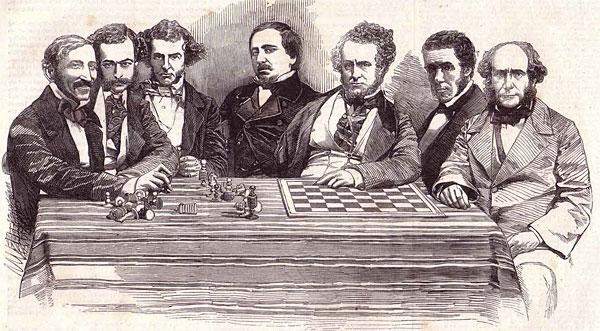
Participants in the London Tournament, 1851.
As will be seen, Anderssen was particularly on fire, since on his way to glory he had to face two top players: Staunton in the semifinals, whom he decisively defeated 4-1, and in his debut match, the Baltic German (resident in France) Lionel Kieseritzky, whom he defeated 2.5-0.5.
The winner being a player of the Romantic style, there was, in a way, a return to past values. However, with the passage of time, and games developed here adhering to a more technical style of play, well in line with the values of the Industrial Revolution, the canon of chess was changing course.
To determine the final standings, beyond the first two places and up to eighth, further matches were played, ultimately resulting in the following ranking for the aforementioned players:
Here is the translated and beautifully formatted table for the consolation final standings of the London 1851 tournament:
London 1851 — Consolation Final Standings (3rd to 8th Places)
| Place | Player | Country / Origin | Consolation Phase Achievement |
| 3rd | Elijah Williams | England | Defeated H. Staunton in the third-place match (4.5 to 3.5). |
| 4th | Howard Staunton | England | Lost the third-place match to E. Williams. |
| 5th | József Szén | Hungary | Defeated B. Horwitz (4–0) and subsequently defeated H. A. Kennedy (4.5 to 0.5). |
| 6th | Hugh Alexander Kennedy | Scotland | Defeated J. Mucklow (4–0) and subsequently lost to J. Szén. |
| 7th | Bernhard Horwitz | Prussia (residing in England) | Lost to J. Szén (4–0) and secured 7th place due to his opponent’s walkover. |
| 8th | James R. Mucklow | England | Lost to H. A. Kennedy (4–0) and failed to appear (walkover) for the 7th-place match. |
For his victory, Anderssen received 183 pounds and a silver cup, while Wyvill earned 55 pounds. The final prize money went to Mucklow, who received 7 pounds.
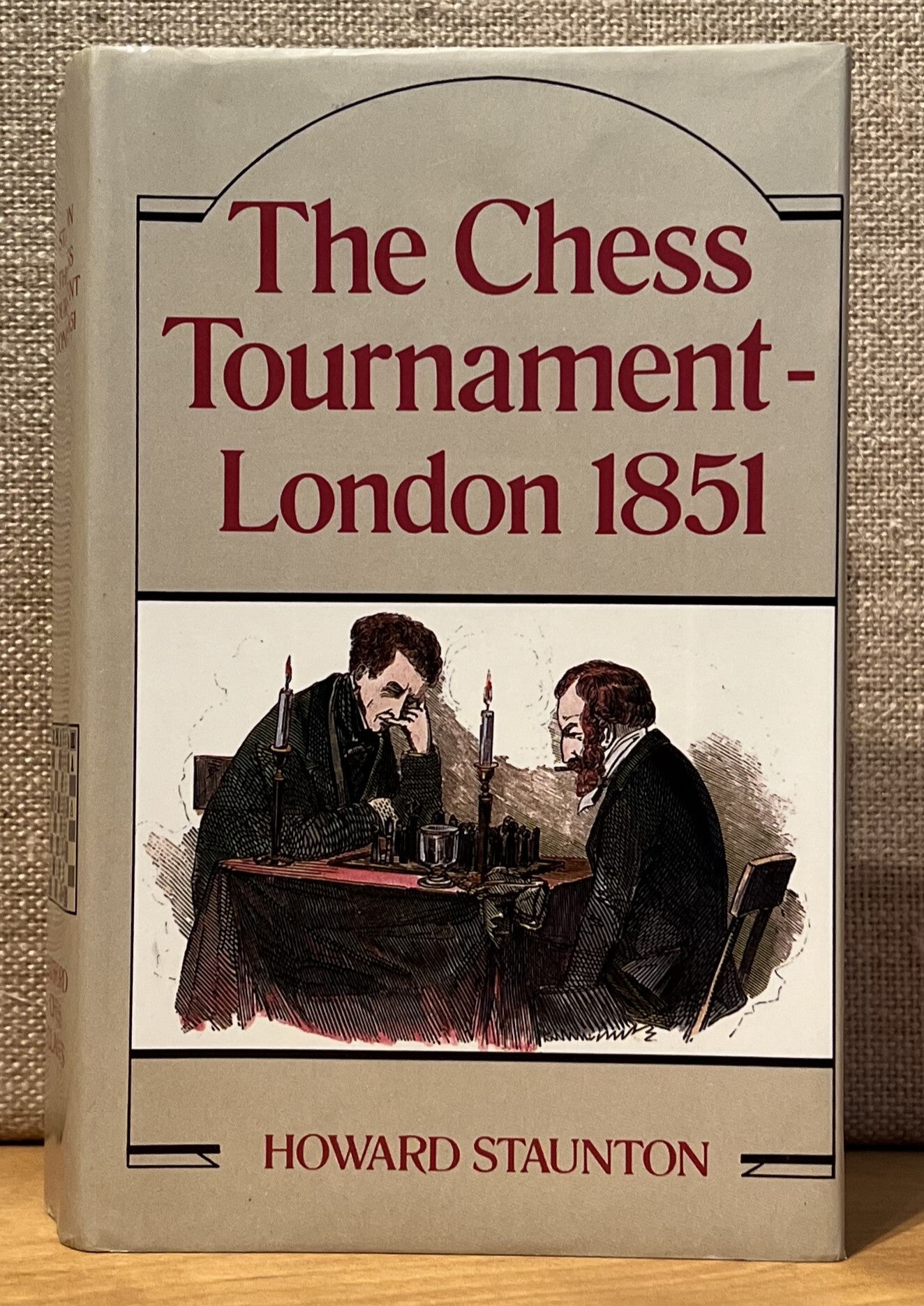
In 1852, Staunton published The Chess Tournament, a book that compiled all the games from the event, along with technical analyses and chronicles of its progress. This format became the standard for future similar projects, a way to record history and democratize knowledge of chess technique.
MATCH OF THE LONDON TOURNAMENT ANALYZED BY MY ALEJO DE DOVITIIS
THE MORPHY METEOR’S RELEASE IN EUROPE 1858/1859
There are chess players who are true watershed moments in the history of chess. They are very few. Just as Philidor was in the last century, in this one, in addition to Steinitz, who would dominate the scene later, from his debut in the 1860s until almost the end of the century, the most notable case will be that of the American Paul Morphy (1837-1884), born in New Orleans, a figure with a dazzling, albeit brilliant, career, the first exponent from the other side of the Atlantic to achieve the undisputed status of having been the best player in the world, after his emergence in Europe in the years 1858/1859 when, with absolute authority, he defeated all his opponents.

At the age of twelve, as proof of his early talent, he defeated the strong Hungarian player Johann Löwenthal (1810-1876) in August 1850 in a three-game match, winning two and drawing one.
Morphy studied law at Louisiana State University, where he would soon graduate. Since this occurred before he reached the legal age of twenty-one, it allowed him to dedicate himself to chess during a hiatus of almost two years, while waiting to begin his professional career.

At twenty years old, he became the US champion, triumphing in the so-called First American Chess Congress held at the end of 1857, under the format of elimination matches, in the city of New York, in which sixteen chess players from all over the country participated, defeating in the final stage, which he reached after easily getting rid of his rivals in previous stages, the German Ludwig (Louis) Paulsen (1833-1891), who was able to participate since the competition was for residents and not only for natives, the native prevailing after five wins, two draws and one loss. Thus, Morphy became the second American champion in history, following in the footsteps of the English-born Charles Henry Stanley (1819-1901), who had won the title in 1845.
Boasting this great victory, a challenge was issued to the Englishman Howard Staunton (1810-1874), the greatest player in that country and considered a virtual world champion in the 1940s, to come to the United States to face him. When Staunton declined, proposing instead that the match be held in Europe, Morphy set off for the Old Continent. In London, he was initially received with some apprehension, as his playing ability was uncertain. But, over time, after his victories and exhibition matches that proved as impressive as they were extraordinary (especially his blindfold simultaneous exhibitions), he came to be seen almost as a phenomenon.
On the island, he was received by the St. George’s Chess Club, of which Staunton was a member. Upon the arrival of the invited guest, he repeatedly managed to avoid accepting the invitation, oscillating between an initial appearance of underestimating his rival and, later, implicitly revealing his fear of defeat upon realizing his superior skill. Misunderstandings, disagreements, and, in a way, excuses began to surface.
The match between Morphy and Staunton initially seemed likely, as both were to participate in the 1858 Birmingham Tournament. While Staunton did play there (though he underperformed, failing to advance beyond the second round), Morphy arrived late and, in reality, was unwilling to play against anyone other than Staunton. In Birmingham, Morphy also gave a highly successful blindfold simultaneous exhibition (six wins, one draw, and one loss).
However, within that context, there were two games, played in a consultation format, with Morphy on one side of the board and Staunton on the other: Morphy partnered with Thomas Barnes (1825-1874), while Staunton was partnered with Reverend John Owen (1827-1901). In both cases, Morphy emerged victorious.
Morphy would go on to face other great European players. In the British capital, before his Parisian tour, he defeated Löwenthal 10-4 (+9, -3, =2) in a formal match played in July. But the first to challenge him was Barnes, who, in informal games, lost to him (+8, -19, =0), thus beginning to fuel the American’s legend. In these rather friendly matches, Morphy defeated three other local players, including Samuel Boden (1826-1882), with a score of +5 -1 =4; Henry Bird (1829-1908), by +10 -1 =1; and the Prague-born Edward Löwe (1794-1880) by an even more decisive +6 -0 =0. It was clear, with this sequence of results, why Staunton might have felt his supposed superiority threatened if he agreed to face the player from the USA.
Furthermore, the highlight of Morphy’s European tour came with his trip to France, the other world chess center of the time, which he reached in August. An obvious meeting point awaited him: the Café de la Régence, where he would play and give his famous simultaneous blindfold exhibitions.

In the French capital, he first defeated Harrwitz at the Café de la Régence, where Harrwitz held sway. Harrwitz seemed poised to reaffirm European superiority, winning the first two games. However, a now-acclimated Morphy quickly recovered, defeating his opponent by +5 -2 =1, at which point the Prussian withdrew, citing health problems.
Anderssen, the winner of the 1851 London Tournament (ahead of Staunton, incidentally), was the main attraction. The match took place between December 20 and 28, 1858. The American played in precarious health, suffering from influenza. The leech treatment he received (typical of the time) caused significant blood loss (it was even claimed he lost three-quarters of his blood), leaving him in a state of general weakness.
Therefore, the match was played at the Hotel Breteuil (on Rue du Dauphin), which no longer exists (there is another hotel with the same name now). It was also said that the Prussian, who traveled to Paris specifically to face the American, was suffering from some illness, although no details were given. At the end of the match, Morphy clearly prevailed, with a score of 8 to 3 in his favor, after seven wins (five of them consecutive), two draws, and two losses, one of them in the first round. The match, curiously, like the previous one, had begun with a victory for the European, an initial advantage that was quickly reversed by the visitor from across the Atlantic, who took control from the fourth game onward. After this clear result, Europe would definitively surrender to the American.
The defeated player himself, who would also fall to Morphy in informal games played after the match (losing five games to the Prussian’s one victory), admitted his admiration for his opponent’s play. This recognition was something the American greatly appreciated, comparing this gesture of sportsmanship (and, one might say, acceptance of the truth) with the unpleasant and/or evasive treatment that had characterized his previous dealings with Staunton in London, and also with Harrwitz in Paris.
Still in the French capital, he defeated the local player Jules de Rivière (1830-1905) 7.5 to 0.5 (+7; =1), whom Morphy would meet again on a subsequent trip in 1863, and the Englishman Augustus Mongredien (1807-1888), the President of the London Chess Club, who traveled to Paris specifically to face him. Mongredien was defeated 7.5 to 0.5 (+7; =1); this match was played at the Hotel du Louvre, where Morphy was staying, and took place in 1859, between February and March.
There are many less formal games played by Morphy in Paris, including several in which he gave a pawn advantage and a first move, and even two pawns and a first move. Under another format, the consultation format, he won two and drew two against the legendary Pierre de Saint-Amant (1800-1872), who played alongside the chess player and notable sculptor, the Frenchman Eugène-Louis Lequesne (1815-1887).
Under this consultation format, there is one game that acquired historical significance due to its spectacular development. It was played on November 2, 1858, at the Paris Opera, during an intermission while the opera The Barber of Seville was being performed. The opponents were the German Karl II, the Duke of Brunswick (1804-1873), and the French Count Gonzague d’Isoard de Vauvenargues (1838-1913), culminating in a spectacular victory for Morphy in a game often presented under the title «A Night at the Opera.»
On April 26, 1859, in a demonstration of the vast difference in skill level between Morphy and his contemporaries, he gave a simultaneous exhibition at the St. James’s Club in London against five great local players: he lost to Thomas Barnes (1825-1874), but beat Boden, Bird, de Rivière and Löwenthal.
His European successes led to his being hailed as a celebrity, putting the controversy with Staunton behind him. He was treated like a star, and after his successful European tour, chess fans began to consider him a virtual new world champion. Queen Victoria of England (1819-1901) herself received him in a private audience in the spring of 1859.
Upon his return to the United States on May 11, 1859, he was received with full honors. He was considered a hero who had triumphed in Europe: the New World was proving that it could now prevail over the Old.
At a banquet held in his honor in the chapel of New York University, packed with intellectuals, politicians, and high society figures, it was said: “Morphy is greater than Julius Caesar, for he came and conquered without even seeing” a clear allusion to the famous adage “Veni, vidi, vici” reformulated now to reflect the astonishment caused by the fact that the player could face his rivals blindfolded and still defeat them decisively. Similar receptions were also held in Boston and Philadelphia.
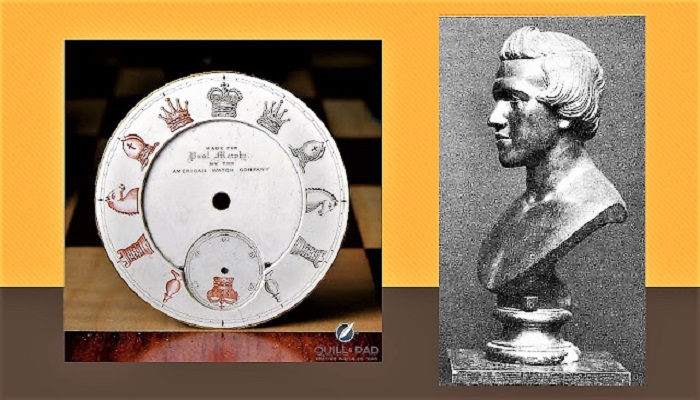
The player received, in that context, a gold and silver chess set representing medieval armies, a board of precious metals made of rosewood, with alternating squares of ebony and mother-of-pearl, with a border decorated with silver lines and four silver lances inlaid, with a silver plaque engraved in one of the corners bearing the inscription: «To Paul Morphy, in recognition of his genius and a testimony of appreciation from his friends and admirers in New York and Brooklyn, 1859» both from the renowned firm Tiffany & Co; and a gold pocket watch, presented by the New York Chess Club, on whose face, instead of the corresponding numbers, were small chess pieces enamelled in red and black.
.jpg)
True to his disdain for money, Morphy never used these pieces to play chess. Later, mired in financial difficulties and severe mental isolation, the clock had to be pawned in Paris (and was never recovered), while the gold and silver set and the chessboard were eventually auctioned off after his death in 1884 to cover family debts.
Upon returning from Europe, and despite the many accolades he received, Morphy, far removed from the nationalistic enthusiasm, decided to abandon chess. This decision, from the perspective of those who observed and idolized him, may not be so strange if we delve into the depths of his complex personality, coupled with a parental mandate that had indelibly marked him as unworthy of supporting his existence.
Before making this extreme decision, he first challenged any player in the world to play against him, offering the advantage of a first move and a pawn, in a highly esteemed test of his own strengths. But no one responded, so that would be virtually the end of his chess career, a game that was beginning to elude him after a European excursion in which, in no more than six months of competitive play, he would so quickly and completely establish himself. He no longer had any rivals in sight. Chess quickly lost its appeal for the brilliant player.
In the following decade, however, he would tentatively return to chess, which he did while staying in Havana in 1862 and 1864, and in Paris in 1863, escaping the fratricidal war that had engulfed his country. Much later, in 1883, while visiting Morphy’s hometown and residence, Wilhelm Steinitz (1836-1900), another of the century’s great players and future world champion, wanted to meet him personally, something he managed to do, but not without difficulty, given the American’s reluctance. Moreover, the interview was hardly a success (it lasted barely ten minutes), and to make matters worse, the man from New Orleans insisted that chess not be part of the conversation. At one point, paradoxically, when Morphy was told that Steinitz was in town, his response was: “I know him. His gambit isn’t good.”
But Morphy’s magical time, and not only in chess (his personal life would take a winding course, he would not be successful in his legal career, and his mental health would be severely affected over the years, even leading to his institutionalization for psychiatric patients), had been that of his European tour of 1858/1859.
Incidentally, upon returning to his country after his successful trip, he was visibly annoyed at being publicly considered a professional chess player, an activity that, as we know, had a poor reputation for him due to his father’s influence.
Morphy, despite his specific talent evidenced in the game, or perhaps precisely because of it, did not fully appreciate or value the world of sixty-four squares, the one that considers him a genius, one of the greatest in the history of chess.
On July 10, 1884, after returning from a long walk, he was found dead in his bathtub, the cause of death being cerebral congestion. It is said to have been a stroke, thus perfectly mirroring the life cycle of his father, who died in the same way, from thermal shock caused by cold water on a very hot body.
Paul Morphy, for his compatriot Robert «Bobby» Fischer (1943-2008), another great exponent of the chessboard—and between them strong parallels can be drawn (ranging from nationality to chess genius, including their deviations from convention)—was one of the ten best players of all time. Moreover, in Fischer’s opinion, Morphy should be considered «the most precise player who ever lived.»
Morphy’s was a whirlwind life. Just as he learned to play chess very early on, with immediate success, he also completed his studies quickly. He dedicated himself more seriously when given the opportunity, and in a tour of his country and Europe lasting just over a year, he defeated all his renowned rivals, definitively entering the history of the sport, much to his chagrin.
His playing style was as powerful as it was original. His overwhelming superiority over his contemporaries testified to the existence of a personality ahead of his time, as perhaps only Philidor could be seen in the history of chess.
His existential turmoil led him to abandon chess almost immediately, and years later, he drifted apart in his relationships with life, following the paths of emotional turmoil that foreshadowed his early death.
The Argentine thinker Ezequiel Martínez Estrada (1895-1964), in the Buenos Aires newspaper La Nación, in its edition of April 16, 1939, presents a note on the figure of the North American under the title: Pablo Morphy, an artist of intellectual refinement, having to define him:
“…an American chess player whose meteoric rise left a trail that reaches us to this day, possessed a powerful and refined intelligence that partook, in just the right proportions, of the precision of the geometer and the imagination of the poet.”
He continues with some of the well-known details about his life, highlighting his virtual disdain for the game, while noting that he would sink into misanthropy, sadness, and persecutory delusions. In chess terms, he places him as the creator of a school upon which all subsequent great players relied:
“He was not merely an extraordinary player, but the most complete, profound, and elegant in the entire history of chess. Around 300 of his games have been preserved… Directly or indirectly, those subsequent advances toward broader horizons, known as schools of thought, are based on the example of his work…”
He believes that Morphy was a necessity of its time, since it was necessary to find an expression of play which, through a broader conception and richer possibilities, would make strategic principles definitively replace the dogma of the texts and the poetic fantasy of the players. The American was the historical answer to that challenge:
“With Morphy, the tyranny of dogma and the dominion of inspiration came to an end, as did the ordinary taste that delighted in petty tricks and the spectacular sacrifice of major pieces. While remaining, himself, the most accomplished exponent of chess in his time, Morphy inaugurated a new era of transcendental strategy and genuinely chess-like beauty, consisting of the musical tuning and mathematical precision of ideas.” (…) While his rivals employed established lines of play and moves considered optimal, he worked on the live game to ascertain, through Cartesian reasoning, the soundness of the moves. (…) If there is anything original and supreme in Morphy’s intellect, it is insofar as it breaks away from canonical theory and obeys the directives of his own style. For this reason, he has been aptly compared to Mozart, and can be compared even more aptly to Paganini and Poe. (…) With Morphy, the game of chess acquires its complete “form,” just as the mechanics and aesthetics of the violin do with Paganini. Morphy’s sense of chess surpasses his personal ability to play it well, just as Paganini’s ear surpasses the prodigy of his hands. Paganini embodies a purely and exclusively violinistic sensibility, just as Morphy embodies a purely and exclusively chess-like mentality and technique.
Regarding the American chess player’s style, he observes, in a sort of incomplete ten-point guide:
1) That he chose open positions, with rapid development and maximum dynamism, giving the game a dramatic character from the outset;
2) That these open positions offer no strategic weaknesses and are as correct in their theoretical structure as the closed positions of the naturalist or positional school;
3) That the combination is always made taking as its starting point the functional sense of the position and not the position itself as the final point of a previous series that ends there;
4) That he approaches positions with the method and criteria of the problemist who sees, beneath the actual position of the pieces, «the true chess position,» that is, the beginning of a series and not the end;
5) That he creates the concept of the relative and interchangeable value of space (squares) and of the forces. (pieces), quite distinct from the static concept;
6) That he considered every move, from the initial one, worthy of great care, making the entire board «vibrate»;
7) That he subordinated all value to simplicity, clarity, and precision, striving to accumulate small tactical advantages (he bases this on a judgment of the former world champion, the Prussian Emanuel Lasker -1868-1941);
8) That he always proceeded according to two simultaneous plans: one tactical, of direct attack; the other strategic, with a view of the entire board, to obtain a better position;
9) That he created the notion of strength according to development, of development according to the plan, and of the plan according to the reality of the position.
Martínez Estrada concludes his analysis by asserting that Morphy’s greatest value lies in this transition from a static and closed mindset to an open and dynamic one. Perhaps uniting the author’s aesthetic and ethical perspectives on the admired chess player, he ultimately adds:
“However much modern chess has progressed toward greater refinement in its overall strategy and the solidity of its theoretical knowledge, a thorough mastery of tactical particularities, and the complexity of its plans, Morphy’s genius must be seen as that of a creator in whom the highest powers of imagination and precision converged. No other player has left in their work such a vast, noble, and pure wealth of emotions, of true beauty, and of refined thought. In this sense, he should be placed alongside those artists who, from Dante to Baudelaire, with Paganini and Poe as supreme examples, demanded of art not only the power of expression and originality, but also accuracy as a matter of conscience.”
His hometown, in a gesture of reconciliation with one of its most prodigal and admirable sons, inaugurated the Morphy Chess & Cultural Center on April 5, 2019. In New Orleans, there is also a street named after him, a plaque on the house where he lived and died—now a restaurant—and a chessboard that belonged to him is on display in the local museum.
Morphy was not a world chess champion, simply because that kind of title didn’t exist in his time. In his short but dazzling career, Morphy proved to be the best of his time, by a wide margin, compared to any of his rivals. Morphy, whose experience at the chessboard was as fragile in terms of its continuity over time as the quality of his subsequent mental health, was undoubtedly a brilliant chess player who established a style of play ahead of its time. Morphy, like very few chess players throughout history, became a celebrity of his time, transcending the specific realm of the game. He was idolized in Paris and London for his victories and the impressive blindfold simultaneous exhibitions that transformed him into a social phenomenon. He was received by the Queen of England in an implicit admission that he was the best in the world at what he did, and he was considered a hero in the United States, as he was able to demonstrate, for the first time, that the new nation was capable of prevailing over all those of Old Europe.
In a specifically chess sense, it could be argued that Morphy can be considered the first modern player, and therefore the precursor to Steinitz, the first world champion in history.
The American is a key link in the evolution of chess, having been born into the Romantic school (based on tactics), but later gravitating towards the Classical school (based on strategy), which, in a way, was shaped by his playing style (a style that would be perfected by the Prague-born player and subsequent masters).
While the American will be primarily remembered for his spectacular and rapid victories, in which he employed a more aggressive technique (generally to quickly defeat much weaker opponents), he also displayed a more positional and measured style of play (which allowed him to prevail against more competitive chess players).
And all this despite the fact that chess wasn’t exactly appreciated in its entirety by someone who, almost unintentionally, almost against his will, almost unknowingly, would become an unavoidable reference point when attempting, albeit vainly, to determine who was the most influential and the best chess player in history.
MORPHY’S GAME ANALYZED BY IM ALEJO DE DOVITIIS
OTHER SIGNIFICANT CHESS EVENTS OF THE DECADE
Besides the London International Tournament, although with a local focus and always under the single-elimination system, there were other tournaments in 1851, both in the capital of the British Empire and in Paris, Vienna, and Amsterdam. Furthermore, the old format of individual matches remained fully in force, although now coexisting with the new format.
The absent von der Lasa, who was absent from London, demonstrated his strength by defeating Anderssen in Breslau 10-5, showing that if he had been present in London, things could have been different. He also played against other compatriots, beating Jean Dufresne (1829-1893) 2-0, although losing to Carl Mayet (1810-1868) 2.5-1.5. Furthermore, still in his native Germany, von der Lasa defeated the Englishman Buckle 3-0. Incidentally, in Berlin, Mayet lost to Anderssen 4-0, who also triumphed over Dufresne 13-5.

Other matches took place in London during that vibrant year of 1851, featuring a powerful Kieseritzky, who defeated Buckle 2-1, fellow Englishman Henry Bird (1829-1908) 8-2, and Löwenthal 9-8, while also drawing with Jaenisch at 1.5. Interestingly, the Immortal Game occurred within the context of another match in which Kieseritzky clearly defeated Anderssen 10-6, demonstrating that, in any case, the Prussian could not yet be considered the undisputed best player of that time. Staunton, for his part, defeated Jaenisch 7.5-2.5. And in Warsaw, where they both resided, Petrov beat Jaenisch by 2.5 to 0.5, the latter also losing, although in St. Petersburg, against Ilya Shumov (1819-1890), by 2 to 1.
In 1852, the match format continued (there were two tournaments, one in England, the other in the Netherlands, strictly local in nature), played in various European venues and also in New York, where a four-game tie was recorded between the Englishman, who was already the US champion, Charles Stanley (1819-1901), and the Frenchman Saint Amant. In another of these matches, which at the time were generally informal, with few exceptions, Anderssen played the extraordinary game known as «The Evergreen Game» in which he brilliantly defeated Dufresne in Berlin, showcasing his romantic style of play.
«THE EVERGREEN GAME» ANDERSSEN’S GAME ANALYZED BY IM ALEJO DE DOVITIIS
In 1853, the first Berliner Schachgesellschaft tournament was held, with Dufresne emerging victorious, while in the USA, the New York Chess Club was formally reactivated in December. There were the usual matches, including two in St. Petersburg, in which Petrov prevailed over Sergei Urusov (1827-1897), and another there in which Urusov defeated Shumov 4-3; one in Berlin in which von der Lasa confirmed his dominance by beating Dufresne 2-0 and his rematch against Mayet, whom he defeated 3-2; and an even more significant one in Brussels, where the German defeated Staunton 6.5-5.5. In this context, the Englishman suffered health problems and, consequently, abandoned the idea of challenging Anderssen to avenge his defeat at London in 1851.
GAME BY VON DER LASA ANALYZED BY IM ALEJO DE DOVITIIS
By 1854, the tournament format had spread to the Canadian city of Toronto, and similar events were taking place in New York, always featuring local players. That year, a tragic event occurred involving a device that had been causing a public sensation, now in America, but previously in Europe: the supposed chess-playing automaton. A fire destroyed it in July at the Chinese Museum in Philadelphia, where it was on display.
And, in the match format, the first matches of a very young Morphy were recorded in the USA, already showing him victorious, a feat he would repeat in 1855, the year in which von der Lasa demolished Mayet in Germany, defeating him 10.5 to 0.5, then, in Brussels, he drew with Dubois at one point, and in Paris, he beat the local player Jules de Rivière (1830-1905) 3 to 2. And there was the reappearance of Anderssen, a clear victor over Mayet and Dufresne, by 14.5 to 6.5 and 6 to 0, respectively, in Berlin.
In 1857, the first British tournament was held in Manchester, organized by the local club. It was a single-elimination tournament with several foreign players, including Anderssen, who lost in the semifinals to Löwenthal. Löwenthal ultimately became champion, defeating the local player Samuel Boden (1826-1882) in the final. Simultaneously, the First American Congress was held in New York, where Morphy dazzled with his dominant performance, defeating the German Ludwig Paulsen (1833-1891) in the final with five wins, two draws, and only one loss.
In 1858, the British national contest was repeated, this time in Birmingham (although some games were played in London). Morphy was invited but declined to participate, as his intention was to face Staunton directly. Löwenthal emerged victorious once again, defeating Austrian Ernst Falkbeer (1819-1885) 3-1 in the final and Staunton 2-0 in the second. That same year, in addition to the matches featuring Morphy, another game was held in Paris in which Anderssen defeated Harrwitz 4.5-2.5.

A match between the chess clubs of Manchester and Liverpool, fifty-six kilometers apart, conducted via telegraph, was one of the highlights of 1859, with the experience being repeated in 1860. Although they had faced each other before in a similar fashion, these were much more formal encounters, fully showcasing the advancement of technology. Manchester won the first match, and the two drew, with the latter played by a team that consulted with the other, led by Horwitz.
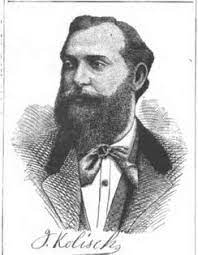
Among the matches of 1859, in addition to Morphy’s, those held in Saint Petersburg stand out, where Urusov defeated Shumov 8.5 to 4.5 and 6.5 to 2.5; and in Warsaw, where Petrov beat Urusov 13.5 to 7.5. Anderssen’s matches in Germany, where he defeated Mayet 14-2, and his informal games against Berthold Suhle (1837-1904), a rising local star, are noteworthy. In Paris, another rising figure, the Slovakian Ignatz Kolisch (1837-1889), emerged victorious, defeating Harrwitz 2.5-1.5 and drawing with de Rivière at seven.
This year saw two remarkable events in the field of blindfold simultaneous exhibitions. Morphy was a key figure, first in April, replicating his performance from the previous year at the Café de la Régence in Paris. He played under this format against eight opponents in London (it’s worth noting that Philidor had done the same in the same venue the previous century, facing only three chess players, which had already caused a sensation). He achieved six wins, one draw, and one loss. Upon returning to the United States, he repeated this feat at the New York Chess Club, earning praise for his exceptional photographic memory. Even more impressive was Paulsen’s performance, also in the United States. During this period, he gave several exhibitions of the same nature in Chicago, St. Louis, and Iowa, even facing fifteen players, a feat he had already accomplished in 1858.
By 1860, within the context of tournaments that were becoming increasingly common, the third British Championship, held in Cambridge, stands out. Kolisch emerged victorious, defeating the now-American (of English origin) Charles Stanley (1819-1901) 3-0 in the final. Among the matches, which were still prevalent, the Paris tournament is particularly significant, where Kolisch drew with Anderssen at 5.5, demonstrating his skill. Another who timidly appears is the Czech Willhelm Steinitz (1836-1900) who this year plays several matches in Vienna, beginning his career towards glory.
POWERFULNESS OF THE PROMINENT CHESS PLAYERS OF THE PERIOD
There are several retrospective measurements that assess the comparative chess strength of the players of the period. According to the Edo Historical Chess Ratings, Morphy was consistently the undisputed leader throughout the decade, followed by Petrov in the 1851-1859 period and Suhle in 1860. In 1851, the year of the London tournament, Morphy and Petrov were followed by von der Lasa, Anderssen, and Staunton.
However, Chessmetrics shows variations in leadership throughout the period. Comparing the records for the month of December of each year, the following details can be noted:
World Chess Dominance (1851–1860) – According to Chessmetrics
Here is the translated table in English, using clear headings for readability:
| Period | Dominant Master | Country |
| 1851 – 1852 | Howard Staunton | United Kingdom |
| 1853 | Lionel Kieseritzky | Livonia (Russian Empire) / France |
| 1854 – 1855 | Howard Staunton | United Kingdom |
| 1856 | Adolf Anderssen | Germany |
| 1857 – 1860 | Paul Morphy | United States |
The Hungarian professor Arpad Elo (1903-1992), who later became an American citizen and created the rating system adopted by FIDE in 1970, also conducted a retrospective analysis. He presented his findings in his 1978 book, The Ratings of Chessplayers – Past & Present, from which the maximum rating for each player of the decade is derived, taking into account the most prominent players (those who would have been in the top 10 according to the rating systems mentioned above), based on the following figures:
Historical Performance Ranking of Masters – According to Professor Elo
| Rank | Player | Country | Estimated Elo |
| 1 | Paul Morphy | United States | 2690 |
| 2 | Adolf Anderssen | Germany | 2600 |
| 2 | Tassilo von der Lasa | Germany | 2600 |
| 4 | Ignatz Kolisch | Hungary | 2570 |
| 5 | Serafino Dubois | Italy | 2550 |
| 6 | Alexander Petrov | Russia | 2530 |
| 7 | Daniel Harrwitz | Germany | 2520 |
| 7 | Howard Staunton | United Kingdom | 2520 |
| 9 | Johann Löwenthal | Hungary | 2510 |
| 10 | Henry Thomas Buckle | United Kingdom | 2480 |
| 10 | Wilhelm Hanstein | Germany | 2480 |
| 10 | Lionel Kieseritzky | Estonia / France | 2480 |
| 13 | Samuel Boden | United Kingdom | 2470 |
| 14 | József Szén | Hungary | 2450 |
| 14 | Sergei Urusov | Russia | 2450 |
| 14 | Elijah Williams | United Kingdom | 2450 |
| 17 | Henry Edward Bird | United Kingdom | 2440 |
| 17 | Berthold Suhle | Germany | 2440 |
| 19 | Bernhard Horwitz | Germany | 2420 |
| 20 | Carl Hamppe | Austria | 2410 |
| 20 | Ernst Falkbeer | Austria | 2410 |
| 20 | Thomas Barnes | United Kingdom | 2410 |
| 23 | Pierre Charles Fournier de Saint-Amant | France | 2400 |
| 24 | Ilya Shumov | Russia | 2390 |
| 25 | Charles Stanley | United Kingdom / USA | 2380 |
| 26 | Jean Dufresne | Germany | 2370 |
| 27 | Carl Jaenisch | Russia | 2360 |
| 28 | Karl Mayet | Germany | 2330 |
The following chess players who would become prominent in the future were born:
| Chess Player | Birth / Death | Country of Origin | Major Achievements |
| Berthold Englisch | July 9, 1851 October 19, 1897 | Austrian Empire (Born in Austrian Silesia, present-day Czech Republic) | * Undefeated winner of the 1st German Chess Congress (Leipzig 1879). * Winner of the Wiesbaden 1880 international tournament (tied with Blackburne and Schwarz). * Tied a famous individual match against the young prodigy Harry Pillsbury in 1896 with a score of five points. |
| Isidor Gunsberg | November 2, 1854 May 2, 1930 | Austrian Empire / United Kingdom (Born in Hungary, naturalized British citizen) | * World Championship Challenger in 1890, where he suffered a narrow, honorable defeat against Wilhelm Steinitz (+4 =9 -6). * Winner of elite international tournaments such as Hamburg 1885 and Bradford 1888. * One of the most feared chess players of the 1880s and a prolific chess columnist for the British press. |
| Miksa Weisz (Max Weiss) | July 21, 1857 March 14, 1927 | Austrian Empire (Born in present-day Slovakia) | * Winner of the 6th German Chess Congress (Breslau 1889), tying with Akiba Rubinstein and winning the tiebreaks. * Co-winner of the New York 1889 Chess Congress alongside Mikhail Chigorin. He earned the right to play a world championship match against Wilhelm Steinitz, but preferred to return to Europe. * One of the most solid elite players of the late 1880s, famous for his positional mastery. |
| Semyon Alapin | November 7, 1856 July 15, 1923 | Russian Empire (Died in Germany) | * One of the most prominent analysts and theorists in history; creator of the Alapin Variation against the Sicilian Defense (1.e4 c5 2.c3). * Winner of the St. Petersburg 1879 tournament (tied with Chigorin) and Munich 1911. * Renowned analyst of the King’s Gambit, the Ruy Lopez (Spanish Opening), and the French Defense. |
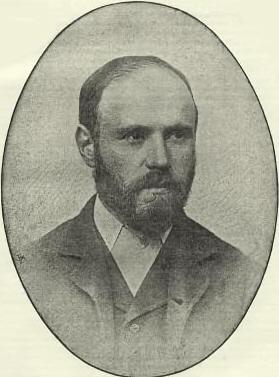
Also born was the Prussian Berthold Lasker (1860-1928), who, although a less prominent player than his brother, was very important as a protector and promoter of the career of Emanuel Lasker (1868-1941), who would become the second world champion in history.
In May 1853, Lionel Kieseritzky, born in the Baltic region of Germany, died. Paradoxically, in December of that same year, Chessmetrics presented him as the best player in the world. Also, two participants in the 1851 London Tournament died: the Hungarian József Szén (1805-1857), who according to some rankings was among the top five players in the world that year, and the Briton Elijah Williams (1809-1854).
CHESS IN THE PUBLISHING WORLD
In the realm of specialized magazines, in England, The Chess Player’s Chronicle, originally founded and edited by Staunton, had an intermittent run. After being sold by Staunton, the buyer ceased publication in 1856, but it returned to circulation around 1859 under the auspices of Kolisch et al.
In France, La Régence, following the demise of the legendary Le Palamède, edited by Kieseritzky between 1849 and 1851, was a publication that also experienced a period of inactivity, but returned, albeit briefly, between 1856 and 1857, under the editorship of de Rivière. In Austria, the Wiener Schachzeitung appeared in 1855, edited by Falkbeer, although its initial run was very short. In the USA, The Chess Monthly was founded in 1857, under the patronage of the bibliophile Daniel Willard Fiske (1831-1904), with Morphy as co-editor.
Furthermore, several widely circulated newspapers and general-interest magazines, recognizing the importance of chess as a recreational and social activity, featured columns on the subject. This occurred in Great Britain with The Illustrated London News, which included a weekly column by Staunton promoting the 1851 London Tournament; The Field, which from 1853 had chess coverage successively under the direction of Elijah Williams and Samuel Boden; and The Era, in which Löwenthal contributed his commentaries and insights between 1854 and 1857.
In the USA, a chess section was included in The New York Clipper in 1853; Frank Leslie’s Illustrated Newspaper followed suit from 1855, presenting the first problems of composer Sam Loyd (1841–1911). The New York Times, for its part, began formally publishing chess chronicles and problems in 1855, and in The New Orleans Sunday Delta, from Morphy’s homeland, a column edited by Charles Maurian (1838-1912), a childhood friend of Morphy’s, began appearing in 1858.
Regarding books, in addition to the one on the 1851 London tournament mentioned earlier, authored by the ubiquitous Staunton, we also have, from 1851, Chess Studies, or Endings of Games, by two Germans residing on the island, Josef Kling (1811-1876) and Bernhard Horwitz (1807-1885), a book dedicated exclusively to the study of endgames.
Leipzig, Germany, was an important publishing center. There, in the 1850s, the journal La Schachzeitung, founded in Berlin in 1846 by the German Ludwig Bledow (1795-1846), moved its publication to Leipzig under the Veit & Comp imprint. Initially, the local chess player Max Lange (1832-1899) served as its editor, and it was in Leipzig that he presented in 1857 Sammlung neuer Schachpartien, mit kritischen und historischen Noten (simply Schachpartien), a collection of the latest chess games with critical and historical notes.
From this time we also have The Chess Handbook (Philadelphia, 1859), one of the first substantial manuals produced in the United States, edited by W. H. Mears, which is based on Staunton’s book of the same name, which emerged in the wake of Morphy’s successes, which were reflected in a specific book, The Exploits and Triumphs, in Europe, of Paul Morphy, the Chess Champion, by the Englishman Frederick Edge (1830-1882), already in 1859, with publications in both New York and London.

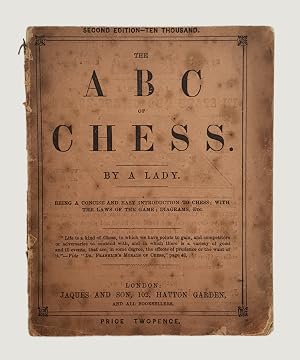
That 1860, being quite a curiosity, given that it is a book written by a woman, which was at the time and also later almost an eccentricity, in 1859 in England, under the title The ABC of Chess, a work «by a Lady«, and she was Harriet Miller Davidson (1839–1883), is presented, which is of an introductory nature.
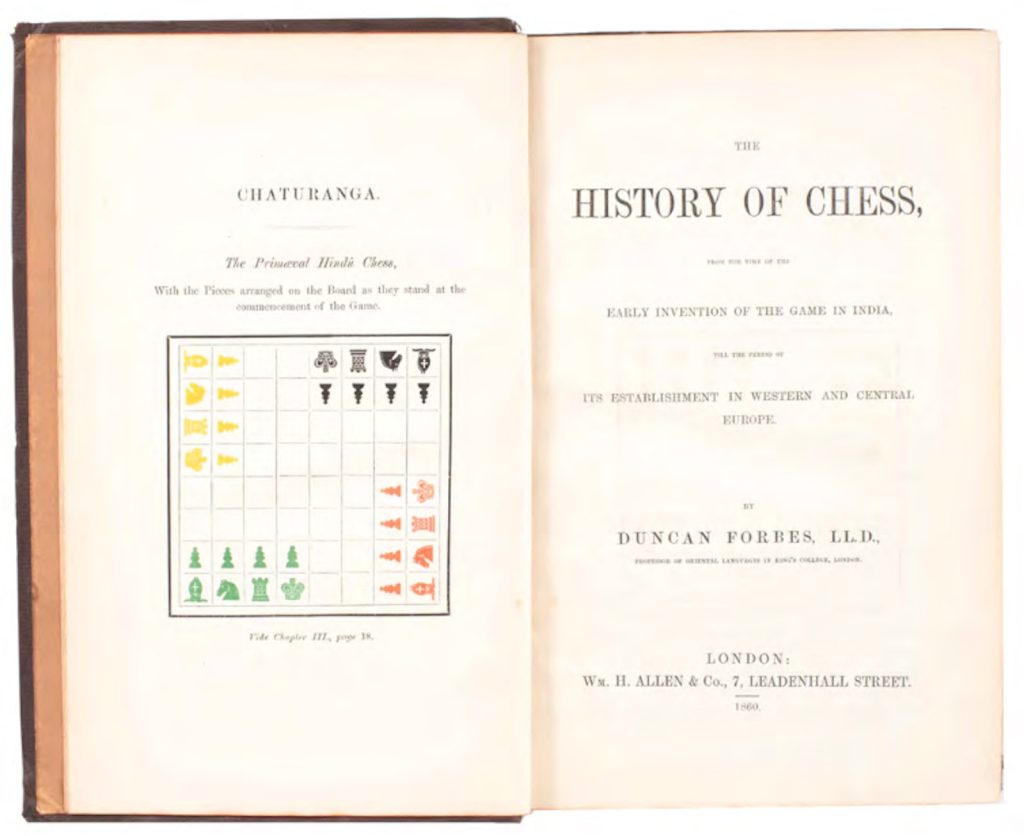
That year saw the publication of The History of Chess from the time of the early invention of the game in India till the period of its establishment in Western and Central Europe (or, in short, The History of Chess), by the Scottish linguist Duncan Forbes (1798-1868). Despite some errors in its foundation, some of them quite serious due to the incorrect dating of certain phenomena, it is a significant contribution to the construction of the hypothesis that places India at the center of attention when trying to establish the origin of chess and the sequence of games that refers to chaturanga (including its variant for four players).
Chess, Politics, Thought, and Society
As was common at the time, chess activity in much of the world was concentrated in social settings, primarily clubs and cafes. Powerful political figures of the era also played the game, albeit in more private settings.
For example, Napoleon III (1808-1873), who ruled France from 1852, frequented chess clubs in his youth, as had his uncle, another emperor, before him. In England, both Queen Victoria (1819-1901), who reigned from 1837 to 1901, and her consort, Prince Albert of Saxe-Coburg and Gotha (1819-1961), were chess enthusiasts, a passion shared by Prime Minister Benjamin Disraeli (1804-1881). In Russia, the tsars Nicholas I (1796-1855) and Alexander II (1818-1881) ruled during that decade, and both played the game; the former protected Petrov, and the latter strongly promoted him.
In the social sphere, the legendary Café de la Régence in Paris topped the list of iconic establishments. Its original location was demolished during the extensive urban reforms of Paris in 1852, but it immediately relocated to a new site on the Rue Saint-Honoré, the very one Morphy would visit in 1858.
Across the English Channel, other notable cafés included Simpson’s Divan, the venue for the 1851 London Tournament, and Pursell’s Coffee House. The Berlin chess elite, meanwhile, continued to frequent the Café de l’Europe, and on Nevsky Prospekt in St. Petersburg, Dominique’s Café operated as a venue for games.
While cafés were public, though certainly frequented by certain more affluent social classes and, in many cases, by figures associated with culture and intellectual circles, clubs were strictly private. Admission was subject to meeting certain conditions and paying a membership fee, and therefore they were frequented by more aristocratic circles.
In London, there was the St. George’s Chess Club, led by Staunton, and the London Chess Club, which, strictly speaking, was older. Similar organizations also appeared in other parts of the British Empire, such as Manchester (founded in 1817), Edinburgh, Dublin, Liverpool, Bristol, Leeds, and Newcastle.
In Germany, the Berliner Schachgesellschaft was a prominent club, focusing during this period on publishing the magazine Schachzeitung, while in Switzerland, the Schachklub Zürich, founded in 1809, was a leading force. Two other important clubs emerged during the decade: in 1853, the St. Petersburg Chess Club was founded in Russia, and in 1857, the Vienna Chess Club (Wiener Schachgesellschaft) was established.
In America, there was the New York Chess Club, the epicenter of the 1857 tournament where Morphy triumphed. Similar clubs existed in cities across the United States, including New Orleans, Boston, and Philadelphia. That same year, the National Chess Association was founded in New York. The American Ellen E. Strong de Gilbert (1837-1900), around 1860, in the city of Hartford, capital of the state of Connecticut, founded together with her husband a chess club called Queen’s Chess Club in which, unlike what usually happened, women were completely welcome, to the point that she herself was President of the entity.
In Cuba, under Spanish rule, the Café de París in Havana was the place to play chess, frequented by the Spanish-Cuban Celso Golmayo Zúpide (1820-1898), who, in 1858, was commissioned to the island as a judicial official. Further south, in Buenos Aires, chess was played at the Club de Residentes Extranjeros (Foreign Residents’ Club), founded in 1841, and practiced by English and French people living in Argentina, especially for the development of the local railway system. In addition, but for Cubans, the game was practiced from 1852 onwards, with the founding of the Club del Progreso (Progress Club), which would become an essential point of reference, perfectly blending politics and chess until the beginning of the next century.
Beyond these courtly and social circles, chess could be played by numerous political figures, those in positions of power, and intellectuals, primarily in private settings.
Such were the cases, in Europe, of the German Karl Marx (1818–1883), who cultivated the game during his exile in London alongside his compatriots Friedrich Engels (1820–1895) and Wilhelm Liebknecht (1826–1900), who would later found the German Social Democratic Party; of the Italian revolutionary Giuseppe Garibaldi (1807–1882); and of the Russian writers Ivan Turgenev (1818–1883) and Leo Tolstoy (1828–1910), the latter a frequent visitor to the Café de la Régence during his residence in Paris, both of whom gave exquisite treatment to the game in their respective works. Another writer who cultivated it, and who later, in Through the Looking-Glass, and What Alice Found There, would place chess at the center of the story, is the British Lewis Carroll (Charles Lutwidge Dodgson) (1832–1898).
In North America, chess was played by future president Abraham Lincoln (1809–1865), who often carried a small chessboard with him when he traveled. Also in the United States, Alexander Beaufort Meek (1814–1865), a politician, poet, and jurist, presided over the American Chess Congress in 1857, where Morphy emerged.
In South America, chess was cultivated by Pedro II (1825–1891), the Emperor of Brazil, who introduced the game into the routine of the court in Petrópolis, often playing with foreign diplomats and intellectuals. It was also played by the Brazilian writer Machado de Assis (1839–1908). In Argentina, among the many political figures, Bartolomé Mitre (1821–1906), a general who would become President, stood out for his love of chess. Benjamín Vicuña Mackenna (1831–1886), a politician, The Chilean historian and writer not only promoted the game but also documented that many heroes of the independence struggle, including the Argentinian José de San Martín (1778-1850) and the Chilean Bernardo O’Higgins (1778-1842), had played chess.
Political activity could also benefit from the talent of chess players, albeit in the role of diplomats. In the case of the Prussian von der Lasa, who also held the noble title of Baron, he was stationed in Stockholm, Copenhagen, and Madrid during that decade. In Madrid, in addition to his assigned duties, he dedicated himself to tracing and researching medieval chess manuscripts (such as those of Lucena and Ruy López), which he did in the royal libraries, laying the foundation for his monumental work as a historian of the game. As for the Frenchman de Saint-Amant, who had played an active role in the 1848 Revolution in Paris, he was Appointed consul in Sacramento and San Francisco, in the U.S., he undertook a delicate mission amidst the Gold Rush and the presence of many of his compatriots in the American West.
Another great player, and intellectual at the same time, was the Englishman Henry Thomas Buckle (1821–1862), who, during this decade, was focused on writing his magnum opus, History of Civilization in England, which did not prevent him from excelling at the chessboard. This demonstrates a sign of the times: the perfect marriage of chess, the quintessential strategy game with a high intellectual reputation, with the world of thought. This phenomenon, while not new (its high regard dates back to the Middle Ages), was perfectly in tune with the changing times and the new society that was taking shape at the beginning of the second half of the 19th century.
LITERATURE, ART, AND CHESS
The standardization of the Staunton chess piece design, created in 1849 by the Englishman Nathaniel Cook (1811-1879), became the norm in all chess circles, particularly in London and Paris. Its beautiful and simple design perfectly reflected the values of the Industrial Revolution. From its inception, it was mass-produced by the London firm of John Jaques. Furthermore, Cook was responsible for a three-volume annotated edition of the works of William Shakespeare (1564-1616), published between 1858 and 1860, a clear indication of his intellectual pursuits that extended beyond the confines of the chessboard.

In the case of painting, chess could no longer be portrayed solely as a game of kings or as a mythological allegory. Now, under the influence of the emerging realist perspective and a fascination with detail, artists used it to allude to psychological concentration, bourgeois leisure, or a certain exoticism prevalent at the time.
Thus, the Frenchman Jean-Louis-Ernest Meissonier (1815-1891) presented Les Joueurs d’échecs («The Chess Players») in 1853, in which the protagonists of the game are dressed in 18th-century attire, perhaps alluding to the country’s golden age in the world of chess, the era of Philidor. Furthermore, there are other works by this artist linked to the game under the same title presented in 1856 and 1858. His compatriot and colleague, Honoré Daumier (1808-1879), who in the next decade would present a painting with a similar title, for the time being, in his roles as lithographer and caricaturist, reflects in some of his compositions the atmosphere of the Café de la Régence in the pages of Le Charivari, a very popular newspaper in Parisian society.


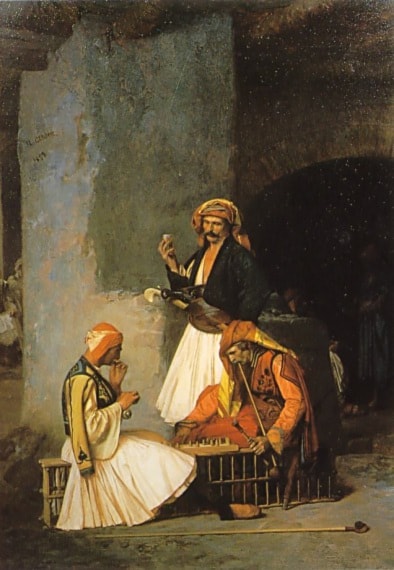
The exoticism comes from another Frenchman, Jean-Léon Gérôme (1824–1904), an orientalist who captured images of chess in other geographies, as he did in a work of 1856 entitled Joueurs d’échecs, Le Caire («Chess Players in Cairo»).
The Chess Game is an 1858 painting by the Anglo-American Edward Harrison May (1824-1887) in which, in addition to reflecting the atmosphere of chess practiced in bourgeois salons, one can imagine a situation in which, as it was always a possible metaphor, the game can be associated with amorous gallantry.

The pairing of music and chess is a classic with a long history. A particularly significant event occurred during this period in 1858, in the context of Morphy’s travels through Europe. This match pitted the American against the German Charles II, Duke of Brunswick (1804-1873), and the French aristocrat Count Isouard de Vauvenargues (1804-1883), during the intermission of a performance of Vincenzo Bellini’s (1801-1835) opera Norma at the Théâtre-Italien, located in the Salle Le Peletier in Paris. The magnificent game is remembered as «A Night at the Opera.»
During this time, photographic images began to be taken, thanks to recent technical discoveries that made it possible, initially using the daguerreotype technique. This was done to capture scenes from the 1851 London Tournament and also to celebrate Morphy, with works, for example, by the renowned American photographer Mathew Brady (1822-1896). Likewise, engravings of him were commissioned, such as the one made in 1859 by another American, Winslow Homer (1836-1910), after the chess player’s triumphant return from Europe, which was published in Ballou’s Pictorial Drawing-Room Companion magazine.
Combining literature and chess, several writers cultivated it with relish, incorporating it into their work, although in books that would appear outside the decade. This is the case of the Russian poet Ivan Turgenev (1818–1883), a notable chess player who practiced it at the Café de la Régence during his stays in Paris, and of his compatriot Leo Tolstoy (1828–1910), who years later would prefer to play chess rather than receive a decoration from his country’s government. However, in this decade, he practiced the game in his leisure time during his participation as a combatant in the Crimean War (1853–1856), a way of maintaining lucidity in such a critical context. On the other hand, dated May 30, 1852, in Pyatigorsk, there is a letter from the writer to an aunt, in which he said:
“There is no reason to justify my silence, and so I begin by begging your forgiveness. After returning from the campaign, I spent two months with Nikolenka in Starogladkovski, leading our usual life: hunting, reading, conversation, and playing chess. Meanwhile, I made an interesting and pleasant trip to the Caspian Sea. I would have been very happy with those two months had I not fallen ill. Moreover, every cloud has a silver lining, and thanks to that illness, I have come to spend the summer in Pyatigorsk, from where I am writing to you. I have been here for two weeks now, living a proper and solitary life, so I am satisfied with my health and my activities. I get up at four and go to the waters until six. Afterward, I bathe and return home. I read or chat over tea with one of our officers, who lives nearby.” I sit down next to him and eat with him as usual; then I sit and write until noon, our lunchtime. Vaniushka, whom I am very grateful to, feeds us very generously for very little money. I sleep until four, play chess or read, go back to the waters and, on my way back, if the weather permits, I have tea served in the garden, and here I dream for hours about Yasnaya, about the wonderful time I spent there…”.

For his part, Turgenev, in a short story from 1854 entitled Zatishye o Zatiš’ («A Haven of Peace» or «A quiet corner») already introduces the game in this dialogue:
«Do you play chess, Marya Pavlovna?» Astákhov inquired.
«Yes, but not well; she plays better than my brother,» answered Ipatov.
«Is Vladímir Sergyéitch a good player?» asked Verétiev.
«No, he is not a strong player, but he plays correctly, according to the rules,» muttered Ípatov, who was evidently confused by a move Astákhov had made.
«I don’t care for people who play correctly,» remarked Verétiev with a yawn. «There is no life in it. Chess is not just a game of calculation; it is an art, or a battle of wills.»
«You prefer wild combinations, then?» Astákhov asked, looking at him with cool disdain. «In chess, as in life, science and method usually triumph over mere impulse.»
«Perhaps,» Verétiev replied, smiling carelessly. «But the impulse is far more amusing while it lasts. I like to sacrifice pieces just to see the board catch fire. Check, by the way, Ípatov.»
(Ípatov, acorralado y perdiendo la paciencia, intenta defenderse de memoria usando frases hechas del juego, lo que provoca la intervención de su hija):
«You always say the same thing, father,» Marya Pavlovna remarked, and she moved a piece on the side board. «You try to play by rote, and that is why you lose.»
The poet had previously featured chess in another work, specifically in the 1845 poem Андрей («Andrei»), where he wrote:
«Do you play chess, Andrei Petrovich?» asked Marya Pavlovna. «I do, but not very well.» «That is good enough,» said Ipatov, «so you and I will play a game.»
They sat down to play chess. Ipatov, as it turned out, did not play by the rules, but rather by tradition, and he kept moving his pieces where they shouldn’t go; however, when he lost a piece, he would get angry and argue that playing chess was a complicated business and that his head was busy with other things.
Andrei Petrovich played very correctly, methodically, though slowly.
«You play very correctly,» remarked Veretiev, who was watching the game, «by the rules; that is good. But in this game there is a certain fantasy, a poetry of its own. Do you not care for it?» «I prefer correctness,» Andrei Petrovich replied dryly. «And that is a proper view too,» added Veretiev. «Check to you, Ipatov!»
Chess could give a character in a novel by the English writer Charles Dickens (1812-1870) a headache. This is evident in Bleak House, a work written between 1852 and 1853, which includes this passage:
«Mr. Guppy suspects everybody who enters on the occupation of a stool in Kenge and Carboy’s office of entertaining, as a matter of course, sinister designs upon him. He is clear that every such person wants to depose him. If he be ever asked how, why, when, or wherefore, he shuts up one eye and shakes his head. On the strength of these profound views, he in the most ingenious manner takes infinite pains to counterplot, when there is no plot; and plays the deepest games of chess without any adversary.»
In 1859, the first English-language version of the Rubáiyát of the Persian Omar Khayyám (1048-1131) appeared, written by the British author Edward FitzGerald (1809-1883). This version includes the famous quatrain, numbered XLIX. which alludes to chess, and has the following sound:
«Tis all a Chequer-board of Nights and Days
Where Destiny with Men for Pieces plays:
Hither and thither moves, and mates, and slays,
And one by one back in the Closet lays.«
«Ma lo’batakanim o falak lo’bat-baz, / Az ruy-e haqiqati na az ruy-e majaz; / Yek chand darin basat bazi kardim, / Raftim be sanduq-e adam yek-yek baz» (In original language).
Alexandre Dumas (1802-1870), the French writer, in his 1857 work, Le meneur de loups («Captain of Wolves»), mentions the classic idea of geometric progression in the invention of chess, when one of his characters exclaims:
“And then this rapid multiplication of the devil’s hairs was terrible! It reminded him of the story of the philosopher who asked for a grain of wheat, multiplied by each of the squares on the chessboard…”.
«Et puis, cette multiplication rapide des cheveux du diable avait quelque chose de terrible ! Cela lui rappelait l’histoire de ce philosophe qui demandait un grain de blé multiplié par chacun des carrés de l’échiquier.» (In original language)
In one of the first references to chess in Argentine literature, the Argentine politician and writer Domingo Faustino Sarmiento (1811-1888), in Volume II of Campaña en el Ejército Grande («Campaign in the Great Army»), published in 1852, states, when referring to the 1848 siege of Montevideo, that
“…that siege was a checkmate with no way out…”.
To conclude this journey, and uniting culture with chess, two fields so inextricably linked, in 1860 a game took place between Wilhelm Steinitz (1836-1900), born in Prague (Austro-Hungarian Empire) and the Austrian Philipp Meitner (1839-1910), in a tournament in Vienna, which is a true classic of 19th-century romantic chess, which would inspire the Argentine writer Abelardo Castillo (1935-2017) when conceiving his story, published in 1992, La cuestión de la Dama en el Max Lange («The Question of the Queen in the Max Lange»), opening that was played in that encounter. The plot evokes, as its main impulse, a specific position in the game, which will be key as a mirror of a decision that the protagonist, a chess enthusiast, must make. He must decide, both in a game he is playing in a local championship, where to place the queen, and what to do with his wife, about whom he had well-founded suspicions that she was unfaithful.