
Chess in the 19th Century: Milestones of 1900
By Sergio Ernesto Negri

Global Context
In this year, the last of the 19th century, a Holy Year as declared by Pope Leo XIII (1810–1903), an insurgent movement (the Boxer Rebellion) broke out in China, reaching a critical point in its opposition to foreign and colonial influence and culminating in the siege of foreign legations in Beijing. In South Africa, the conflict between the British Empire and Dutch-descended settlers (the Boer War) continued, and a civil war raged in Colombia. Meanwhile, in the Philippines, the country’s conflict with the United States persisted. French troops occupied part of Chad’s territory. Much of the Canadian capital, Ottawa, was destroyed by fire. In Italy, King Umberto I (1844–1900) is assassinated by an anarchist.

German scientist Max Planck (1858–1947) presents his work on the law of blackbody radiation, introducing the constant h, which is fundamental to establishing the relationship between a photon’s energy and its frequency, thereby laying the foundations of quantum mechanics. Although published the previous year, The Interpretation of Dreams by the father of psychoanalysis, the Austrian Sigmund Freud (1856–1939), begins to circulate, revolutionizing psychology. The first experimental flight of a rigid airship over Lake Constance is recorded, a feat achieved by the German Count Ferdinand von Zeppelin (1838–1917). Three scientists—the Dutchman Hugo De Vries (1845–1935); the German Carl Correns (1864–1933), and the Austrian Erich Tschermak (1871–1962), independently rediscovered the laws of inheritance formulated by the Czech Gregor Mendel (1822–1884), marking the beginning of modern genetics.

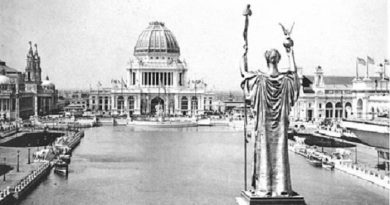
The Paris World’s Exhibition takes place, showcasing, among other innovations, the escalator, the diesel engine, and the synchronization of sound with moving images in films. In the same city, the second Olympic Games are held, featuring the debut of women athletes and a podium dominated by France, the U.S., and the U.K. The German-American Emile Berliner (1851–1929) begins manufacturing single-sided records in Montreal, Canada, making it possible to distribute music; shortly thereafter, in the U.S., the RCA Records label is founded. In Rome, the opera Tosca by the Italian Giacomo Puccini (1858–1924) premieres. The U.S. wins the first edition of the Davis Cup in tennis. In exile, the Irish writer Oscar Wilde (1854–1900) dies in France.

Chess in 1900
An era comes to an end. The American (born in Prague) Willhelm (William) Steinitz (1836–1900), the first world champion in history, dies in poverty in a psychiatric hospital. He was someone who knew how to reinvent his playing style, shifting from romantic to positional, and through that change, he established the definitive model for how chess should be played in modern times. His self-confidence became so powerful that it led him to believe he could beat God at chess. In any case, he can be considered the father of modern chess.

The Prussian Emanuel Lasker (1868–1941), the world champion who had dethroned Steinitz, reaffirmed his dominance by winning the Paris tournament held as part of the World’s Wxhibition, scoring 14.5 points out of a possible 16, though he did not finish undefeated, as he lost his game against the American Frank Marshall (1877–1944). Marshall’s compatriot, Harry Pillsbury (1872–1906), finished in a tie for third place with the Hungarian Géza Maróczy (1870–1951).
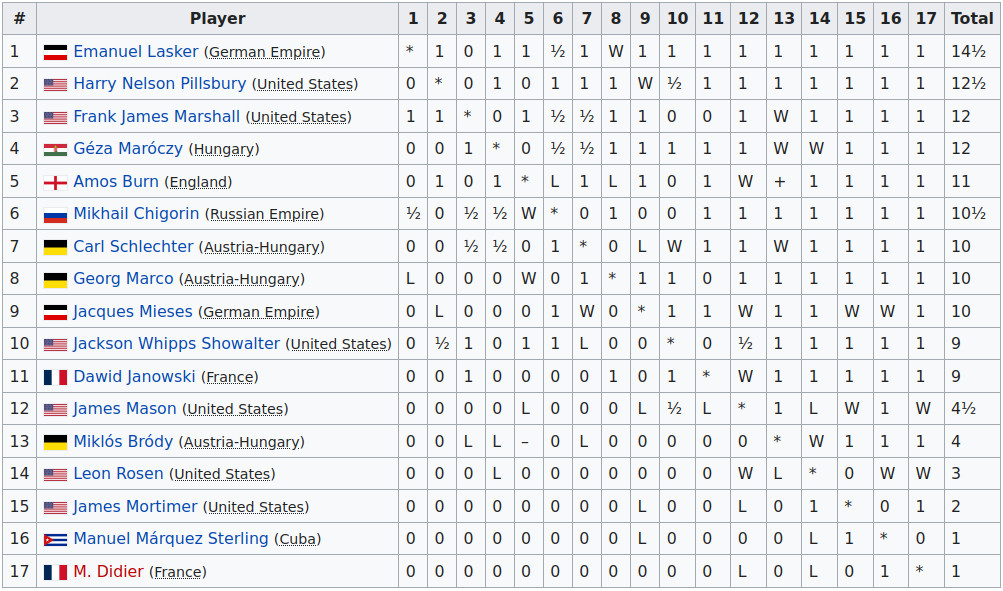
The 12th German Chess Congress, held in Munich, saw a three-way tie for first place between Maróczy, Pillsbury, and the Austrian Karl Schlechter (1874–1918), the latter two remaining undefeated with twelve points out of a possible fifteen. In Vienna, Maróczy won the Kolisch Memorial, ahead of Schlechter, a tournament that had begun in late 1899 and concluded early this year. The fifth telegraph match between the U.S. and England took place, with Pillsbury and Joseph Blackburne (1841–1924), respectively, leading the teams, resulting in a 6–4 victory for the U.S.; and a similar match was held at the collegiate level. In Australia, other matches were held between Sydney and Melbourne, and between Sydney and Brisbane, and one more between Melbourne and Perth; while in the U.S., another match took place between Chicago and New York.

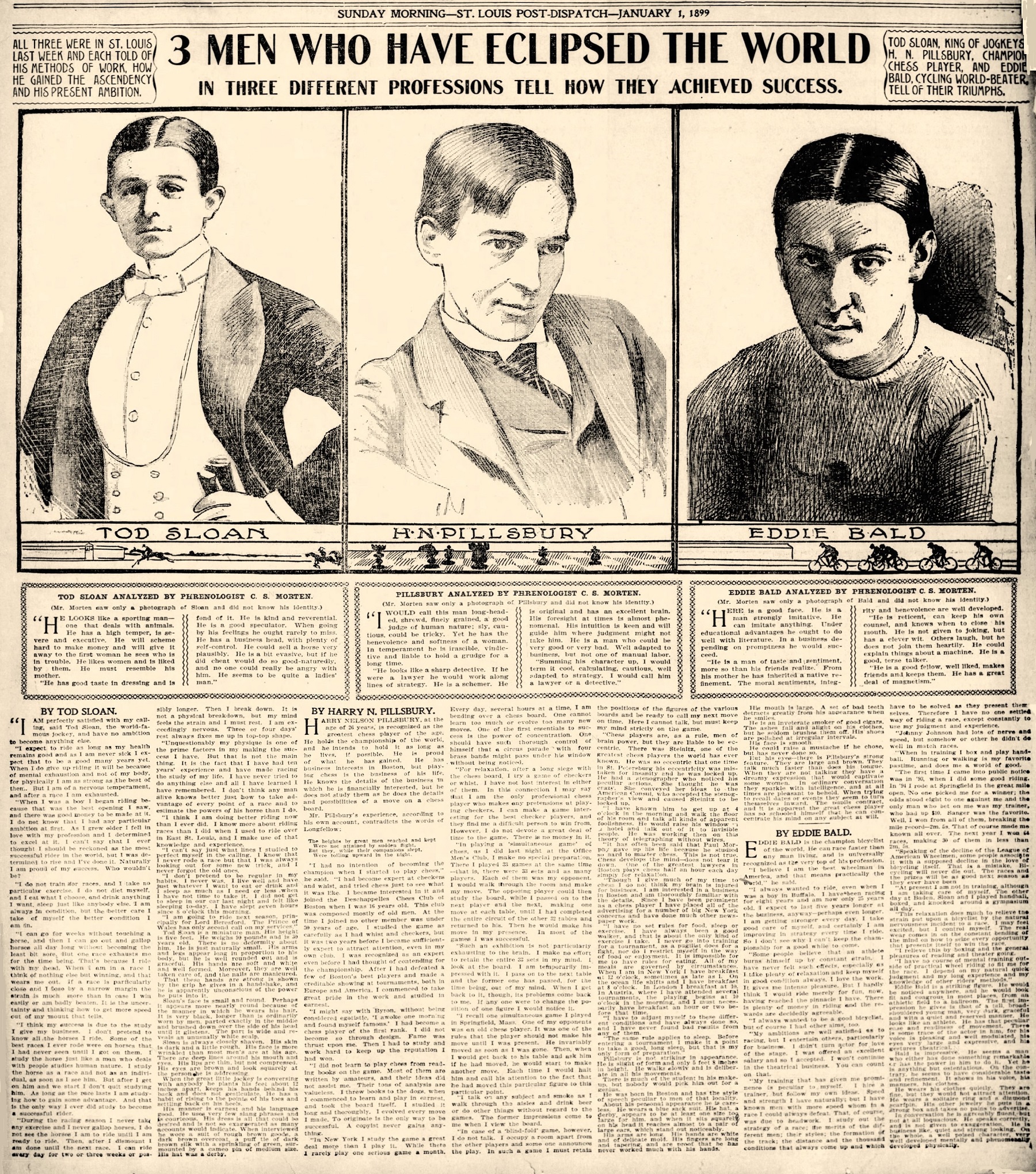
Pillsbury, cementing his reputation as a prodigy, played blindfolded against twenty players. He first did so in April at the Franklin Chess Club in Philadelphia, achieving fourteen wins, five draws, and only one loss; not content with that, he simultaneously played two games of checkers—also blindfolded—and took part in a game of whist. Later, in Europe, in the German city of Frankfurt in July, he repeated the feat by playing twenty blindfold games, winning eleven, drawing seven, and losing two. This was considered a world record, one that stood for many years, succeeding the one set in 1876 by the Polish player Johannes Zukertort (1842–1888) in London, when he had faced sixteen players. As part of the Paris Exhibition, among the performances offered, there were simultaneous exhibitions, including one by Pillsbury on ten boards at the Grand Cercle des Échecs.
The Chessmetrics ranking as of December lists the following top players: Lasker; Tarrasch; Pillsbury; Maróczy; Schlechter—though, of course, Steinitz is no longer included due to his passing. In the case of EDO Historical Chess Ratings, its global ranking highlights Lasker; Tarrasch; Pillsbury; Maróczy; and Chigorin.
Argentine Roberto Grau (1900–1944) is born; he was the Argentine and South American champion and a key figure in organizing the first Chess Olympiad held outside Europe, in Buenos Aires in 1939; he was also a founder of FIDE, and his Tratado General de Ajedrez («General Treatise on Chess») is a widely recognized instructional book in the Spanish-speaking world. Also born: the American (strictly speaking, born in Ukraine, then part of the Russian Empire) Irving Chernev (1900–1981), a prolific author with such well-known works as Logical Chess: Move by Move (1957) and a co-authored book, An Invitation to Chess, a learning manual (1945); the Latvian Wolfgang Hasenfuss (1900–1944), his country’s Olympic representative, for whom he won an individual bronze medal in Prague in 1931, and the German IM Kurt Richter (1900–1969), a two-time Olympic team bronze medalist—in Prague 1931 and Munich 1936 (the latter being an unofficial event)—and an individual bronze medalist on the first of those occasions, who is best known for the Richter-Rauzer Attack used in the Sicilian Defense.

Rudolf Charousek (1873–1900), born in Bohemia (Austro-Hungarian Empire), has died Rudolf Charousek; he wonseveral tournaments and a victory over the world champion, the Prussian Emanuel Lasker (1896–1941), in his international debut in Nuremberg in 1896, who had such a promising future, but passed away all too soon at the age of twenty-six, succumbing to tuberculosis. And also the American Ellen Gilbert (1837–1900), a powerful player, particularly in correspondence chess, who is remembered for announcing in advance two checkmates—one in twenty-one moves and another in thirty-five—causing a sensation, particularly because she was a woman, a group traditionally marginalized in the chess world; she and her husband founded, around 1860, in the city of Hartford, the capital of the state of Connecticut, a chess club called the Queen’s Chess Club, where, unlike what was customary, women were entirely welcome, to the point that she herself served as the club’s president.

The French writer Antoine de Saint-Exupéry (1900–1944), born this year, in Citadelle («The Wisdom of the Sands»), a reflective work considered his masterpiece, where, for example, expresses the following:
“That may well be so—since you are showing yourself to him. But if there is a certain music that can move him, and if you play this music to him, then it is not you but the music he will hear. Likewise if he is poring over a problem that torments him and you show him the solution, he is bound to take it from you. Whatever his hatred and his scorn of you, how should he make-believe to himself and go on seeking the solution? If you point out to a chess player the move which he has been racking his brain to find, and which alone will save him, you master him, for even while seeming to pay no heed, he obeys you. For when a man gives what you are seeking for, you are bound to take it over. A woman is hunting for a ring she has mislaid or the answer to a riddle. I find the ring and hold it out; or I whisper in her ear the answer. True, she may loathe me so much that she will have none of either. Nevertheless, I have mastered her, for I have sent her back to her chair; she would need to be quite crazy, to go on seeking…».

Also born at this time was the Argentine writer Roberto Arlt (1900–1942), who introduced chess into the novel genre in Argentina; he did so in Los lanzallamas («Flamethrowers»), although he also mentions it in Los siete locos («The Seven Madmen») and, as a witness to reality, provided commentary on the actual chess scene in the country’s capital in his Aguafuertes porteñas («Etchings from Buenos Aires»).

Other compatriots of Arlt were born this year: Leopoldo Marechal (1900–1970); tango lyricist Enrique Cadícamo (1900–1999); and poet Francisco Luis Bernárdez (1900–1978). The former considered panajedrez, that sophisticated variant of our game created by the artist Xul Solar (1887–1963), an act of love. The second mentions it in his tango Robustiano: “…You wear the cockade showing you’re a frog-like young man / And you’re a dandy with more squares than a chessboard…”). Finally, Bernárdez dedicated his poem Amor unitivo (“Unitive Love”) to chess, in which he says:
“So closely are our minds entwined / and so tightly bound are our hearts, / our inclinations now in harmony / and our natures intertwined, / that our arguments and reasons / and our joys and sorrows / are playing chess with pieces / identical in color and size. / On the board of life we see / two people we know engaged, / even though we cannot tell them apart, / in a game of love that we know / has no winner, because we both lose, / nor loser, because we both win.”
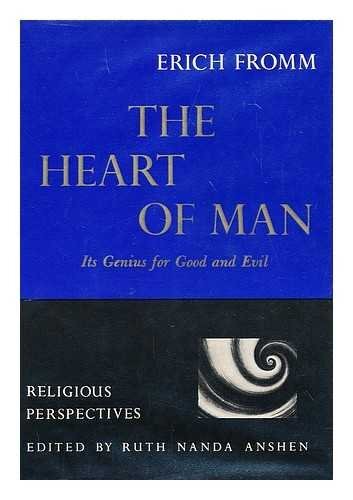
The German psychologist Erich Fromm (1900–1980) is another figure born this year who, in The Heart of Man, its genius for good and evil used chess within the framework of his arguments in the following way:
«A good illustration of the principle involved here is the game of chess. Assuming that two equally skilled players begin a game, both have the same chance of winning (with a slightly better chance for the white side, which we can ignore for our purposes here); in other words, each has the same freedom to win. After, say, five moves the picture is already different. Both still can win, but A, who has made a better move, already has a greater chance of winning. He has, as it were, more freedom to win than his opponent, B. Yet B is still free to win. After some more moves, A, having continued to make correct moves that were not effectively countered by B, is almost sure to win, but only almost. B can still win. After some further moves the games is decided (…) The implication of the analogy of the chess game is obvious. Freedom is not a constant attribute which we either «have» or «have not.» In fact, there is no such thing as «freedom» except as a word and an abstract concept. There is only one reality: the act of freeing ourselves in the process of making choices. In this process the degree of our capacity to make choices varies with each act, with our practice of life…».
The German philosopher Friedrich Nietzsche (1844–1900) has died. He viewed chess as a metaphor for the “new comedy”; he believed that chess could serve as a metaphor for the new comedy, but not for ancient musical drama. He expressed this in Die Geburt der Tragödie aus dem Geiste der Musik («The Birth of Tragedy») (1872), where he states:
«It was to a populace prepared and enlightened in this manner that the New Comedy could now address itself, of which Euripides had become as it were the chorus-master; only that in this case the chorus of spectators had to be trained. As soon as this chorus was trained to sing in the Euripidean key, there arose that chesslike variety of the drama, the New Comedy, with its perpetual triumphs of cunning and artfulness».
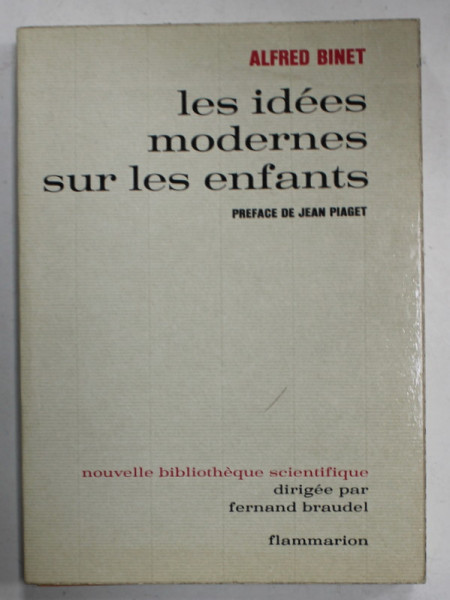
The French psychologist Alfred Binet (1857–1911), published Les Idées Modernes sur les Enfants («Modern Ideas About Children»), a text in which, building on his studies of chess’s psychological impact, he asserts:
«While studying a case in which great precision was possible, I had opportunity to observe the relationship which exists between intelligence and memory. This was on the occasion of a short incursion into the curious and picturesque world of chess players, some of whom have the admirable ability to play several games without looking at the chessboard. With the board far from them, they order a move which another person makes for them, and each time this person also informs the player of the opponent’s move. Several players were even able to play correctly without seeing and to win four, five, six, and even more games in competition with seeing but less talented adversaries.
This blind chess play implies a great ability for strategic representation. In order to play the game and win, it is absolutely necessary to visualize, with accuracy and precision at all times during the competition, the chessboard and its squares as well as the complicated position of the pieces in relation to one another. Memory is therefore definitely involved. Now it is very remarkable that this blind-play virtuosity is not observed in mediocre fourthor fifth-rate players, in those who are referred to as the duffers. On the contrary, it is found in almost all first-rate players because of the sole fact that they have exercised chess- board strategic intelligence to the utmost. Not all these masters have achieved the same blind-play proficiency, but all can play with their back to the chessboard.«