Argentine chess milestones of global significance (1810-2025)
By Sergio Ernesto Negri
In the 19th century
As a review of the presence of chess in the century in which the country was born, it must be said that it was practiced in cafes, clubs (some even specific ones created at the end of the century, although of short-lived existence) and in family residences (among them those of well-known figures in society).
On the other hand, chess was cultivated by patriots (General San Martín, Juan José Castelli, Bernardo de Monteagudo), politicians and men of culture (among them, José Mármol, Juan Lavalle, Juan Manuel de Rosas, Bernardino Rivadavia, and Bartolomé Mitre, his wife Delfina being one of the first female chess players recorded in our history).

During the Battle of Vuelta de Obligado, which took place on November 20, 1845, chess was a form of entertainment for the patriot troops, as evidenced by a wooden knight piece measuring 3.8 centimeters high and 1.6 centimeters wide that has been found and is now on display at the Obligado Battle Site Museum, near the city of San Pedro.
The first writer-thinkers who refer to chess in written works are Domingo Faustino Sarmiento and Juan Bautista Alberdi and, with a woman’s perspective, Juana Gorriti. The Club del Progreso in the city of Buenos Aires became a space where chess was played and public policies and government actions were designed for the construction of the Nation.
Even the founding of the nation can be viewed through the lens of chess. While it is believed that Viceroy Cisneros, when interrupted by patriots fighting for freedom, was playing cards, when the scene was recreated in the sculpure of Juan José Castelli located in Plaza Constitución in the city of Buenos Aires, the German artist Gustav Eberlein (1847-1926) chose to illustrate it with a chess game.

In the 20th century
First decade
In 1901 and 1902, the Club de Progreso of the city of Buenos Aires played telegraphic matches with the Clube dos Diários of Rio de Janeiro, Brazil, which ended in a draw, in one of the first matches of this kind in the world. In 1902, chess was mentioned for the first time in a fiction book, which occurred in a play by Roberto Payró entitled Sobre las ruinas… («On the ruins…»).
It is one of the pioneer entities in which chess was played, having been founded in 1852. The Argentine team was formed by Miguel Gelly, Julián Balbín, Eugenio Zamudio, Cupertino del Campo, Benito Villegas. Julio Lynch, Alberto Gelly and Alberto Palacios.


The Club Argentino de Ajedrez (Argentine Chess Club) was founded in the city of Buenos Aires in 1905 and, in the course of time, it would become one of the most renowned chess entities in the continent and in the international arena. This year, writer Leopoldo Lugones presented his book Los crepúsculos del jardín («The Twilights of the Garden»), which includes the poem El solterón («The Bachelor»), the first time chess is mentioned in Argentina in a work of this kind. Shortly after, in 1909, the game debuted in the short story genre, by the same author, who included it in Abuela Julieta («Grandma Juliet») a text included in the book Lunario sentimental («Sentimental lunary»).

In its beginnings, it published a magazine (the first specialized in the country, directed by Lizardo Molina), formed a library, brought to the country many main chess players, including world champions, being particularly remembered the visit of Emanuel Lasker in 1910 within the framework of the Centenary of the Nation. Benito Villegas, in this context, managed to defeat two of the illustrious visitors: Richard Teichman and Jean Taubenhaus.


On December 7, 1908, in proof of another technological prodigy that had the country as the protagonist, a telegraph meeting was recorded on the high seas between Argentine amateurs located on the ship König Wilhelm II and others chessplayers who crewed the steamship König Friedrich August, both German ships were on a voyage from Europe to South America.
In 1910 there is a polemic between the Spanish philosopher Miguel de Unamuno and José Pérez de Mendoza (President of the Club Argentino de Ajedrez -Argentine Chess Club-), in which the latter gives arguments in favor of the inclusion of chess in school curricula, a necessity that the former does not believe in.
On May 20, 1910, a statue by the German artist Gustav Eberlein was erected in Plaza Constitución in the city of Buenos Aires. It includes a bas-relief depicting the moment exactly one hundred years earlier when two patriots, Juan José Castelli and Bernardo de Monteagudo, demanded freedom from Viceroy Cisneros, who was distracted by playing chess, as the image shows (in reality, the situation would have been while the Spaniard was playing cards).

Second decade
Visits by the future world champion, Cuban José Raúl Capablanca, are recorded in 1911 and 1914. That year, the Club Argentino de Ajedrez, always seeking to spread the game, hired the German chess player Ricardo Teichmann.
In 1915, under the authorship of Arturo Capdevila, the first of the three poems that Argentina gave under the name «Ajedrez» (Chess) appeared in his book El poema de Nenúfar («Nenufar´s poem»). The next ones will be those of Jorge Luis Borges and Alejandra Pizarnik, and there will be a fourth referring to xiang-qi that is due to Alberto Laiseca, meaning a unique case in the comparative experience at an international level.
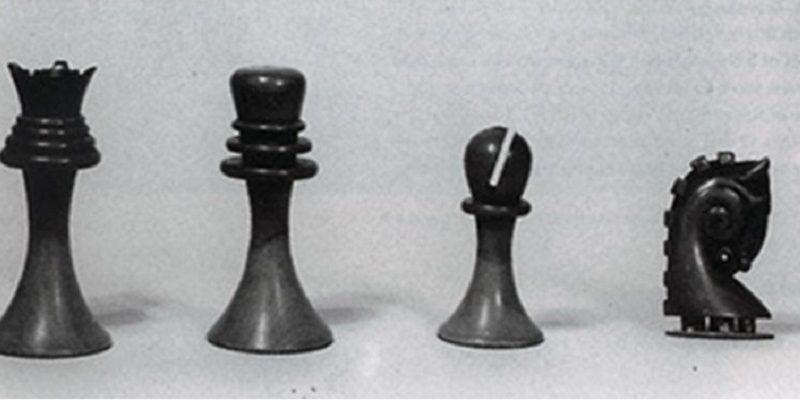
The French artist Marcel Duchamp visits Argentina between 1918 and 1919, during which time he devotes himself fully to chess (he will play at the Club Argentino de Ajedrez -Argentine Chess Club-), in the context of which he designs some pieces that will become models (“the pieces of Buenos Aires”).

In 1920 Pérez Mendoza presented the book El ajedrez en Argentina («Chess in Argentina»), a compilation on the impact of the activity throughout the length and breadth of a country that was a regional leader.

Third decade
In 1921, Roberto Grau became the first South American champion in Montevideo (Uruguay), a title he repeated in 1928 in Mar del Plata in its third edition. In the intermediate, that of 1925, in Montevideo, another compatriot, Luis Argentino Palau, won. Grau, in time, will be considered the “father of Argentine chess”, due to his multiple roles as player, organizer, disseminator and leader, with a central role in the creation of FIDE and in the organization of the first Olympiads held in Buenos Aires.

In October 1922, the Argentina Chess Federation (FADA) was founded, entity that publishes the official magazine El Ajedrez Argentino («Argentine Chess»), beginning in November 1923 and continuing until October 1926. It is successively directed by Damian Reca and Roberto Grau. A second phase will subsequently begin in January 1947.

Czechoslovakian Richard Réti came to Argentina and, in 1924, won the Argentine Major Tournament, but he did not receive the national title because he was a foreigner. This year, a tango for piano, entitled Capablanca solo…!!! («Capablanca, only…!!!»), by the renowned composer Enrique Pedro Delfino (1895-1967), dedicated to the Cuban player, received a mention in the competition held at the Grand Splendid cinema-theater in Buenos Aires.
And coinciding with the Nations Chess Tournament that was being held in Paris in 1924, at the Palermo Hippodrome in the Argentine capital, Capablanca would triumph in the main competition of a day in which the Saavedra Prize was awarded, a horse named in homage to the Cuban world champion, to whom another tango for piano was also dedicated called, precisely, «Capablanca», written by Adolfo Pérez (Pocholo) (1897-1977).


Argentina is the founder of FIDE in Paris in 1924. It is one of the fourteen nations that signed the respective act, officiating then as delegate Roberto Grau. Given that, in the course of time, another of the signatories, the Czechoslovak Karel Skalička, will become an Argentine citizen, there is the unprecedented circumstance that two Argentine nationals are founding members of the world entity.

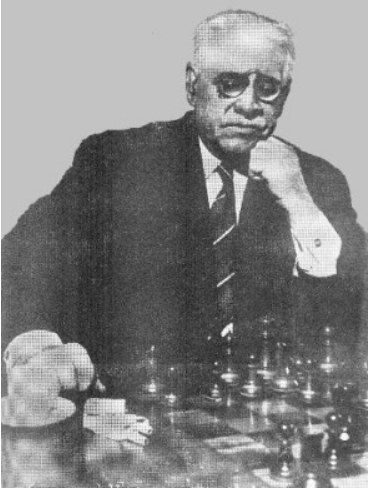
The country, in Paris, will be the only non-European reference to present a complete team in the Tournament of Nations (Canada will have only one player representing it), with Roberto Grau, Luis Palau, Valentín Fernández Coria and Damián Reca (the first Argentine champion in history). Luis Palau reached the status of finalist in the event, for which he will receive a bronze medal, the first one obtained by an American chess player in the Olympics. Palau and Grau defeat here Max Euwe of the Netherlands, future world amateur and absolute champion.


In 1926, the Russian chess player Aleksandr Alekhine, who would soon after assume French nationality, came to Argentina for the first time, and in this context, there was talk of him challenging world champion Capablanca in Argentina.
In Buenos Aires, in 1927 took place the match for the world title between Capablanca and his challenger, Alekhine, who, in the end, would be the winner. This encounter, organized by the Club Argentino de Ajedrez, placed Argentina at the center of the chess community’s attention, due to the quality of the protagonists and the fact that it was the first of its kind to be held during the time FIDE was in force. From that moment the country will propose again and again to host a rematch that will never take place.

In London, that same year, the first official Chess Olympiad in history was held, in which only one non-European team was present among the sixteen participants: Argentina with a delegation composed of Grau, Palau, Alejandro Nogués Acuña and Juan Rivarola.

In 1927, under the direction of Grau, the magazine El Ajedrez Americano («The American Chess») began to be published until December 1943. In 1928, in The Hague, our country repeated its Olympic presence, being the eighth team in the standings, among the seventeen delegations present, with a team made up of Grau, Palau, Reca, Carlos Maderna and Fernández Coria. In 1929, chess was introduced to the country in the literary genre of the novel, something Roberto Arlt did in Los siete locos («The seven madmen»).

Fourth decade
In the Warsaw Olympics of 1935, to which Argentina returned after its absence from the three previous events (1930, 1931 and 1933), besides repeating the eighth place of 1928 (now with twenty participants), Jacobo Bolbochán won the individual bronze medal, the first (Palau in 1924 was honorary) obtained by the country in events of this type, for his performance in the second board.

Multiple Argentine triumphs in South American tournaments, in Mar del Plata and Buenos Aires in 1934, with victories by Aron Schvartzman and Luis Piazzini, respectively. In 1936, Isaías Pléci won in Mar del Plata and in 1938, Carlos Guimard won in Rio de Janeiro.
In the 1937 Stockholm Olympics, Guimard won the silver medal in the fourth board and Pléci the bronze medal in the reserve board. Argentina reached fourth place, with the same score (but the tie-breaking system was unfavorable) as the third place, Poland, and therefore was just one step away from the collective bronze medal. In this context, it was decided that Buenos Aires would host the next edition of the competition.

That year Damián Reca, the first Argentine champion, published the book “Caro-Kann”, a key work for the dissemination of this opening, in particular with respect to the variation called the Panov Attack, which occurs after the following sequence of moves: 1. e4 c6 2. d4 d5 3. exd cxd 4. c4. And the magazine «Caissa» was launched, which ran until 1955, with Arnoldo Ellerman, Juan Illiesco, Eduardo Marchisotti and José Suárez as editors. In 1938, another visit by Alekhine, the world champion, to Argentina is recorded.

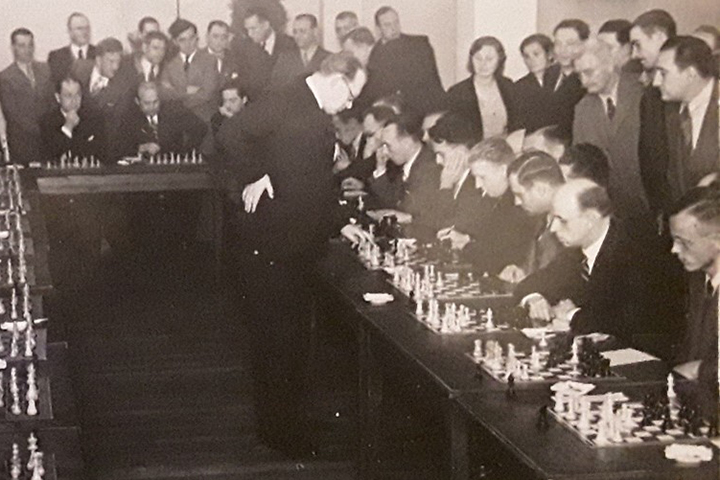
In 1939, Buenos Aires hosts two major chess events: the Tournament of Nations and the Women’s World Championship, which for the first time are moved from Europe. Both were held at the Politeama Theater. In the first, a record number of participants was registered (twenty-seven countries, with the presence of many debutants from the American continent), with Germany winning the tournament, followed by Poland and Estonia in third place, and with Capablanca winning the gold medal and Alejin the silver medal on the first board. Argentina was placed fifth, with Isaías Pléci receiving the individual gold for his performance in the reserve board and Jacobo Bolbochán the bronze for his performance in the third board. Roberto Grau played a central role, more than as a player, in his role as organizer, ensuring that the event could take place and be a success.


In the women’s world competition (in which two local players, Dora Trepat de Navarro and María Berea de Montero, are making their debut in this kind of event), the English representative (born in Moscow and at one time representative of Czechoslovakia), the legendary Vera Menchik, triumphs once again, ahead of Sonja Graf who, prevented from displaying the flag of her country of origin, Germany, will compete under the “flag of freedom”.


Since the 1939 Tournament of Nations coincided with the declaration of the Second World War, by decision of the FIDE Congress and Assembly, its headquarters were moved to Buenos Aires and the Argentine Augusto de Muro (President of FADA) was appointed as its President (the Dutchman Alexander Rueb remained as Honorary President), in a historic event that would not be subsequently recognized until its definitive vindication. It was not until 1946 that FIDE resumed its activities with increasing normality in Europe after the end of the war.

In this context, several local tournaments of international scale will be played and many European players will end up staying in the region. The most emblematic cases are those of the Pole Miguel Najdorf, the Austrian Erich Eliskases (one of the best emerging chess players of the 30’s, who could have challenged for the world title, having been the leader of the triumphant German team in 1939) and the player born in the Russian Empire, Paulette Schwartzmann although, by then, based in France which, after staying in Argentina, will be multiple national champion in the women’s category.


As for tournaments, for example, in 1939 the Club del Círculo organized one, in which Najdorf won ahead of estonian Paul Keres, in the highest national competition in 1940 (Torneo Mayor:»Major Tournament»), the Lithuanian Markas Luckis (another one that will remain in the country permanently since 1939) came first, and that year in Rosario a tournament was held with the victory of the Swede Gideon Ståhlberg.
For a long time, he will settle in this country, as did the future Israeli champion Moshe Czerniak and the world runner-up Sonja Graf, who will be the first woman to participate in a Major Tournament in Argentina. Ståhlberg won the Major Tournament in 1943 but, due to his condition of foreigner, he will not receive the recognition of national champion. FADA is considering granting him the status of national champion emeritus.

In addition to those mentioned, the following Olympic players will remain in the country permanently (except those indicated): from Germany, the champion team, Paul Michel; Albert Becker (of Austrian nationality), and Heinrich Reinhardt; from Poland, the runner-up, Paulino Frydman and, temporarily, Franciszek Sulik; from Estonia, collective bronze medalist in 1939, Ilmar Raud; from the Protectorate of Bohemia-Moravia (Czechoslovakia), Jiří Pelikán and Karel Skalička; from Latvia, Movses Feigins; from the Netherlands, Christian de Ronde; from Palestine, Víktor Winz (temporarily) and Zelman Kleinstein; from France (temporarily) Aristide Gromer; and the Irishman John Francis O’Donovan.

Although it was in the mid-1940s that the Argentine artist, inventor and linguist Xul Solar devoted himself more fully to Panajedrez or Ajedrez Criollo («Panchess» or also “Creole chess”), an activity of a metaphysical and perhaps esoteric nature, conceived as a kind of all-encompassing chess (music, poetry, the stars, the horoscope, language, the game) was created in the 1930s.

In 1940, Ezequiel Martínez Estrada published La cabeza de Goliat -Microscopía de Buenos Aires («Goliath’s Head – Buenos Aires Microscope»), a book in which he profiles the leading Argentine chess players of the time and describes the context in which the Buenos Aires Tournament of Nations took place the previous year.

Fifth decade
Many tournaments of great international level are held in different locations of the country, particularly in the city of Mar del Plata, in this case from 1941 and for a period of three decades (previous editions of this event in the seaside city, in the 1920s and 1930s, had already involved South American tournaments).
There, there will be a classic confrontation between Najdorf and Ståhlberg (also in Buenos Aires, where they shared the lead in a tournament of the Club del Círculo in 1941), which will be in favor of the former, who wins there on several occasions (1942, 1944 -together with Herman Pilnik-, 1945, 1946, 1947), although the first edition and that of 1943 will be in favor of the Swede (who also wins in Buenos Aires in the Silver Anniversary tournament of 1941) and, in 1948, Eliskases won. Already, without those original duelists, in 1949 Héctor Rosetto triumphed, while in 1950 the Yugoslav Svetozar Gligorić won.
In 1941 Sonja Graf presents in Buenos Aires the book Así juega una mujer: impresiones y recuerdos de la carrera ajedrecística de la autora y psicología de los ajedrecistas («How a woman plays: impressions and memories of the author’s chess career and the psychology of chess players.»), the first text in the world in Spanish written by a woman chess player. Later she will publish, still in the Argentine capital, another work, in this case of autobiographical tone called Yo soy Susann («I´m Susann»).

In the chess room of the Café Rex in the city of Buenos Aires, directed by the Polish by birth, Argentine by adoption Paulino Frydman, from 1941, the process of translation from Polish to Spanish of the novel “Ferdydurke” by the writer Witold Gombrowicz, another Pole who will have long residence in the country, where he will produce much of his splendid literary work that will make him a candidate for the Nobel Prize for Literature, takes place.

In 1942, Schachnovelle («Chess Novel») was published for the first time in the world, a work by the Austrian writer Stefan Zweig (1881-1942), who committed suicide that year along with his wife, anguished by the Nazi persecution. This work, in addition to being the definitive legacy of the prolific author, is one of the best approaches made in fiction to the complexity of chess, especially in its psychological impact and in its facet, both as redemption and obsession.
In 1944, Roberto Grau died in full age (he was forty-four years old), leaving as a legacy his work during his lifetime, in particular his famous Tratado General de Ajedrez («General Chess Treatise»), a work in four volumes, of great diffusion, which will contribute to the formation of a considerable number of chess players in the whole Spanish-speaking world.


In 1945 Ernesto Sabato’s first book, Uno y el Universo (“One and the Universe”), is published, in which the writer and thinker coins the imperishable idea that chess was discovered by man and not invented («…it could be said that man did not invent chess, but that he discovered it. Considering the Universe as given, all the creations and inventions of man would be like games in this Great Chess, discoveries in a Great Jungle. But taking another step further back, it could be said that perhaps the Universe has not been created but discovered in a Jungle of Possible Universes, a difficult, dark, sublime jungle, into which only a God can venture»). This year Pilnik takes third place in the Pan-American championship held in Hollywood (behind Americans Samuel Reshevsky and Reuben Fine) and in the Grau Memorial in Buenos Aires, Najdorf overtakes Ståhlberg.

Between 1946 and 1956, Jorge Luis Borges and Adolfo Bioy Casares edited a book collection published by El Séptimo Círculo («The seven circle»), which included suspense stories from Argentine and world literature (several of them with chess allusions). When designing the logo, they used an image of a chess knight created by the Italian artist José Bonomi (1903-1992).

Najdorf acquires Argentine citizenship in 1946 and already, representing the country, progresses in his career in a notorious way compared to his previous European stage, becoming part of the world super-elite and, according to the specialized site Chessmetrics, being the second player in the world for thirty-three months in the 40’s, always behind the Soviet Mikhail Botvinnik.
In 1946 Najdorf, in the first relevant tournament after the end of the war, shared fourth place in Groningen where he even defeated Botvinnik. He then won the Treybal Memorial in Prague (as well as a tournament in Barcelona), which qualified him for the decisive instance in order to determine the new world champion, but FIDE inexplicably did not invite him to participate in the selective event to determine ir, which took place in 1948 with Botvinnik’s victory.
In 1947, in Sao Paulo (Brazil), he officially obtained the world record of simultaneous games played blindfold (there were 45, of which he won 39). In 1943, he had already obtained the best record in this modality, in an exhibition held in Rosario, which was not recognized by FIDE. That year, in Buenos Aires and La Plata, a hexagonal game was played, with Ståhlberg winning ahead of Najdorf.

In 1948 Najdorf shared sixth place in the Saltsjöbaden Interzonal (that year he won in Venice and La Plata, ahead of, in the first case, among others, Euwe and the Pole Savielly Tartakowr and, in the second, Ståhlberg), while in the Candidates Tournament of Budapest 1950 he was fifth (the best non-Soviet), for the world cycle to challenge the new world champion, in which the Soviet David Bronstein won. This tournament was originally to be held in Buenos Aires, but FIDE changed the venue at the request of the USSR Federation.
In this decade, Najdorf applied with gusto the move a6 with Black in the fifth move of the Sicilian Defense, which, from then on, would be known as the Najdorf Variation, one of the most used in master practice. It is given with the following sequence of moves: 1.e4 c5 2.Nf3 d6 3.d4 cxd4 4.Nxd4 Nf6 5.Nc3 a6.

- In 1945, the Ukrainian-turned-Argentine amateur Ovsey Cotlar presented a theoretical innovation in the Lasker Defense of the Queen’s Gambit in Buenos Aires, which gave rise to the Cotlar-Buenos Aires Variation (Ovsey Cotlar, Karel Skalicka, Miguel Czerniak, Luis Palau, Alejandro Nogués Acuña). In 2025, Martín Labarca and Sergio Macagno published a work on the author entitled «Ovsey Cotlar, Burgués pero decente» (Ovsey Cotlar, Bourgeois but Decent).

In 1946, and again in 1952, the Argentine theorist Eduardo J. Marchisotti made fundamental contributions to enriching the Modern Chess Opening, determining omissions corresponding to the seventh and eighth editions, respectively, of this prestigious international publication published in 1911. In this context, the renowned Czechoslovak theorist Walter Korn acted as reviewer.


In the first Olympic Games of the post-war period, in Dubrovnik, Argentina was runner-up behind Yugoslavia, with a team made up of Najdorf, Julio Bolbochán, Guimard, Héctor Rossetto and Pilnik (Luis Marini was there to support the team but did not play). Three individual gold medals for Najdorf, Bolbochán and Pilnik, and one bronze medal for Rossetto. In 1950 Najdorf wins a tournament in Bled (second Pilnik who, in turn, wins in Lucerne together with Euwe) and another in Amsterdam (ahead of Reshevsky). And he receives the title of GM from FIDE in his first nomination in history.


Sixth decade
Argentina consolidated its position as the second power in the world by winning Olympic silver medals again, now with the presence of the USSR, which it won in Helsinki 1952 and Amsterdam 1954. The respective teams were led by Najdorf and Julio Bolbochán, and integrated by Pilnik and Rossetto, adding the contribution of Eliskases in the first case, and those of Oscar Panno and with the return of Guimard, in the second. Individual gold medals for: Najdorf and Rossetto in Helsinki; and silver for Julio Bolbochán in Amsterdam. It should be noted that the 1954 Olympiad was to be held in Buenos Aires but, at the last minute, it was cancelled due to economic problems.


In Helsinki, Carlos Alberto Peronace, a student of another great local composer José Mugnos, won first prize, and consequently also a gold medal, in the Olympic Composition Competition, which he won for a problem, which was awarded among 83 finals submitted by 42 composers from 15 countries around the world.

The great Argentine composer of all times, Arnoldo Ellerman, also received a gold medal in the capital of Finland, in the category mate in two moves, a modality that was his specialty. In 1956 he was awarded the title of International Judge of Composition and in 1959, in Luxembourg, he was awarded Honoris Causa, the title of International Master of Composition, which was given for the first time to only five personalities in the world. Furthermore, still in this decade, he was elected president of the first World Congress of Problemists held in Yugoslavia in 1958. Already in 1945 he had published 1001 Problemas (“1001 Problems”), a book with a selection of the best of his work, in a production that exceeds three thousand compositions.

In the first world junior championship held in Coventry and Birmingham in 1951, Raúl Cruz placed third. That year, in the first South American Zonal, held in Mar del Plata, Eliskases and Julio Bolbochán shared the leadership, completing the podium with Carlos Maderna.

In 1952, in the Swedish town of Saltsjöbaden, the Interzonal Tournament is held, with the participation of Argentine Eliskases and Pilnik, who finish tenth and twelfth among twenty-one participants, in the event won by the Soviet Aleksandr Kotov. This year, Pilnik wins a tournament in Belgrade (ahead of European figures, including former world championship challenger Yéfim Bogoljubow. In the first South American Women’s Zonal, held in Buenos Aires, María Angélica Berea is successful. Two years later, in the same place and circumstances, Celia de Moschoni wins, while in Rio de Janeiro 1957, Soledad de Huguet wins.
In the Candidates Tournament of Zurich 1953, in which the Soviet Vasili Smyslov wins, Najdorf occupies the sixth place shared among the fifteen select aspirants, an event about which, with the collaboration of Zoilo Caputto, he writes a work in two volumes entitled 15 Aspirantes al Tírulo Mundial (“15 Aspirants to the World Championship”).

Oscar Panno was crowned world junior champion in 1953 in Copenhagen, ahead of figures of the stature of Borislav Ivkov, Bent Larsen, Klaus Darga and Friðrik Ólafsson.

That year, based on a model game in which the Yugoslav Svetozar Gligorić defeated Najdorf with Black in Mar del Plata, the variation named after that seaside city was coined, corresponding to the King’s Indian Defense, which occurs after the following sequence of moves: 1. d4 Nf6 2. c4 g6 3. Nc3 Bg7 4. e4 d6 5. Nf3 O-O 6. Be2 e5 7. O-O Nc6.

In 1953, a match was held in Buenos Aires between Najdorf and Reshevsky, a rematch of the one held the previous year in North and Central America, for a proclaimed virtual «World crown of the West», in which the winner was the one based in the northern portion of the continent.

At the 1954 Amsterdam Olympics (which were supposed to be held in Buenos Aires, although Argentina, for financial reasons, decided to hold them at the last minute), Argentina was again runner-up to the USSR, with a team consisting of Najdorf, Julio Bolbochán, Panno, Guimard, Rossetto, and Pilnik. Bolbochán won the silver medal, ahead of the Soviet Vasili Smyslov (the gold went to a Canadian player who faced less demanding opponents), finishing his campaign undefeated.


In 1954, at the Cervantes Theater in the city of Buenos Aires, a match was played between a powerful USSR team (its first players were Bronstein, Yuri Averbakh and Keres, the last one Kotov!) and the Argentine team, which won 20.5 to 11.5 in favor of the former. At this year’s South American Zonal in Mar del Plata, the podium went to Panno, Najdorf and Pilnik.
In the Interzonal of Gothenburg 1955, Panno had an extraordinary performance, being third, only behind the Soviets Bronstein and Keres. In that event, among the twenty-one participants, there were no less than four Argentines, proof of the power of the country at that time. In addition to Panno, Najdorf, Pilnik and Guimard also took part. So Panno and Pilnik qualify for the Candidates Tournament.

To that competition we owe the Gothenburg Variation in the Sicilian Defense, which was played in three games with the Soviets Yéfim Géler, Keres and Boris Spassky, with White; and the Argentines Panno, Najdorf and Pilnik with Black. Although they lost, after introducing a theoretical novelty, Fischer later showed that Black had a good chance of starting the game. 1. e4 c5 2. Nf3 d6 3. d4 cxd4 4. Nxd4 Nf6 5. Nc3 a6 6. Bg5 e6 7. f4 Be7 8. Qf3 h6 9. Bh4 g5.
Another novelty is due to Panno, who has a model game against Gregorio Idígoras in the Mar del Plata tournament of the same 1955, starting with a6, in the seventh move, which will be from that moment the Panno Variation in the Fianchetto variation of the King’s Indian Defense. It is given after the following sequence of moves: 1. d4 Nf6 2. c4 g6 3. Nf3 Bg7 4. g3 O-O 5. Bg2 d6 6. O-O Nc6 7. Nc3 a6.
Since 1954, and until 1981, Editorial Sopena Argentina, from the beginning under the direction of Luis Palau until 1971 when he died, then Normando Ivaldi directed it, publishes monthly the magazine Ajedrez («Chess»), a very influential medium in the Spanish-speaking world due to its quality and continuity in time.

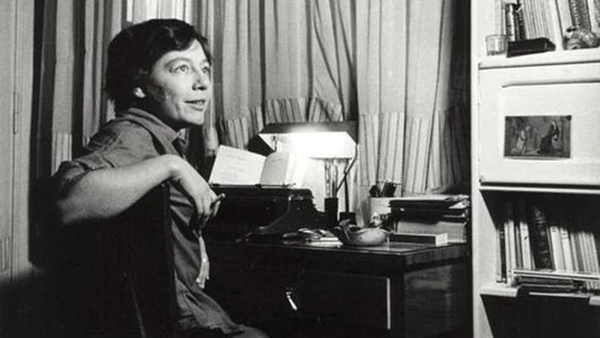
In 1955 poet Alejandra Pizarnik presented her book La tierra más ajena («The Most Foreign Land»), which included her poem Ajedrez («Chess»).
In the 1956 Moscow Olympics, Raúl Sanguineti won the gold medal in the first reserve board, when Argentina came fourth, with a team also composed of Najdorf, Julio Bolbochán, Panno, Pilnik and Bernardo Wexler.

The Candidates Tournament is being held in Amsterdam, featuring the eight contenders for the world title. For the first and only time in history, two Argentinians, Oscar Panno (just twenty-one years old) and Herman Pilnik, will be competing in a tournament that was won by the Soviet Vasili Smyslov. Both Argentinians finished in lower positions, especially in a competition of this caliber.

In the 1957 South American Zonal, in Rio de Janeiro, the podium went to Panno, Rossetto and Sanguineti, with Najdorf relegated to fourth place. This year, Rodolfo Walsh’s short story «Zugzwang» appeared, who also offered another game with chess connotations called Trasposición de jugadas («Transposition of Moves») and, much later, a play always with allusions to the game entitled La batalla («The Battle»); before that, in addition to its mention in his famous Operación Masacre («Operation Massacre»), in 1953, in Variaciones en Rojo («Variations in Red» he had cited Khayyam’s quatrains on chess in his story Asesinato a Distancia («Murder at a Distance»); and, in El ajedrez y los Dioses («Chess and the Gods»), he argued that the gods do not play on a board but on a cube, so the displacement of the pieces will not occur in a two-dimensional space, since it will not only be on the surface but will also be in depth.

In the Interzonal of Portorož 1958, in which the Soviet Mikhail Tal won, there was a triple Argentine presen ce among the twenty-one present: Panno; Sanguineti; Rossetto. With a team led by Pilnik, accompanied by Panno, Eliskases, Roberto Redolfi, Sanguineti and Jaime Emma, Argentina was placed third in the Munich Olympics 1958, behind the USSR and Yugoslavia, winning the collective bronze medal. Panno deserves the same recognition for his individual performance and ,that year is Pan-American champion in Bogota.
Mar del Plata continues to be in this decade an important place in the international calendar showing the following winners: Julio Bolbochán and Eliskases (1951); Julio Bolbochán and Rossetto (1952); Gligorić (1953), Panno (1954), Yugoslav Borislav Ivkov (1955), Julio Bolbochán and Najdorf (1956), Keres (1957), Larsen (1958), Najdorf and Czechoslovak Ludek Pachman, ahead of Fischer (1959) and Spasski and Fischer (1960). In other important tournaments in the country, in Buenos Aires 1955 Ivkov also won, ahead of Gligorić.

Three Argentine women took part in decisive instances for the women’s world crown. In 1953 the presence of María Berea de Montero and in 1955 that of Celia Baudot de Moschini, in both cases in Moscow, while in 1959 in Plovdiv, Soledad González de Huguet took part.
In 1959 in Münchenstein Calos Bielicki became world junior champion, following in Panno’s footsteps. Both were trained and assisted by Julio Bolbochán. This year Arnoldo Ellerman receives the IM title in chess composition.

In 1960, the Sesquicentennial Tournament was held in Buenos Aires, with a shared victory of the Soviet Víktor Korchnói and Reshevsky, with the Hungarian László Szabó third, and in the presence of great figures, among them a young Robert Bobby Fischer. In the Leipzig Olympiads of that year, Samuel Schweber won the silver medal in the first reserve board, with the country lagging behind (by the standards of that time) by coming in seventh place. And in the South American Zonal, Julio Bolbochán wins ahead of Schweber.


In 1960 El Hacedor («The Maker») is published, a book of poems in which Jorge Luis Borges includes his famous sonnets Ajedrez («Chess»).

Jiri Pelikán, born in Czechoslovakia and living in Argentina (Olympic medalist for his native country in the 1930s), practiced very often in the 1950s a very aggressive variation of the Sicilian Defense with Black’s move e5 on the fifth move (the sequence is 1.e4 c5 2.Nf3 Nc6 3.d4 cxd4 4.Nxd4 Nf6 5.Nc3 e5). Later it will be deepened by the Soviet Evgeni Sveshnikov and very much played by the world champion, the Russian Vladimir Kramnik in the 90s. We are in the presence of the Pelikan (Sveshnikov) Variation.
Seventh decade
At the 1962 Varna Olympics, Argentina won the bronze medal, with Najdorf receiving the silver award for his performance on the first board and Sanguineti the gold for his performance on the fourth board. The team was completed by Julio Bolbochán, Panno, Rossetto and Alberto Foguelman. That year in Mar del Plata a Latin American championship was held, in which Raimundo García was victorious.
Najdorf in Havana won the first edition of the Capablanca Memorial in 1962, where he was ahead of, among others, the once world champions Spasski and Smyslov. In the Stockholm Interzonal, won this year by Bobby Fischer, among the twenty-three players there were two Argentines, Julio Bolbochán and Schweber. In the 1964 Interzonal, in Amsterdam, there will be a double Argentine presence, with Rossetto and Foguelman, who had obtained, in that order, the first places in the 1963 Zonal in Fortaleza.

On the way to the women’s world crown, Celia Baudot de Moschini plays in the 1964 Candidates Tournament in Sukhumi, who had won the Women’s Zonal in Fortaleza a year earlier. That year, in Buenos Aires, Soviets Paul Keres and Tigran Petrosian won the «Municipality of the City of Buenos Aires» tournament, ahead of American Robert Byrne and Najdorf.
In the 1966 Havana Olympics, Panno obtained a gold medal on the second board, when the country was in fifth place in the general table, with a team also composed of Najdorf, Julio Bolbochán, Sanguineti, Raimundo García and Schweber. That competition had as one of its main promoters the Cuban Ernesto Che Guevara, who also sponsored the Capablanca Memorials that began to be played in Cuba in the 1960s.
In the 1968 Lugano Olympics, he finished in seventh place (Najdorf, Panno, Sanguineti, Rossetto, Jorge Rubinetti, García). And in the 1970 Siegen Games, eighth place (Najdorf, Panno, Julio Bolbochán, Miguel Quinteros, Rubinetti, Carlos Juárez).
In the 1966 South American Zonal in Termas de Río Hondo, a quadruple tie for the lead between the Brazilian Henrique Mecking and the Argentines Julio Bolbochán (the only undefeated player), Panno and Foguelman.
An Argentinean, although representing Puerto Rico, won the 1967 world junior title in Jerusalem. He was Julio Argentino Kaplan, who was trained in Buenos Aires by Jacobo Bolbochán. In that competition participated, among others, the Dutchman Jan Timman, the German Robert Hübner and the Englishman Raymond Keene.

In the classic Mar del Plata tournament, victories were recorded in this decade: Najdorf, ahead of the American Robert Byrne and the Czechoslovakian Miroslav Filip, in one case, and the Soviet Leonid Stein, in the other (1961 and 1965); the Soviet Lev Polugayevski, ahead of Szabó and Smyslov (1962), and Smyslov (1966). From 1967, the international open tournament modality was adopted, whose first edition was won by Najdorf, who in 1969 won the South American Zonal in this seaside resort, ahead of Panno.
In 1970, the Magistral Ciudad de Buenos Aires was held at the Teatro Municipal Libertador General San Martín, where Bobby Fischer triumphed in the presence of, among others, Smyslov. That year Najdorf was part of the Rest of the World team, in his confrontation against the USSR in Yugoslavia, having tied his personal contest against the former world champion Mikhail Tal. And Panno (eleventh among twenty-four players) and Rubinetti play the Interzonal of Palma de Mallorca that year, in which Fischer wins.

Eighth decade
In 1971, Buenos Aires was the center of world chess attention because, at the Teatro Municipal Libertador General San Martín, Petrosián and Fischer played the final match to determine the challenger of the world champion. In the context of the “Cold War” and a virtual “Fischermania”, the attraction exerted by the brilliant American is cemented in the Argentine capital, protecting himself so that one year later in Reykjavik he reaches the summit, toppling a Soviet power that seemed unshakable. In the Mar del Plata tournament this year Polugayevski wins again. And in the city of Buenos Aires, the First School Tournament was held, seeding future educational plans, including chess in the classroom in primary education: the podium was made up of Antonio Ruiz, Sergio Negri, and Gustavo Águila (Alejandra Tadei was the only girl finalist); Jorge Luis Borges spoke at the awards ceremony.


In 1971 and 1972, Panno obtained two consecrating victories in the Palma de Mallorca Tournament (in the first case sharing the lead with the Yugoslav Ljubomir Ljubojević, and in the last occasion being first together with the Czechoslovakian Jan Smejkal and Korchnói), being ahead of Reshevsky, Larsen, the Hungarian Lajos Portisch, the Swede Ulf Andersson and Polugayevski and Averbaj, among others. Likewise, in 1972 he escorted Mecking in the South American Zonal of Sao Paulo.And, s till in Palma de Mallorca, in 1973 he finished half a unit behind the winners, the Soviets Leonid Stein and Tigran Petrosian, undefeated, tying positions with Hungarian Zoltan Ribli, Andersson and the Czechoslovakian Vlastimil Hort.

In the first edition of the Pan-American team championship, held in 1971 in San Miguel de Tucumán, Argentina was the winner, with the five members of the team winning individual gold medals: Najdorf; Panno; Quinteros; Sanguineti; Schweber. At the Skopje 1972 and Nice 1974 Olympics, Argentina is only fourteenth.
Panno participates in the 1973 Petropolis Interzonal, won by Mecking. And in the same year in Leningrad, with shared triumph of Anatoli Kárpov and Korchnói, Quinteros participates, who won the Torremolinos tournament that year, alongside the American (of Hungarian origin) Pal Benkö and ahead of the Romanian Florin Georghiu, among others. Quinteros also triumphed in Lanzarote in 1974, ahead Ólafsson. And Sanguineti is the Pan American runner-up in Winnipeg, behind the American Walter Browne. In the world junior championship held in Manila, always in 1974, in which the British Antonhy Miles prevailed, Sergio Giardelli reached the same number of points as the champion and the second, the Swede Lars-Åke Schneider, all undefeated, plus the Argentinean was third by application of the tie-breaker system. In 1975 Sanguineti wins the South American Zonal in Fortaleza, with Quinteros and Panno completing the podium.
In 1976, in the Haifa Olympics, already under the Swiss system (and with the boycott of the USSR and other powerful squads), Argentina placed fourth, with Quinteros being the second best in the third board and Luis Bronstein with the third best performance in the reserve board, although without medals (since they were not awarded on that occasion). The team was completed by Najdorf, Panno, Sanguineti and Jorge Szmetan. Two Interzonals were held this year: in Manila, with another victory by Mecking, the presence of the Argentines Panno (eighth among twenty players) and Quinteros was verified, and in Biel, where Larsen won, Sanguineti participated.

In Haifa, Argentina made its debut in the Women’s Olympics, with Matilde Cazón achieving the second best performance on the third board, and the team was eleventh (among twenty-three participants), with also Julia Arias, Edith Soppe and Alejandra Tadei. That year, Daniel Cámpora is placed fourth in the World Junior Championship in Groningen, which is won by the American Mark Diesen.
In 1977, Miguel Bernat is the first Argentinean to reach the title of Pan-American Junior Champion, which he achieves in São Paulo. Juan Morgado, between this year and 1980, achieves his success in the first Tournament of the Americas by correspondence.
In 1978, Buenos Aires hosts the Olympics for the second time, held at the River Plate Club. Sixty-five countries took part in the open event, with the unprecedented triumph of Hungary over the hitherto undefeated USSR. In the women’s event, the Soviets prevailed (as usual), among thirty-two nations. Argentina had two teams in the main event.

This year, the first international tournament sponsored by the Clarín newspaper was held, in which Andersson won. Another event was organized in Buenos Aires by the Konex firm, with Korchnói and Yugoslav Ljubomir Ljubojević winning. Panno is one of Korchnói’s analysts in his confrontation for the world championship against Kárpov in Baguío. Gerardo Barbero is fifth in the World Junior Championship in Graz won by Soviet Serguei Dolmatov.


In 1979 Marcelo Tempone won the cadet world champion title in Belfort (France). Luis Bronstein takes part in the Interzonal held in Rio de Janeiro (the previous year he had been runner-up in the Zonal in Tramendaí). Edith Soppe, in the same place, plays the women’s Interzonal. In this year’s Clarín Tournament, Larsen wins, ahead of Spaski, Miles, Anderson and Najdorf. And in the Konex tournament, the Swiss Korchnoi and the Serbian Ljubojević were victorious, with the American Walter Browne and the Englishman Tony Miles finishing behind them.

In 1980, the match between the exiled Korchnói and his former Soviet compatriot Polugayevski took place in Switzerland, for the semifinals of the world cycle, with Najdorf as the main arbiter. It took place at the Premier Theater, in the Argentine capital, with the former winning after the tie-break games. Due to the conditions in which it was played, it was called the «Match of the glass box».

In Mexico, in 1980, the second world championship for teams under 26 years of age was held, in which Argentina obtained third place (behind the USSR and England), with a team led by Sergio Giardelli (integrated also by Miguel Bernat, Fernando Braga, Alfredo Roca and Carlos Cranbourne), who achieved an extraordinary performance, remaining undefeated. In the same year, Tempone became Pan-American youth champion in Córdoba. That year an open tournament was held in Los Polvorines, in which the American Walter Browne won by applying the tie-break system, who tied in scores with Oscar Panno, the former world champion the Soviet Vasili Smyslov and Jaimme Emma (another USSR figure, Mark Taimanov, was also present).

In the 1980 Clarín Tournament, Larsen (who would live in Argentina for the last twenty years of his life) won, ahead of Timman and Karpov, the reigning world champion, who made his first visit to Argentina to play (although he had already been here in 1978 for the World Cup). In the Valletta Olympiads, Argentina is placed fourteenth. And Edith Soppe is consecrated in Cordoba as the first Pan-American women’s champion.


Ninth decade
In 1981, in Embalse Río Tercero, the world championships for under sixteen-year-olds are held in the open and women’s sections (the Hungarian Zsuzsa (Susan) Polgár wins the latter event, and the English Stuart Conquest wins the other). In 1981, Rodolfo Garbarino became Pan American Junior Champion, which took place in San Pedro (Jujuy). Tempone is seventh in the junior world championships in Mexico, where Yugoslavian (Croatian) Ognjen Cvitan won. And García Palermo is second to the American Walter Browne in a tournament held in Santiago, Chile.

In an international open played in Morón, Ljubojević triumphs, ahead of the American Yasser Seirawan, the Swedish Ulf Andersson, the Argentine Juan Carlos Hase and Larsen (all with equal scores, in order given by applying the tie-break system). And in Mar del Plata there is a tournament called Europe vs. America, where those from the other continent dominate, whose representatives occupy the top positions: the Swede Ulf Andersson; the Serbian Ljubomir Ljubojević; the Dane Bent Larsen, and the Hungarian Lajos Portisch; for our country, the Americans Larry Christiansen, Walter Browne and Yasser Seirawan participated, and the local Miguel Quinteros.
Quinteros wins the 1982 Morón Zonal (he will also play in the 1985 Corrientes Zonal along with Chilean Iván Morovic), who will take part in the Moscow Interzonal, while Rubinetti plays in the 1982 Toluca Zonal. Quinteros, will repeat his presence in the Interzonal of Biel 1985. In the Olympics, under his leadership, Argentina was eleventh in Lucerne 1982 and fourteenth in Thessaloniki 1984.
In Mar del Plata, in 1982, the last edition of the Clarin tournament was held (the others were in Buenos Aires), in which five top 10 players participated, Timman won, ahead of the Hungarian Lajos Portisch, Karpov, Polugayevski and the American Yasser Seirawan; in this context, Carlos García Palermo achieves a milestone by becoming the first Argentine to defeat a reigning world champion, his defeated being Anatoli Karpov. In this year, the first world junior championship for women was held in Senta, with the presence of Liliana Burijovich, who finished in eighth place. In that same type of competition, in 1988 in Adelaide, Claudia Amura finished in sixth place.

Since 1983, with biweekly editions from 1988 until April 1997, the magazine «Ajedrez de Estilo» (Style Chess) has been published under the direction of Juan Morgado, a medium of particular impact at the national and regional levels. In a work corresponding to the period 1983/1987, the artist from La Plata, Edgardo Antonio Vigo (1928-1997), created a piece in carved wood and tile entitled Ajedrez proletario («Proletarian Chess»), which has been part of the collection of the Museum of Latin American Art (MALBA) in the city of Buenos Aires since 2022.

In the U26 World Junior Team Championship, held in Chicago in 1983, where Argentina came seventh, Claudio Panzeri won the gold medal in the second reserve board, keeping his undefeated condition in the event. In Buenos Aires, a tournament is held, won by Larsen ahead of Panno. And in Netanya (Israel) there is another one in which Quinteros prevails over local Shimon Kagan.
In 1983, 1986 and 1990, Julia Arias (Lebel-Arias) won the title of female champion in France ((in Argentina it had been four times between 1974 and 1977) and, representing this country, won the European Zonals in 1985 and 1987, in Amsterdam and Budel, respectively, qualifying for the Interzonals played in each year in Zeleznovodsk and Tuzla. She was the Olympic representative of France and, later, of Monaco.

In 1984, the cycle of the tenth world correspondence championship, initiated in 1978, was closed, in which Juan Morgado was runner-up. In 1983 he receives the first GM title in correspondence chess which, subsequently, will be obtained by another fifteen nationals: Carlos Pappier and Rodolfo Redolfi in 1994; Roberto Álvarez and Norberto Patrici in 1997; Rubén Berdichesky, Gabriel Blasberg and Alfredo Roca in 1998; José Copié and Alfredo Mozzino in 2000; Germán Benz in 2002; Gustavo Echeguren in 2003; Héctor Walsh in 2006; David Beaumont in 2007; Roberto Jacquin in 2009, and Walter Cornejo in 2011.

In 1984 and 1985 the world championships were organized in the town of Lomas de Zamora, for the children’s category, being won, respectively, by the Spaniard Lluís Fabregó and the North American (born in Ukraine) Ilya Gurevich. In the latter case, it is an Argentinean, Sandra Villegas, who is placed as the best among the participants, thus obtaining a recognition in that sense from the FIDE History Committee.

That same year, 1985, in the second edition of the Pan-American team tournament, in Villa Gesell, Argentina was the winner, with a team made up of Najdorf, Qunteros, Panno, Barbero, Pablo Ricardi and Guillermo Soppe, with individual gold medals for the last four players. In the Zonal held that year in Corrientes, Quinteros won alongside Chilean Iván Morovic; in the Pan-American Junior Championship, played in Saladillo, Carlos Boisonett obtained the first place and, in Mendoza, the world team championship for players under 26 years of age was organized, in which Argentina won the bronze medal (behind the USSR and the USA), with a team made up of Barbero, Ricardi, Tomás Darcyl, Alejandro Hoffman, Soppe and Gustavo Mahía.
Also in 1985, in Lucerne, a World Team Chess Championship was held, with ten nations participating. Argentina had qualified as the Pan American champion. The USSR, with a team led by Anatoly Karpov, won, ahead of Hungary and England. Argentina finished eighth, with a team composed of Panno, Quinteros, García Palermo, Cámpora, Barbero, Rubinetti, Gómez Baillo, and Soppe. Two individual bronze medals were won: Quinteros on the second board and Soppe as the second reserve.
In the film La historia oficial («The Official Story»), winner of the Oscar for best foreign language film for the 1985 production, which was directed by Luis Puenzo, the character of history professor named Benítez (played by the Chilean actor Patricio Contreras) is seen in his three scenes accompanied by a chessboard (in two of them interacting with the great Norma Aleandro), somehow wanting to highlight his somewhat cautious personality (they were dark times in which he had to know how to protect himself in order to survive).

In the same competition, in 1986 and 1987, in San Juan, Puerto Rico, Argentina was twice silver medalist (the gold was obtained, respectively, by England and the Netherlands). In the first case, the team was formed by Ricardi, Soppe, Mahía, Sergio Macagno and Garbarino and, in the second, by Hoffman, Sergio Slipak, Carlos Schwanek, Garbarino and Carlos Contín.
In 1986, in Rio Gallegos, a new edition of the absolute and women’s world championships for under sixteen-year-olds was held in the country, with victories by the Soviet Vladimir Akopian and the Bulgarian Katrin Aladjova (Hungarian Judit Polgár is third here and Sandra Villegas fifth; while in the other competition, the absolute one, Sofía Polgár is part).
In Dubai Olympics 1986, Argentina was eleventh, in a conformation that had the leadership of Cámpora. And this year, and in 1988, Fernando Braga is crowned champion of Italy.

Carlos García Palermo won the Capablanca Memorial tournament in Havana, jointly, on two occasions, the first with Julio Granda and the second with Denis Verduga, both Peruvians, in the 1986 and 1987 editions. In 1985, at the same venue, he had triumphed in the B competition, qualifying for the major stage. In 1983, again on the island, the Argentine player had triumphed in a tournament in Bayamo. In 1988, back in Italy, García Palermo shared the lead in the Forli Open with Granda, both ahead of Braga (with Bulgarian Veselin Topalov appearing in the rear).

In 1987 Pablo Ricardi became Pan-American champion in La Paz (Bolivia). That year, in Junín, the third edition of the Pan American team championship was held, with the locals finishing second, tied with Chile, with individual gold medals: Ariel Sorín and Carlos Schwanek, on the fourth board and on the second reserve (the cast was completed by Tempone, Soppe, Gómez Baillo and Hoffman). Mikhail Tal wins the tournament in Termas de Río Hondo, ahead of Chilean Roberto Cifuentes, also Soviet Lev Polugayevski, and locals Panno and Jorge Szmetan. And, always in 1987, the poet from Rosario, Alberto Laiseca, presents his book Poemas chinos («Chinese Poems»), which includes the poem Ajedrez de país central («Chess of the Central Country») which exalts the game of xiang-qi, the precursor to our chess.

In the 1988 Thessaloniki Olympics, Jorge Gómez Baillo is gold medalist in the second substitute board, obtaining the country the tenth place, in a team integrated also by Cámpora, Panno, Barbero, Rubinetti y Ricardi. This year, Claudia Amura was crowned world junior rapid world champion in Adelaide, Australia. Shortly thereafter, she became the first Latin American Women’s Grandmaster. And in 1990, on the first board, she won the Olympic silver medal in Novi Sad, behind the Hungarian Zsusza Polgar and ahead of the Chinese Xie Jun. In the Azov Interzonal, to which she had qualified after winning the South American Zonal in La Paz 1990, she was fifth among the eighteen participants, remaining just one and a half points behind the winners.

Hugo Spangenberg, in the world championship for children under fourteen years of age held in San Juan de Puerto Rico in 1989, was bronze medalist, behind the Bulgarian Veselin Topalov and the Russian Vladimir Kramnik, two future world champions. In Mar del Plata, Argentina is South American team champion, with the presence of Rubinetti, Gómez Baillo, Soppe, Ricardi, Roberto Servat and Schwanek.
Tenth decade
In the World Team Championship for under 26 years old, in 1991 in Maringá, Argentina is bronze medalist (preceded by the USSR and the USA), with a team formed by Jorge Sánchez Almeyra, Diego Adla, Sorín, Fabián Fiorito and Gustavo Kanefsck. That year, Amura wins the South American Women’s Zonal in Sao Paulo, repeating the achievement in Brasilia 1993. Always in 1991, in the Clarín tournament, Soviet (Latvian) Mikhail Tal, the former world champion, won on equal points with Peruvian Julio Granda and Cuban Jesús Nogueiras. In a tournament organized by the GEBA club, the Dane Bent Larsen prevailed over Hugo Spangenberg, and in the Konex tournament, the American (of Armenian origin) Vladimir Akopian triumphed, tied on points with the locals Ricardi and Fabián Fiorito.
In 1992, in Buenos Aires, the World Junior Absolute and Women’s World Championships were held, with the Argentine Pablo Zarnicki winning the first of these competitions and the polish Krystyna Dąbrowska the second one. The following year he took part in the Biel Interzonal. In that year, the first of several visits of the then world champion Gary Kasparov to the country took place: it was precisely in a five-minute tournament per player held at the Argentine Club that Zarnicki managed to defeat him (by time). Also in 1992, in a tournament in Buenos Aires, in the presence of the Hungarian Judit Polgár (who was relegated), another player from this country (although born in Ukraine) Alexander Chernin prevailed, ahead of the Bosnian Predrag Nikolić, the Chilean Iván Morovic and the Dane (based in Argentina) Bent Larsen.

In Mar del Plata, he was also defeated in a blitz tournament held at the Hotel dos Reyes by chess player Juan Carlos de las Heras. However, in the main event, which consisted of two matches against prominent Argentine players, Kasparov won by a nine-to-three aggregate score, playing in simultaneous and with alternating colors in the various games. His opponents were Oscar Panno; Hugo Spangenberg; Pablo Zarnicki; Pablo Ricardi (who won once); Jorge Rubinetti; and Claudia Amura.
That same year, in Madrid (Spain), the first of the five volumes of the collection El Arte del estudio de ajedrez («The art of chess study») was presented, by Zoilo Caputto, a monumental work which summarizes the historical evolution of artistic chess from the remote Antiquity to modern times. In Argentina appears the book Las maquinarias de la noche by Abelardo Castillo, which includes a short story, La cuestión de la dama en el Max Lange («The issue of queen in the Max Lange»), of notorious chess influence, which will be taken to the screen from the medium-length film to be made in 2003 by the director Juan José Jusid (in https://youtu.be/HaTi_72ZPGM). That year, in Villa Martelli, the American (of Estonian origin) Jean Ehlvest triumphed in a tournament, tied on points with the Frenchman Vladislav Tkachiev (of Kazakh origin); while in Najdorf, the Chilean Ivan Morovic and the Israeli Emil Sutovsky prevailed.

In 1993, the Argentine U26 team was crowned world junior champion in Paranaguá (Brazil), completing the podium with Azerbaijan and France. They repeated that success in 1997, now ahead of Kazakhstan and Russia, in the Argentine city of Presidencia Roque Sáenz Peña. Their teams were led by Hugo Spangenberg, supported by Pablo Zarnicki. The latter, on the second occasion, with 7.5 points out of 9, became the chess player with the best performance in the event. Other members of these teams were: Jorge Sánchez Almeyra; Diego Adla and Fabián Fiorito, in the first case; and, in the other, Diego Valerga, Diego Pereyra Arcija, Maximiliano Ginzburg, and Lucas Moreda.

In the 1993 Najdorf Tournament, the Spaniard (of Latvian origin) Alexei Shirov prevailed, tied on points with the American (of Tatar origin) Gata Kamsky, ahead of the Swiss (dissident Soviet) Viktor Korchnoi, the Peruvian Julio Granda and the Dane Bent Larsen; while in San Martín the Russian (who would later reside in Argentina) Maxim Sorokin won, ahead of the locals Soppe and Hoffman and, further back, the former world champion, the Russian Vasili Smyslov.
In 1994 Cámpora is gold medalist on the first board at the Moscow Olympics, achieving the second best performance in the open event (2,776 ELO points), only behind Topalov. Zarnicki achieves the silver medal on the fourth board. In the same year, Cámpora won a tournament in Buenos Aires, alongside the British Stuart Conquest, ahead of the Hungarian Péter Lékó.

A tournament was held in Buenos Aires in honor of Lev Polugayevski (the player, who at one time obtained the GM title in Mar del Plata, chose the Argentine capital as the venue for this competition), in which everyone had to play the Sicilian Defense, where the Soviet representative Valeri Sálov triumphed, with the presence of Karpov, who finished fifth, also relegated by the Indian Viswanathan «Vishy» Anand, the Ukrainian Vasili Ivanchuk and the Hungarian Judit Pólgar, completing the octet the Latvian-Spaniard Alexei Shirov, the Tatar Gata Kamski and Ljubojević.
Ginzburg was in 1994 Pan-American junior champion, in Santiago de Chile, while Spangenberg shared third place (victory of the Icelandic Helgi Grétarsson, escorted by the Hungarian Judit Polgár) in the world junior championship held in Matinhos and, in 1995, in the same competition, he came in third place alone in Halle, when the German Roman Slobodjan won.
In the Pan-American team championship held in Cascavel (Brazil), in 1995, Argentina is silver medal at the collective level, with gold awards for individual performance in the cases of Ricardi and Slipak, second and third board, from a team integrated also by Zarnicki, Sorín, Tempone y Hoffman.
In Buenos Aires, Bobby Fischer, on June 19, 1996, presents randomized chess (the main pieces are placed randomly), which will be called Fischer Random Chess or 960 Chess (due to the number of possible positions at the beginning of the game) or, more recently, under the renewed impulse of the Norwegian Magnus Carlsen, Free-style Chess. Fischer launched, in the city of La Plata, additionally, a clock of his invention, which has become popular because it allows to add extra time for each move played.

There are four Argentinean triumphs in Pan-American youth championships at the end of the century: Diego Pereyra in Trujillo (Peru) 1996; Fernando Peralta in Buenos Aires 1997; Martín Labollita in Santiago (Chile) 1999, and Rubén Felgaer in Macas (Ecuador) 2000. Amura, in 1997, was Pan-American women’s champion in Mérida, a title repeated in 1998 by Sabina Hernández in San Felipe.
In the 1996 Yerevan Olympics, Argentina ranked fifteenth, in a team headed by Spangenberg. The last Olympic medal for the country was won by Alfredo Giaccio, in 1998 in Elista, with his bronze medal obtained for his work in the first reserve board. Hoffman and Ricardi participated in the world championship held in Las Vegas in 1999 under the direct elimination system, while Fiorito played the same role in 2000 in New Delhi, while Amura did the same in competition to determine the new women’s world champion.

Since May 1997, José Copié has been presenting a publication, first on paper and then in digital format, entitled Finales… y Temas (“FINALS… AND THEME”), dedicated fundamentally to studies and problems of chess composition, including other works on the relation of the with history and culture: this medium has been acquiring extra-national repercussion.
That year, on his second visit to Argentina, world champion Kasparov faced the Argentine Olympic team in a two-legged match at the Bolsa de Comercio, recording an overall victory, having faced Oscar Panno, Pablo Ricardi, Pablo Zarnicki, Hugo Spangenberg, Ariel Sorín, and Gustavo Germán. In this order, Spangenberg achieved a victory against the Soviet, but the latter won 8.5 to 3.5 on aggregate.
Since 1998, Russian GM Maxim Sorokin, settled in Argentina where he played and, in particular, dedicated himself during his time in the country, which he represented in the Olympics held that year, to one of his most prominent roles, that of coach, with Spangenberg being one of his trainees.
In 1998, Diego Flores became the world runner-up for under sixteen years old in Oropesa del Mar, although he shared the maximum score with the champion, the Uzbek Ibragim Khamrakulov and with those who came in third and fourth, the Cuban Lázaro Bruzón and the Chinese Huan Ni (a future star, the Russian Aleksand Grischuk, can be seen lagging behind). Flores, as a sign of his progress since then, in 2025 he will be crowned Argentine champion for the eighth time (in the hundredth edition of the competition), equaling Miguel Najdorf’s record, and both surpassing Sanguineti who had seven victories in that type of tournament.
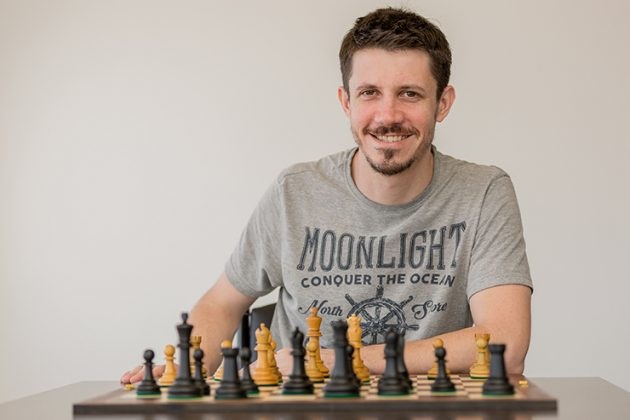
In 2000, in Rio de Janeiro, Felgaer and Gastón Varela are part of the Argentinean team that becomes world junior champion for under-twenties, winning the gold medal for their individual performance. In this year’s Najdorf tournament, Karpov was once again relegated, with Hungarian Judit Polgar and Moldovan Victor Bologan triumphing, with Pablo Ricardi defeating the Russian.

In the 21st century
First decade
Felgaer repeats in 2001, in Yucay (Peru), its previous title in the Pan-American Junior Championship. In this first year of the century, in Rio de Janeiro, in the fourth world team championship for under-twenties, Argentina is bronze medalist in men, with Lucas Liascovich being gold at individual, and bronze too in women, with silver for Marisa Zuriel and bronze for Verónica Enrique at personal performance.
Another visit to Argentina of Kárpov, who this time has a first victory here, in another edition of the Najdorf Magistral, with Korchnói coming second, and third, the Azerbaijani Teimour Radjabov. Also present were British Nigel Short, Hungarian Judit Polgár and the world champion, China’s Xie Jun.

In 2001, Facundo Pierrot, Felgaer, Hoffman and Cámpora (who successfully defeated England’s Nigel Short in the first round), participated in the world championship by direct elimination in Moscow. Elisa Maggiolo does the same in the women’s section.
In May of this year, musician Juan María Solare presents a musical work inspired in «Chess», Borges’ sonnets, at the Volkshochschule in Düsseldorf (Germany) by Cristina Haigis (soprano) and the composer himself (piano). In 2002, fellow countryman Ricardo Szmetan was crowned champion of Barbados, the country he represented at the Olympics that year in Bled.

In 2003, the second edition of the continental championship was held in Buenos Aires, with the American (of Russian origin) Alexander Goldin emerging victorious, defeating the Brazilian Giovanni Vescovi in a tiebreaker. The third edition took place in the same city in 2005, with the Cuban Lázaro Bruzón taking the title. Seven players finished half a point behind, including the top seed, Gata Kamsky, and the local players Felgaer and Gastón Needleman.
In the 2004 edition of the world championship held in Tripoli, Felgaer goes through the first round, an event in which Cámpora and García Palermo also took part. In the Pan-American Youth Championship held in Guayaquil (Ecuador), Pablo Lafuente was champion. In Elista, in the women’s world championship, Carolina Luján participated.
In 2005, in Potrero de los Funes, San Luis, the FIDE world championship took place, in which eight elite players played, the winner being the Bulgarian Veselín Topalov, and thus achieving the maximum crown. The other participants were Vishy Anand, Peter Svidler, Aleksandr Morozévich, Péter Lékó, Rustam Kasimdzhanov, Michael Adams and Judit Polgár. This year in Spain, Diego Rasskin Gutman publishes the book Metáforas de ajedrez – La mente humana y la inteligencia artificial («Chess metaphors – The Human Mind and Artificial Intelligence»).

In 2005, in Cali (Colombia), Leandro Perdomo is Pan-American youth champion. Jorge Lois receives the title of International Master in composition this year, while Jorge Kapros will obtain it in 2007. Flores, Gastón Needelman and Felgaer (who passed the first round), are part of the World Cup in Janti-Mansisk 2005. In 2007, in the same city and circumstances, Flores, Juan Pablo Hobaica and Peralta will be part of the group, and in 2009, always in that Russian city, Flores will repeat.
In 2006, in San Luis, María Sarquís was crowned South American junior champion. That year, in the women’s world championship in Yekaterinburg, Amura was present, who repeats in 2008 in Nalchik, in this case accompanied by Marisa Zuriel, who will return to this arena in 2010 in Antakya.
Zuriel was also the winner of the women’s continental championship in Potrero de los Funes 2007, while Luján became this year the first woman (and so far the only one) to obtain the title of International Master. In Matheu, Sandro Mareco is South American Junior Champion.


In 2007, De los Cuatro Vientos presented the first volume of José Copié’s Historia del Ajedrez Argentino («History of Argentine Chess»). The remaining two volumes will appear in 2011 and 2012. In 2016, published by Gargola, a compendium containing a fourth volume is presented, covering the history of the Mar del Plata masters. This is a central and essential reference work on the history of Argentine chess. In 2009, Copié also published an author’s edition of «Remember 1939», a work on the Tournament of Nations of that year that recounts the history of Augusto de Muro’s appointment as FIDE President.

In Cali, in 2008, Damián Lemos became Pan American Youth Champion (the previous year he had been runner-up in Riobamba to the North American, although with a great career in Argentina, Robert Hunganski, who in the Chennai 2022 and Budapest 2024 will be coach of the Olympic teams of the absolute competitions), while Denise Carraro is South American Youth Champion in Montevideo.
Anton Kovalyov received the title of GM that year as an Argentine representative. There, the Ukrainian learned to play chess with Ricardi and Panno, a country he represented at the 2008 Dresden Olympics, although he later took up permanent residence in Canada. This year, too, under the auspices of the Biblioteca Nacional Mariano Moreno of the city of Buenos Aires, Filosofía del ajedrez («Chess Philosophy»), a book by Ezequiel Martínez Estrada, where his deep reflections about the game are condensed, is presented.

In 2009, the world junior absolute and women were held in Puerto Madryn, where the French Maxime Vachier-Lagrave and the Indian Swamina Soumya won, respectively. Stephanie Amed in Montevideo is Panamerican Junior Women’s Champion. This year is published Historia del ajedrez argentino («History of Argentine Chess») by José Copié, a work in three volumes; in 2016 will be published in a single volume, compiled, enlarged and updated.

Kasparov makes another visit to the country, within the framework of the Argentine Bicentennial in 2010. At the initiative of National Senator Carlos Alberto Reutemann, in this year Panno receives the Mención de Honor Senador Domingo Faustino Sarmiento (Mention of Honor Senator Domingo Faustino Sarmiento») by the Senate of the Nation.

Second decade
Sandro Mareco and Rubén Felgaer, who reaches the second round, are part of the 2011 World Cup in Janti-Mansisk. In Tromsø 2013 both repeat, together with Flores, with Felgaer being the only one to pass the first round.
In Durán, in 2011, Leonardo Krysa is Pan-American junior champion. In that 2011, and also in 2013, 2015 and 2019, Federico Pérez Ponsa, Sebastián Iermito, Julio Benedetti and Lucas Coro, are South American youth champions in Tarija, Asunción, Barrancabermeja, and again Asunción, respectively.
In 2012, the seventh Continental Tournament of the Americas was held in Mar del Plata, with Peruvian Julio Granda taking the victory over American Alexander Shabalov (born in Latvia). Diego Flores completed the podium, although the final standings were determined by tie-breaking, as all of them, along with Canadian Eric Hansen (born in the USA) and American Gregory Kaidanov (born in Ukraine), finished with 8.5 points out of a possible eleven.
Lujan is part of the final instance to determine the women’s world champion in 2012 and 2018, in both cases in Khanty-Mansiysk. In 2015, in Sochi, always in events of this kind, double Argentine presence with Luján and Zuriel. In 2017, Ayelén Martínez made her debut in this kind of events, in Teheran.
In 2013 the Senate of the Nation, under the impulse of Senator Reutemann, presents the book La generación pionera – 1924/1939 («The pioneer genearation – 1924/1939») , first volume of the collection Historia del ajedrez olímpico argentino («History of Olympic Argentine Chess»), by Sergio Negri and Enrique Arguiñariz, with forewords by Daniel Larriqueta and Oscar Panno. In Bolivia, Peruvian Julio Granda won the continental tournament this year, with Flores finishing third.

Luján won the women’s continental championship in Villa Martelli in 2014 and Alan Pichot was crowned world under-16 champion in Durban (South Africa). That year saw the publication of the book «Cortázar de la A a la Z» (Cortázar from A to Z), which included for the first time an unpublished text by Julio Cortázar, someone who had already explored playfulness and chess in his previous work, entitled El ajedrez en Marte («Chess on Mars»).


Mareco is Pan-American champion in Montevideo 2015 and is going through the first round of the World Cup in Baku, in which Pérez Ponsa also participates. In 2017, always in this world instance, in Tbilisi, Mareco, Flores and Krysa play, while in 2019, in Khanty-Mansiysk, Pichot, Flores and Mareco did.
In the 2017 women’s continental championship in Villa Martelli, Peruvian Deysi Cori emerged victorious. Between the end of 2017 and the beginning of 2018, with the advice of Sergio Negri and Juan Morgado, an exhibition called Movimientos en blanco y negro («Black and white movements») was held at the Museo del Libro y de la Lengua de la Biblioteca Nacional Mariano Moreno de la República Argentina, where the importance of chess in Argentina, in its historical and cultural aspects, was exalted. A catalog was published (https://catalogo.bn.gov.ar/F/?func=direct&doc_number=001418560&local_base=GENER) in which writers Sylvia Iparraguirre, Guillermo Martínez and Martín Kohan, among others, made their contributions.

In 2018 at the Club Argentino de Ajedrez the book La generación plateada – 1950/1976 («The silver generation – 1950/1976»), second volume of the collection Historia del ajedrez olímpico argentino («History of Argentine Olympic Chess») by Negri and Arguiñariz, with a foreword by Enrique Valiente Noailles and Morgado, is presented. This year, in the continental tournament held in Montevideo, in which the American Sam Shankland prevailed, Flores finished as runner-up.


Mogado presents two new works: in 2019 El encuentro por el título mundial Capablanca – Alekhine 1927 – Argentina hacia las ligas mayores 1925 – 1927 («The world title match Capablanca – Alekhine 1927 – Argentina towards the major leagues 1925 – 1927»), in two volumes, and in 2020 El Impresionante Torneo de Ajedrez de las Naciones 1939 («The Impressive Chess Tournament of Nations 1939»), in three volumes; over time, this author created, through the publication of twenty-three volumes, a historical collection on the country covering the period 1500-1960. In that 2019, in Mar del Plata, the fiftieth edition of its open tournament took place.

In 2020, the specialized site Ajedrez Latitud Sur (ALS: «Chess Southern Latitude») was launched, edited by Sergio Negri, Silvia Méndez, and Enrique Arguiñariz. It presents works related to chess, with a perspective under the patronage of the Southern Cross, dedicated to exploring especially the links between the game and history and culture. Among the permanent collaborators, and those who contribute by sharing productions appeared in other media are, among others, Antonio Gude, Diego Rasskin Gutman, Leontxo García, Zenón Franco Ocampos (in memoriam), Alejo de Dovitiis, José Copié, Juan Morgado, Uvencio Blanco Hernández, Jorge Niegovich, Luis Scalise, Marcelo Reides, Horacio Olivera, Carlos Ilardo, Claudio Federovsky, Esteban Jaureguizar, Jesús Seoane Sepúlveda, and Sergio Coellar Mideros.
The site can be accessed from the following link: https://ajedrezlatitudsur.wordpress.com/
This year the Argentine humorist Quino (whose name was Joaquín Salvador Lavado, having been born in 1932) passed away. He achieved widespread international renown, particularly with his comic strip «Mafalda,» in which chess played a prominent role time and time again.


Third decade
Alan Pichot is the only Argentinian (at the time he was) to have advanced past the first two rounds of the World Cup since its inception in 2001, a feat he accomplished in 2021 in Sochi, after defeating Costa Rican Sergio Minero Pineda and Croatian Ivan Šarić, before falling in the third round to Russian Aleksandr Grischuk. Federico Pérez Ponsa advanced past the first round by defeating Bulgarian Momchil Nikolov, but lost in the second round to the aforementioned Croatian player; the same happened to Sandro Mareco, who defeated Jordanian Sami Khader, only to lose to Peruvian Jorge Cori. Leonardo Krysa, however, did not advance beyond the first round.
Miguel Najdorf was inducted into the World Chess Hall of Fame in St. Louis, USA, in 2021, while Oscar Panno was inducted in 2024. They are the only Argentines to have earned this kind of recognition.
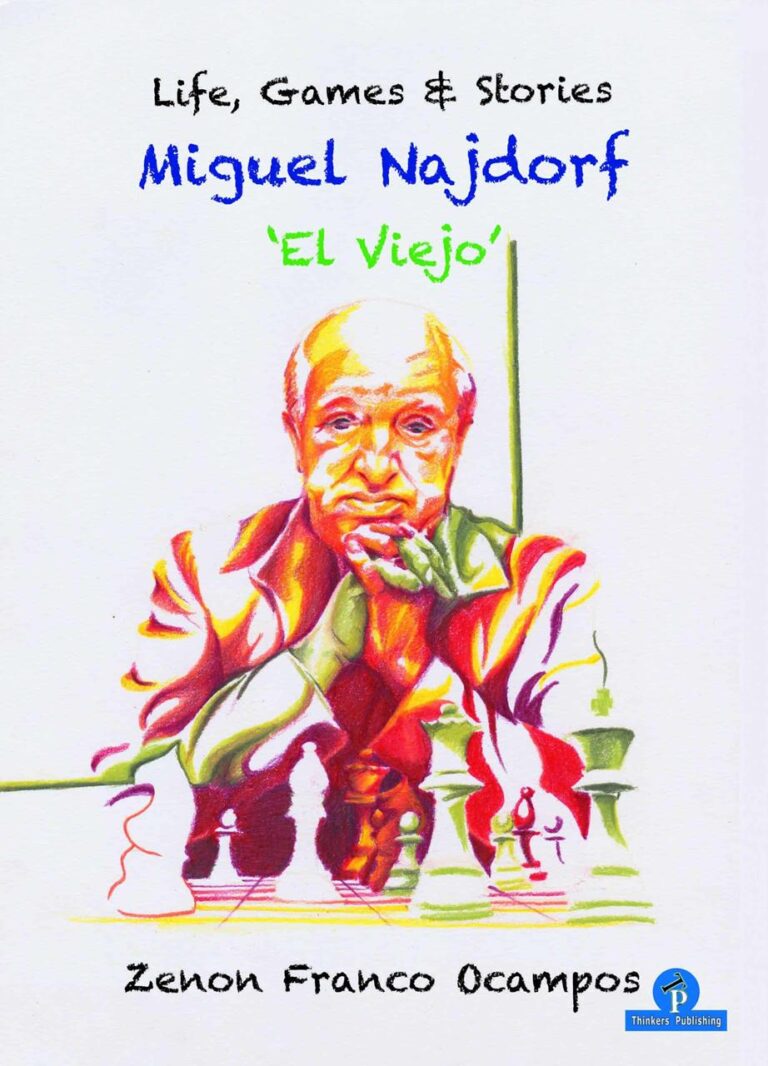
In 2021, FIDE chose as one of the three best books of the year Miguel Najdorf El Viejo («Miguel Najdorf, The Old Man») by Zenón Franco Ocampos, someone who, although he was born in Paraguay, ending his chess career in Spain (he was national runner-up in 1999), had a long period of personal growth in Argentina, hosting many local competitions (he won the Grand Prix in 1979, 1980 and 1981). Over time, he would become a great disseminator of chess based on his vast literary work and, as a player, in addition to being a GM, he would obtain two gold medals playing for Paraguay at the Lucerne 1982 and Novi Sad 1990 Olympiads.
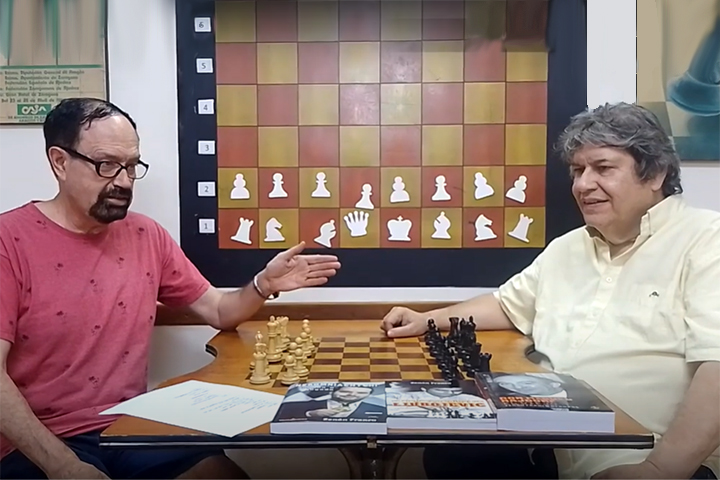
In 2022 the Centenary of the founding of FADA was celebrated, and several commemorative activities were held, with the participation of FIDE President Arkady Dvorkovich and FADA President Mario Petrucci. In this context, Sergio Negri presented a work on Hitos del Ajedrez Argentino (Milestones of Argentine Chess), the basis of the current work, and a commemorative open tournament was held at the Villa Martelli Chess Circle, in which the Paraguayan Axel Bachmann, the Cuban Neuris Delgado Ramírez and Pichot reached the first place.


In this 2022 Sandro Mareco becomes the first Argentinean to be proclaimed Ibero-American champion, in Mexico, among one hundred and fifty participants. Candela Francisco Guecamburu is proclaimed South American female champion that year in Santa Cruz de la Sierra, and Anapaola Borda repeats this achievement in Antofagasta 2023. Alejandro Hoffman, now living in Uruguay, becomes a national champion in 2022.

In 2023 FIDE recognized, as its second president, the Argentine Augusto de Muro, at the request of FADA, based on an investigation carried out by Sergio Negri and Juan Morgado, who were incorporated that year to the History Committee of the world entity. The respective table, officially consecrated, was conformed as follows:
PRESIDENTS OF THE FIDE
- 1924-1939 and 1946-1949 Alexander Rueb (The Netherlands)
- 1939-1940 Augusto De Muro (Argentina)
- 1949-1970 Folke Rogard (Sweden)
- 1970-1978 Machgielis Euwe (Netherlands)
- 1978-1982 Fridrik Olafsson (Iceland)
- 1982-1995 Florencio Campomanes (Philippines)
- 1995-2018 Kirsan Ilyumzhnov (Russia)
- 2018-2026 Arkady Dvorkovich (Russia)
Candela Francisco Guecamburu becomes world junior champion in 2023 in Mexico and, successively, double champion of the American continent without age limits in Havana 2023 and Oaxtepec 2025 (in that case at sixteen years old and in this one at eighteen), in women’s competitions. She is the only world chess champion in the history of Argentina as far as women under conventional rhythm are concerned.

Ilan Schnaider won the bronze medal at the U20 Pan American Championship in 2023, at the age of twelve. Previously, he had already been the best U8 and U9 chess player in the world. In March 2025, due to his performance in the Zonal Championship held in Santiago de Chile, where he was runner-up, he qualified for the next phase of the World Cup at senior level. In 2023, Daniel Cámpora was fifth in the senior world cup held in Terrasini.

In 2023, Tomás Sosa became champion in the first edition of the Ibero-American championship in the blitz mode, in a competition held in Barcelona (Spain) in the presence of one hundred and fifty players.

On June 30, 2024, also in Barcelona, Faustino Oro, who had previously broken all records (being the youngest to surpass 2,300 ELO points, the youngest to obtain IM rating, besides being the best U10 on the planet), became the youngest International Master in history (a record that in May 2025 will be broken by another chess player), which he achieved at that time at the age of ten years, eight months and sixteen days. With that performance, he reached 2,416 ELO points, a figure that no one had managed to reach at his age.
On the other hand, in 2024, Oro defeated the Norwegian Magnus Carlsen, the best player in the world, in a one-minute game, and the number two in the ranking, the American (of Japanese origin) Hikaru Nakamura, in a three-minute game, in only his first achievements in these modalities against top players. Kasparov, from those performances, baptized the boy as Chessi, exact mixture of chess and Messi.

In 2024, two other youngsters becomes International Master, Schnaider, at the age thirteen years and six months, and Francisco Fiorito, at the age of fourteen. Juan Martín Ibarra, for his part, wins the South American Junior Championship in Santa Cruz de la Sierra.
The women’s team at the Budapest 2024 Olympics achieved the best historical performance in this kid of competition, since it was on the same score line as other nations, starting with the one that obtained the seventh place by tie-breaker system. One hundred and seventy teams participated in the occasion, being our representatives Francisco, María José Campos, Borda, Belén Sarquis and Amura.

Negri, in this Olympic framework, as a member of the FIDE History Committee, presented a proposal for a methodology to designate Honorary GMs in the future and, once applied to the chess universe, sixty-four chess players were recognized, among them former world champions Steinitz, Lasker, Capablanca, Alekhine and Menchik.

Also in Budapest, although it was no longer a strictly Argentine milestone, but still is because of the origin of a player forged in the country, Pichot won the bronze medal on the fourth board representing Spain. Shortly after, in another consecrating performance in 2024, he qualified as Ibero-American champion in Linares.


The ninety-ninth edition of the Argentine championship, played in 2024, was held under the patronage of Ezequiel Martínez Estrada. And the hundredth, in 2025, as a tribute to Oscar Panno, who turned ninety years old.
At the end of 2024, in the context of the celebration of the FIDE Centenary, several activities were held in Buenos Aires, in the presence of the President of the world entity, including meetings in the Club Argentino de Ajedrez, among other entities, and some simultaneous games in the Obelisk of the city of Buenos Aires given by Oro. In this context, Buenos Aires was declared as Capital de Ajedrez de las Américas (“Chess Capital of the Americas”) and Vicente López as Capital del Ajedrez Escolar de las Américas (“School Chess Capital of the Americas”).

Anapaola Borda Rodas triumphed in the South American Zonal held in Santiago de Chile in March 2025, thus qualifying for the next round of the World Cup.
On May 12, 2025, the tallest piece in the world will be inaugurated in the Cordoba city of Río Ceballos. It is an image of the queen’s trebejo that reaches a height of seven meters and sixty-two centimeters. This year, with Ajedrez y Posperonismo 1960 («Chess and Post-Peronism 1960»), Juan Morgado concluded his monumental historical collection of twenty-three volumes, while Enrique Arguiñariz presents the book Panno magistral recargado («Panno magistral reloaded»).
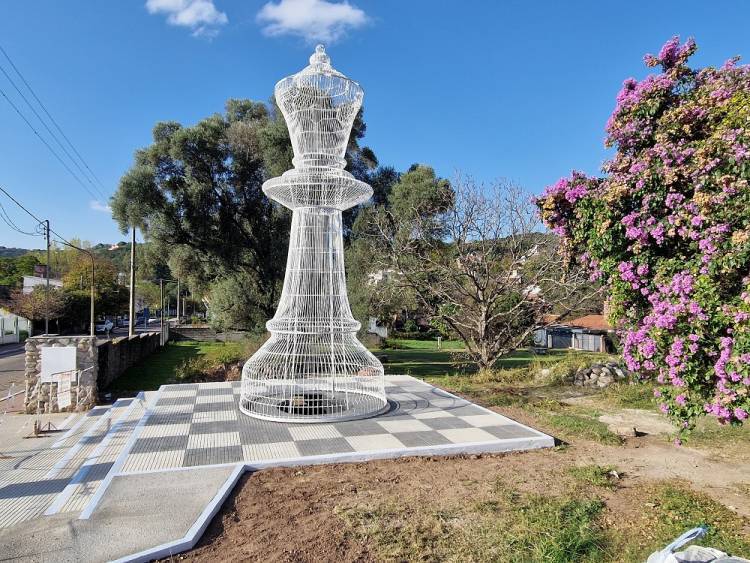
Jorge Lois becomes the first Argentine GM in chess composition by reaching the necessary score to access a title conferred by the World Federation for Chess Composition (WFCC).


In Seville, Spain, the book Ajedrez: espejo de la vida («Chess: mirror of life»), by Sergio Negri, is published, which includes sixteen works made by the author for the European publications JotDown Cultura and JotDown Sport, in which he portrays the link between the game and culture an history. Diego Rasskin Gutman, prologue writer of the book, points out: «Why do we play chess, what pushes us, century after century, to return to the sixty-four square board? This book does not seek a definitive answer, but offers sixteen possible paths. In ´Chess, mirror of life´, (…) Negri invites us to think, to remember and, above all, to play. Because, as he suggests, chess is also the history of our cultures and the essence of what we are». The book will be presented in Argentina on September 12 at the Club Argentino de Ajedrez , with the participation of writer Guillermo Martínez and GM Oscar Panno.


In September, Faustino Oro, upon winning the «Legends and Prodigies» tournament in Madrid, achieved his first GM norm, becoming the second youngest player in history to achieve this feat (behind the Indian Gukesh Dommaraju) and surpassing the 2,500 ELO point barrier, the youngest ever to reach such heights, doing so at the age of eleven years and three hundred and forty-seven days, beating the previous record held by Indian Praggnanandhaa Rameshbabu.
Leonel Amato won the bronze medal on board one in Astana (gold went to Israeli GM Yehuda Gruenfeld, silver to Hungarian IM Viktor Varadi, while Leonel, who achieved the same score as them, does not have any title), as part of the Second Chess Olympiad for People with Disabilities, finishing undefeated with five points in six games.
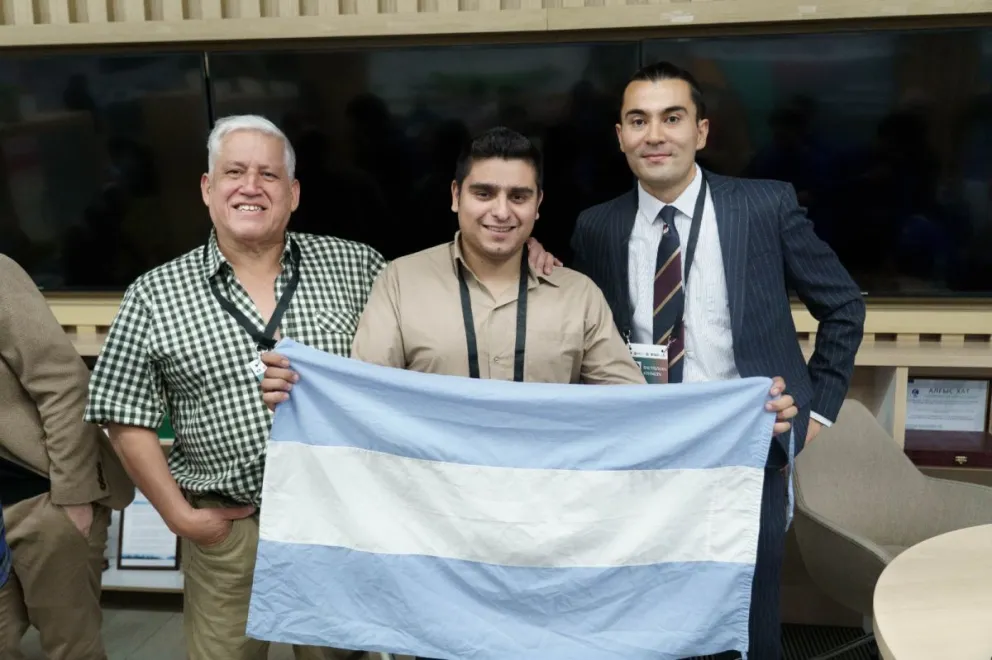
At the 2025 World Cup held in Goa, Faustino Oro (one of the special guests invited by the organizers) advanced past the first round, defeating Croatian Ante Brkic. In the second round, he faced Indian Santosh Vidit, (2,715 ELO points), with whom he tied in the two matches played in the regular phase, although losing in the respective tiebreaker. Diego Flores and Ilan Schnaider did not make it past the first day. Oro, at twelve years old, is the youngest participant in the history of this competition.
The Universidad Nacional de Tres de Febrero («National University of Tres de Febrero») hosted the 2nd International Congress on Chess and Education: Learning, Thinking, and Technology, with the participation of experts from Argentina and abroad, including FIDE Education Commission President Jerry Nash, writer Guillermo Martínez, and Grandmaster Oscar Panno. The university offers teacher training in chess through its University Diploma in Chess Teaching and Diploma in Chess Promotion, Management, and Training, coordinated by International Master Carolina Luján.
IM Francisco Fiorito, fifteen years old, became the runner-up in the Ibero-American Rapid Chess Championship in Sant Boi de Llobregat, Spain, with the same score as the winner, Cuban GM Omar Almeida Quintana, in a tournament where chess players from eleven countries competed.

In the Szmetan-Giardelli Masters tournament held in Buenos Aires, Norwegian Aryan Tari emerged victorious, defeating Bulgarian Ivan Cheparinov on tiebreaks. Alexei Shirov (of Latvian origin) and the local duo Flores and Oro finished half a point behind, with Oro earning his second GM norm.
At the World Rapid Chess Championship held in Qatar, Faustino Oro continued to achieve strong performances and set records. In the tournament won by Norwegian Magnus Carlsen, he finished in 77th place out of 247 participants, with 7 points out of 13, surpassing the 2500 Elo rating mark. He became the youngest player in history to achieve this feat, earning a triple distinction, as he holds higher ratings than this threshold in all three formats: classical, rapid, and blitz. Candela Francisco also delivered a great performance, scoring 6.5 points out of 11 and finishing in 41st place, ahead of 100 other players.
In the World Blitz Championship, both players again performed exceptionally well: Oro achieved victories over Americans Levon Aronian (of Armenian descent) and Leinier Dominguez (born in Cuba); while Francisco defeated two former world champions, Ukrainian Mariya Muzychuk and Chinese Lei Tingjie.
At the end of the year, Faustino Oro was distinguished as the best junior chess player in the world for 2025, based on a global vote conducted by YouTube, organized by FIDE, in which he beat the Turk Yagiz Kaan Erdogmus, the American Andy Woodward and the Russian Ivan Zemlyanskii.
Argentina, after the first title obtained by Najdorf in 1950, has another thirty-six GMs, being one of the most prolific nations in the world in this field. They are, in chronological order, the following:
Erich Eliskases and Herman Pilnik (1952); Oscar Panno (1955); Carlos Guimard and Héctor Rossetto (1960); Miguel Quinteros (1973); Julio Bolbochán (1977); Raúl Sanguineti (1982); Carlos García Palermo (1985); Daniel Cámpora (1986); Gerardo Barbero (1987); Maxim Sorokin (1992, obtained while playing in Russia); Pablo Zarnicki (1994); Ariel Sorín (1995); Hugo Spangenberg (1996); Pablo Ricardi (1997); Alejandro Hoffman (1998); Sergio Slipak (2001); Rubén Felgaer (2002); Fernando Peralta (2004); Vitali Kiselev (2007, obtained while playing in Russia); Diego Flores, Anton Kovalyov (obtained while playing in Argentina, now under the Canadian flag) and Pablo Lafuente (2008); Salvador Alonso, Damián Lemos and Diego Valerga (2009); Sandro Mareco (2010); Federico Pérez Ponsa (2012); Alfredo Giaccio (2013); Martín Lorenzini and Andrés Obregón (2014); Alan Pichot (2016, now under the Spanish flag); Leonardo Krysa (2017); Leonardo Tristán (2020), and Tomás Sosa (2022)
Regarding contributions to chess theory from Argentina (by authorship or by the place of discovery), Martín Labarca (to whom we are very grateful) carried out the following survey:
VARIATIONS
Argentina
(Queen Gambit Declined, Cambridge Springs – D61)
Grau, Reca y Palau (1919-1920), Pilnik, Fernández Coria, Eliskases, Alekhine – Capablanca, Buenos Aires 1927
Grau
(Queen Gambit Declined – D06/12) (1935)
Argentina / Variation of the change
(Caro-Kann – B13)
Portela, Grau, Reca, Palau, Pleci, Fenoglio, Rebizzo, Cristiá, Guimard, Rossetto
Argentina / Variation Pollock
(French, Classic – C14) (1935-1953)
Michel, Skalicka, Czerniak, Pilnik, Puiggrós, Stahlberg, Rossetto, Guimard, Eliskases
Czerniak
(Caro-Kann, Panov-Botvinnik Attack – B13) (1939)
Search – Czerniak, Círculo de Ajedrez 1939
Marini
(English, Four Knights – A28) (1940)
Guimard
(French, Tarrasch – C03) (1941)
(French, Tarrasch – C07) (1943)
Pilnik
(Ruy López, Closed – C90) (1944)
Cotlar / Buenos Aires
(Queen Gambit Declined , Lasker Defense – D57) (1945)
Cotlar, Skalicka, Czerniak, Palau, Nogués Acuña
Najdorf
(Sicilian – B90) (1948)
Argentina / Variation Collijn
(Scandinavian, Anderssen Contraattack – B01)
Paul Michel (1940s-1950s)
Pelikan
I (Sicilian – B33) (1950s)
II (French – C00) (1947)
Panno
I (King’s Indian, Fianchetto – E63) “Panno System”
II (King’s Indian, Saemisch – E83) (1955)
Argentina / Gotemburgo
(Sicilian, Najdorf – B98) (1955)
Pilnik, Najdorf, Panno, Julio Bolbochán, Guimard
Quinteros
(Sicilian – B27) (1971)
Mecking – Quinteros, Mar del Plata 1971
Argentina
(Queen Gambit Declined, Three Knights – D37)
Auciello – Román, E., FMDA 1990
Pichot, Peralta, Pérez Ponsa, Flores, Mareco, Krysa (2010s)
OTHER CONTRIBUTIONS
Mar del Plata Variation
(King’s Indian, Orthodox – E97) (1953)
Najdorf – Ivkov, Gligoric
Deletang’s Method
(La Stratégie 1923, Revista del Club Argentino 1925)
Eduardo J. Marchisotti
(Among the world’s leading theoreticians between the mid-1940s and the late 1950s)
Damián Reca – Caro-Kann (1937)
(Included in the reference bibliography of Modern Chess Openings, editions 1946, 1952, 1955).
Moshe Czerniak – The French Defence (1943)
(Included in the reference bibliography of Modern Chess Openings, editions 1946, 1952, 1955, 1965 and 1972).
Caissa and El Ajedrez Americano magazines among the reference bibliography of Modern Chess Openings.
©ALS, 2025